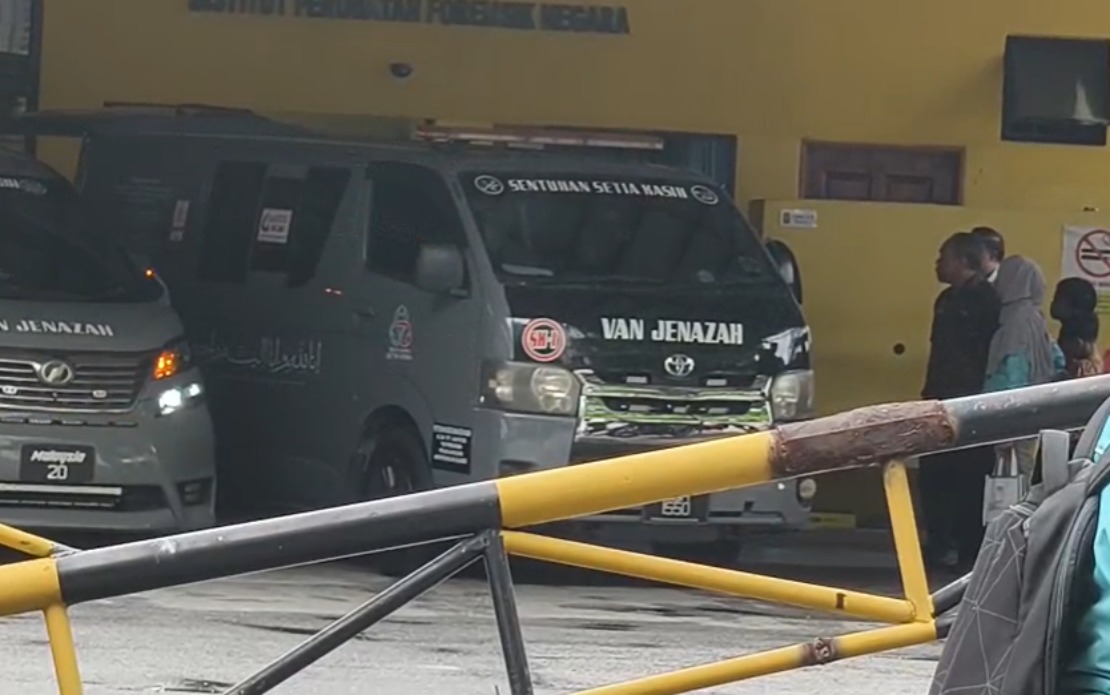
Three members of the same family who died in a collision involving a Malaysian Immigration Department (JIM) lorry have been released from the National Institute of Forensic Medicine at Kuala Lumpur Hospital for funeral arrangements. The remains of Shaik Mohd Firdaus Shaikh Yahya, 53, and his two daughters Siti Nor Sazlin, 25, and Siti Darwisyah Auni, 12, were handed over to relatives on the evening of August 19 following the completion of post-mortem procedures. Their bodies will now be transported to Perak for burial in accordance with Islamic and family wishes.
The three were among four pedestrians struck when a JIM Black Maria lorry collided with multiple vehicles on Jalan Sultan Ismail in the early hours of that day. The accident occurred at approximately 1 am, leaving another pedestrian seriously injured and causing substantial damage to a Proton Saga and an Inokom Matrix multi-purpose vehicle. Preliminary investigations suggest the collision resulted from a series of traffic violations and loss of control by the government-operated vehicle.
According to witness accounts and police findings, the unoccupied JIM lorry was travelling toward Chow Kit with its emergency lights and siren activated in preparation for an immigration enforcement operation against undocumented migrants. However, the vehicle is believed to have entered the Maju Junction intersection against a red traffic signal, directly into the path of the Proton Saga which had the right of way on a green light. The impact of this collision proved catastrophic, forcing the heavier lorry to lose control and skid across the intersection.
As the JIM vehicle careened through the junction, it struck four pedestrians who were lawfully crossing or standing nearby. The uncontrolled lorry then collided with the Inokom Matrix that was also legitimately using the intersection. The sequence of events raised immediate questions about whether the use of emergency protocols justified the apparent disregard for traffic regulations and whether proper driver training and safety procedures were followed by the government agency.
Funeral arrangements are proceeding according to Islamic tradition. The remains will be taken to Jamiul Ehsan Mosque on Jalan Pahang in Kuala Lumpur, where they will undergo ritual bathing, shrouding, and funeral prayers. Following these ceremonies, the bodies will be transported to Kampung Air Hitam Labu Muslim Cemetery in Kampar, Perak, for final burial. This arrangement reflects the family's connection to Perak and their religious observances.
The accident has drawn significant public attention to road safety practices involving government vehicles, particularly those operated by enforcement agencies. The case raises broader concerns about whether personnel operating specialised vehicles receive adequate training in handling emergency equipment and maintaining traffic safety obligations simultaneously. The use of sirens and beacon lights does not grant blanket immunity from traffic laws, and investigators will need to determine whether standard operating procedures were followed.
Police have opened an investigation under Section 41(1) of the Road Transport Act 1987, which addresses causing death by rash or negligent driving. This legal framework allows authorities to examine whether the JIM driver's actions constituted criminal negligence or reckless conduct. The investigation will likely scrutinise factors including vehicle maintenance, driver fatigue, visibility conditions, speed, and whether emergency protocols were appropriately invoked for the intended operation.
This incident occurs within the broader Malaysian context of road safety concerns. Fatal accidents involving government vehicles operated under emergency conditions periodically expose gaps in accountability, training standards, and the balance between operational urgency and public safety. For families of victims, such tragedies extend beyond immediate loss to encompass questions of responsibility and systemic oversight within relevant government agencies.
The death of young Siti Darwisyah Auni, just 12 years old, particularly underscores the human cost of traffic violations. Alongside her father and elder sister, her life was cut short in circumstances that may have been preventable through stricter adherence to traffic regulations. The incident will likely prompt wider discussion about whether emergency operational status should ever supersede fundamental traffic safety obligations.
For the Malaysian Immigration Department and other law enforcement agencies, this accident serves as a sobering reminder of the critical importance of driver discipline and adherence to road rules. While enforcement operations targeting undocumented migration are legitimate government functions, they cannot come at the cost of endangering civilian populations. The investigation's findings will be closely watched by road safety advocates and may influence future policy regarding how government vehicles operate during emergency situations.

