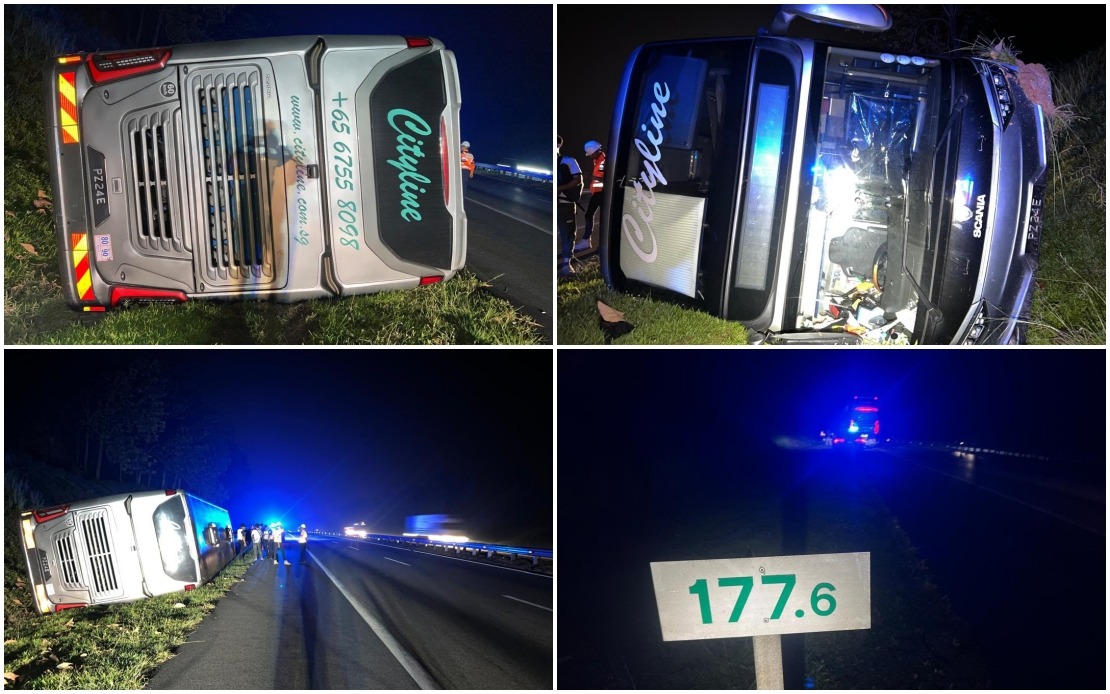
A tour bus travelling from Singapore to Kuala Lumpur veered off the northbound lane of the North-South Expressway near Jasin in Melaka early on August 26, overturning and injuring three passengers. The incident occurred at Kilometre 177.6 when the vehicle attempted to avoid a lorry that had suddenly slowed ahead, causing the driver to lose control. Police arrived at the scene following a report made at approximately 5 am.
Among the injured were a 59-year-old Malaysian tour guide, a 62-year-old passenger from Singapore, and a 42-year-old British national. All three sustained injuries to their heads and legs, according to Jasin district police chief Supt Lee Robert. They were transported to Jasin Hospital for immediate medical attention. The severity of their injuries has not been disclosed, though none were reported as life-threatening at the time of transport.
The tour bus was carrying a total of 12 occupants, comprising passengers, a driver, and the tour guide. The vehicle had been operating as a commercial cross-border service, a common sight on Malaysian expressways connecting Singapore's tourism hubs with Kuala Lumpur's attractions. Such international tours have grown in popularity in recent years, particularly among regional travelers seeking convenience and guided experiences.
Investigations revealed that the accident resulted from a sudden braking situation. When the lorry ahead reduced speed, the bus driver made an evasive manoeuvre to prevent a rear-end collision. However, the sharp movement to the left caused the bus to cross the lane boundary and subsequently leave the expressway. The sequence of events highlights the challenges faced by large vehicle operators in congested expressway conditions, where unpredictable behaviour by other road users can trigger dangerous situations.
The North-South Expressway, one of Malaysia's most heavily trafficked highways, spans over 800 kilometres connecting the northern and southern regions of Peninsular Malaysia. Its northbound stretch through Melaka, where this incident occurred, experiences significant daily traffic volumes from both local and cross-border commercial vehicles. Safety concerns on the expressway have periodically drawn attention from authorities, particularly regarding heavy vehicle management and driver fatigue.
This incident underscores ongoing challenges in expressway safety management, especially involving buses and long-distance transport operators. The role of tour bus services in regional connectivity makes passenger safety a matter of concern not only for individual operators but for transport regulators across Southeast Asia. Incidents involving cross-border tourist transport can affect confidence in commercial bus services and raise questions about maintenance standards and driver training protocols.
Police investigations were continuing to determine whether any contributing factors beyond the immediate collision avoidance situation played a role. This includes assessments of vehicle condition, driver hours of operation, and road conditions at the time. Such investigations are standard procedure in expressway incidents involving multiple passengers, as they inform regulatory adjustments and operator compliance measures.
The incident reflects broader issues facing Malaysia's transport sector as it manages increasing volumes of regional tourism and cross-border movement. Tour operators and bus companies must balance service frequency with safety protocols, ensuring drivers are adequately rested and vehicles properly maintained. The expressway system, while efficient, demands constant vigilance from all road users to prevent accidents that can have serious consequences for passengers and disrupt regional travel patterns.
For Malaysian readers and regional travellers, such incidents serve as reminders of the importance of choosing reputable operators with strong safety records and adequate insurance coverage. Insurance considerations become particularly complex in cross-border incidents involving foreign nationals, as liability and medical cost coverage may fall under multiple jurisdictions. Both the Singapore and British nationals involved would likely benefit from comprehensive travel insurance provisions.

