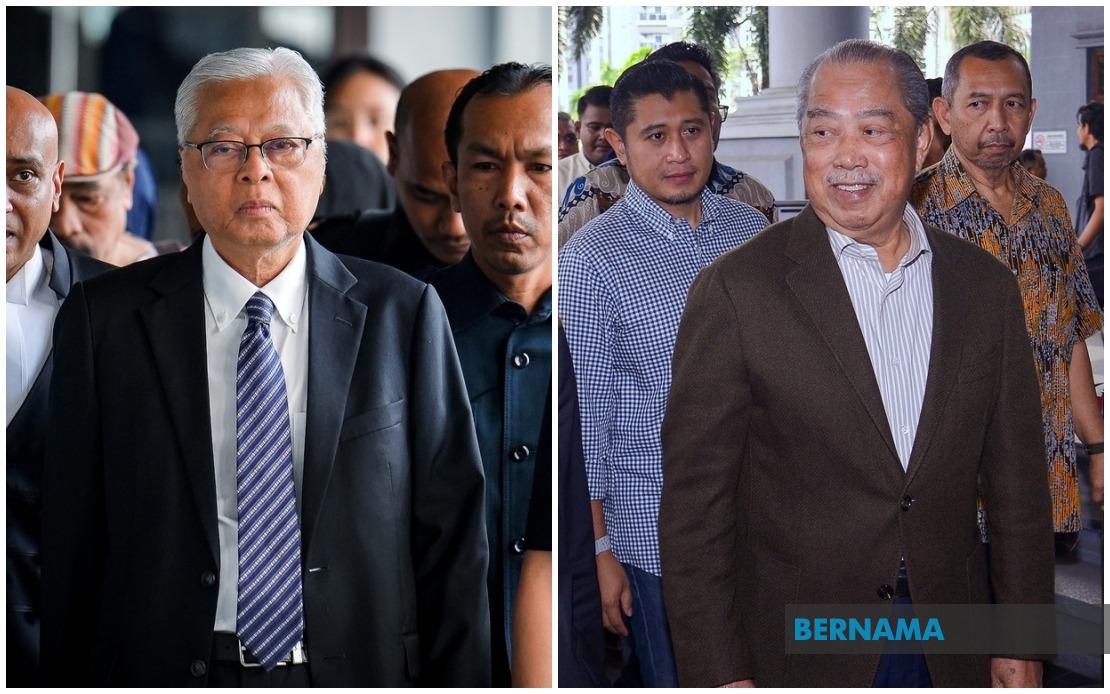
An extraordinary confluence of legal proceedings brought three former Malaysian prime ministers to the Kuala Lumpur Court Complex on the same day, creating what court observers and seasoned journalists described as a watershed moment unlikely ever to be replicated in the nation's contemporary history. Datuk Seri Najib Tun Razak, Tan Sri Muhyiddin Yassin, and Datuk Seri Ismail Sabri Yaakob each appeared before different judicial chambers to address separate legal matters, transforming the courthouse into the focal point of national attention and drawing an unprecedented concentration of media personnel to document the proceedings.
The convergence carried profound symbolic weight for Malaysia's political narrative, representing a visible manifestation of accountability mechanisms operating across three distinct administrations. This moment underscored how the country's legal system has increasingly become intertwined with high-level political leadership in recent years, with former heads of government now subject to the same court processes available to ordinary citizens. For many Malaysians, the sight of three individuals who once wielded executive authority standing separately before judges symbolised either the strength of institutional independence or, for some, a troubling pattern of post-office prosecutions depending on one's political perspective.
Veteran court reporter V. Anbalagan of Free Malaysia Today characterised the occasion as historically singular, reflecting that his two decades covering Malaysian judiciary proceedings had never encompassed such a scenario. Anbalagan emphasised that journalists present were witnessing an event that transcended routine political coverage, instead constituting a rare intersection of Malaysia's legal, political, and historical narratives. His assessment suggested that the statistical improbability of this occurrence—three former premiers, each serving non-consecutive terms across different eras, facing legal proceedings simultaneously—rendered it a near-impossible scenario to reproduce, even as Malaysian politics continues navigating complex transitions and accountability questions.
The logistical complexity of managing simultaneous proceedings involving former national leaders required extensive coordination between judicial authorities, law enforcement, and court administration. Security personnel deployed from Sentul district police headquarters and the Palace of Justice worked in concert to establish differentiated access protocols, with between three and six categories of security passes distributed among journalists, legal practitioners, family members, and members of the public seeking admission to respective courtrooms or video-link facilities. This tiered approach reflected concerns that unrestricted access could transform courtroom proceedings into chaotic spectacles, undermining the dignity and procedural integrity essential to judicial functioning.
Prepations commenced the previous afternoon, with security briefings ensuring all personnel understood their assigned responsibilities across the sprawling court complex. Security officer Nik Zainab Jusoh noted that particular emphasis was placed on monitoring upper floor corridors outside courtrooms, where concentrated crowds of media personnel and interested observers gathered between proceedings and during breaks. The ground floor maintained relative stability, though the overall atmosphere remained charged with the unusual concentration of high-profile defendants, legal teams, media crews, and security apparatus orchestrating carefully sequenced movements throughout the complex.
Journalists began assembling from early morning, with some arriving before 7 am to secure vantage points and prepare broadcasting equipment. Television crews positioned themselves strategically throughout the court grounds, while photographers and print journalists coordinated coverage to ensure that the movements and reactions of the three former prime ministers and their respective legal entourages could be documented comprehensively. Bernama TV news officer Siti Zanariah Nor Zin reflected on her sixteen years in journalism, describing the event as the first instance in Malaysian media coverage where such circumstances had materialised, with staggered arrivals fortuitously providing breathing space for media teams to transmit updates to their respective editorial headquarters.
Utusan Malaysia journalist Amirul Aiman Osman acknowledged the operational challenges posed by simultaneous proceedings, noting that while the situation proved hectic and crowded, robust security measures prevented the scenario from devolving into disorder or untoward incidents. The coordination between different security agencies and court personnel, refined through meticulous planning, ensured that despite unprecedented demand on court facilities and security resources, standard procedures functioned without significant disruption. This operational success itself carried implications for how Malaysian courts might manage similarly complex situations in future, establishing precedent for managing competing demands on judicial infrastructure during high-profile cases.
Najib attended proceedings in a substantial civil suit valued at USD5.64 billion, brought by 1Malaysia Development Berhad (1MDB) and its subsidiary against him and several other defendants before Judicial Commissioner Mohamad Redzuan Idrus. This litigation represents part of the broader legal reckoning surrounding 1MDB's financial operations and alleged misappropriations that occurred during Najib's premiership. The civil action complements various criminal charges and investigations that have pursued accountability for the sovereign wealth fund's trajectory, positioning this particular courtroom proceeding as a critical juncture in the ongoing 1MDB accountability process.
Muhyiddin confronted seven charges encompassing alleged abuse of power and money laundering allegations linked to the Jana Wibawa programme, addressing matters from his administration that prosecutors contend involved inappropriate financial and administrative conduct. His appearance before Judge Noor Ruwena Md Nurdin represented continuation of investigative and prosecutorial efforts focused on identifying potential misconduct during his tenure. These charges, distinct from Najib's 1MDB-related litigation, illustrated how Malaysian legal proceedings had increasingly subjected former prime ministers to multi-jurisdictional scrutiny, with different aspects of their administrations subject to separate investigative and prosecutorial examinations.
Ismail Sabri appeared before Judge Suzana Hussin to address asset declaration charges, specifically allegations involving his failure to disclose holdings totalling RM14.7 million in cash, multiple foreign currency accounts containing millions, and physical gold bars. These charges reflected growing attention to unexplained wealth held by senior political figures, representing a category of financial accountability that extended beyond specific corruption allegations to encompass broader transparency in asset ownership and disclosure. Following his appearance, Ismail Sabri posted RM300,000 bail with one surety, departing the court complex at 11.43 am, concluding his participation in that day's proceedings while legal processes continued for his co-defendants.
The simultaneous proceedings generated intense scrutiny from both domestic and international observers, with Malaysia's handling of these cases attracting attention regarding the judiciary's independence and the rule of law's application regardless of political status. The visibility of three former prime ministers navigating court processes simultaneously carried implications for public confidence in Malaysian institutions, whether reinforcing faith in accountability mechanisms or, conversely, prompting questions about selective prosecution or political motivations underlying particular legal actions. This tension between institutional legitimacy and perceived political instrumentalisation of courts remained a persistent undercurrent in how different segments of Malaysian society interpreted these proceedings.
For Malaysian journalism, the event represented both opportunity and challenge—an opportunity to document historically significant legal developments involving the nation's highest offices, yet also a challenge to maintain professional standards and analytical balance amid the inherent drama and political sensitivity surrounding such coverage. The coordination demonstrated by media organisations, alongside security and judicial personnel, established institutional capacity for managing complex, high-profile scenarios while maintaining public access to court proceedings and the broader principle of transparent justice. Looking forward, the convergence served as a reminder of Malaysia's ongoing political and legal transitions, with accountability for former leaders becoming an increasingly prominent feature of the nation's contemporary governance landscape.

