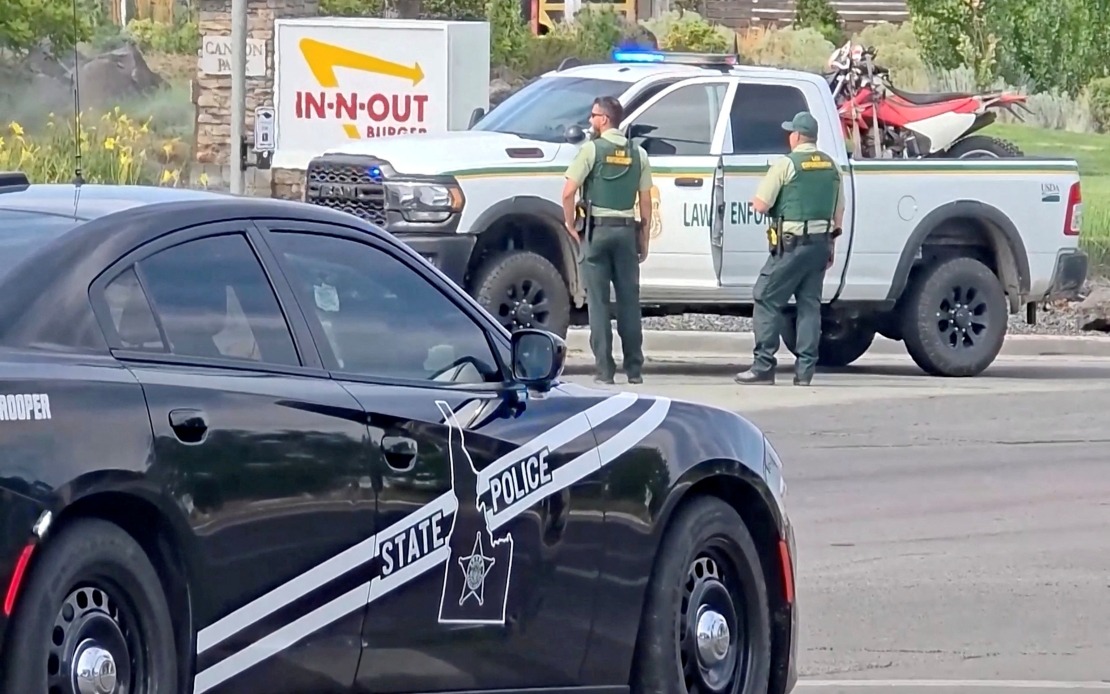
A shooting rampage at an In-N-Out Burger outlet in Twin Falls, Idaho claimed three lives and left seven others wounded on Saturday afternoon, marking yet another gun violence incident in the United States. Authorities recovered the body of the suspected shooter near the restaurant, though officials have not confirmed whether this death is included in the overall casualty count. Twin Falls Police Chief Matthew Hicks reassured residents at a subsequent news conference that the immediate danger to the community had been contained, with no ongoing threat to public safety.
The incident unfolded around 2 pm local time at the busy shopping plaza location, a moment when hundreds of shoppers and diners were present in the immediate vicinity. Joshua Palmer, the city's public information coordinator, noted that several of the injured persons sustained critical injuries requiring emergency medical intervention. The sudden eruption of gunfire in a commercial hub sent shockwaves through the crowd as emergency responders descended on the scene to provide medical assistance and secure the perimeter.
Investigators are in the early stages of piecing together the circumstances surrounding the shooting. Authorities have yet to establish the identity of the suspected shooter or determine what motivated the attack. Such fundamental questions about the perpetrator's background, grievances, or psychological state remain unanswered as law enforcement agencies conduct their ongoing inquiry. The Twin Falls Police Department has been collaborating with state and federal authorities to gather evidence and interview witnesses.
The victims' identities and demographic details have not been disclosed publicly as officials continue the sensitive process of notifying their families. This procedural delay, while respecting the privacy of affected families during an initial phase of the tragedy, also reflects the complexity of managing a multi-casualty incident. Authorities have indicated that comprehensive information about the victims will be released once next-of-kin notification is complete.
The mass shooting underscores persistent concerns about gun violence in American public spaces, particularly in commercial and recreational venues where civilians gather without expectation of danger. Twin Falls, a community of roughly 50,000 people in south-central Idaho, is now confronting a tragedy that has shattered the sense of safety many residents felt in their local commercial district. The incident serves as a stark reminder that such incidents can occur in communities of any size.
The response from Twin Falls emergency services appears to have been swift and coordinated, with first responders quickly arriving at the scene to provide medical care and contain the situation. Chief Hicks' public assurance about the elimination of the threat was intended to calm residents who might naturally fear additional danger following such a traumatic event. The police department's transparent communication through press briefings reflects a commitment to keeping the community informed as the investigation progresses.
For those monitoring gun violence trends in the United States, this incident adds to a troubling pattern of mass shootings that have become distressingly frequent across American communities. The unpredictability of such attacks and their occurrence in everyday settings like restaurants raise broader questions about public safety, mental health resources, and law enforcement capabilities in preventing such tragedies. Regional observers note that Idaho, while having lower rates of violent crime compared to some other states, is not immune to such incidents.
The Twin Falls community now faces the difficult process of trauma recovery and mourning. Beyond the immediate loss of life and the physical injuries sustained, the psychological impact on witnesses and the broader community will likely persist for months. Counselling services and community support mechanisms will become essential resources for those affected by Saturday's violence.
As the investigation deepens, questions about warning signs, access to firearms, and potential connections between the shooter and victims may provide crucial insights into preventing similar incidents. Law enforcement agencies typically examine the suspect's history, any prior criminal records, and potential grievances or conflicts that may have triggered the attack. These details, once established, could illuminate whether this was an act of targeted violence or an indiscriminate shooting.

