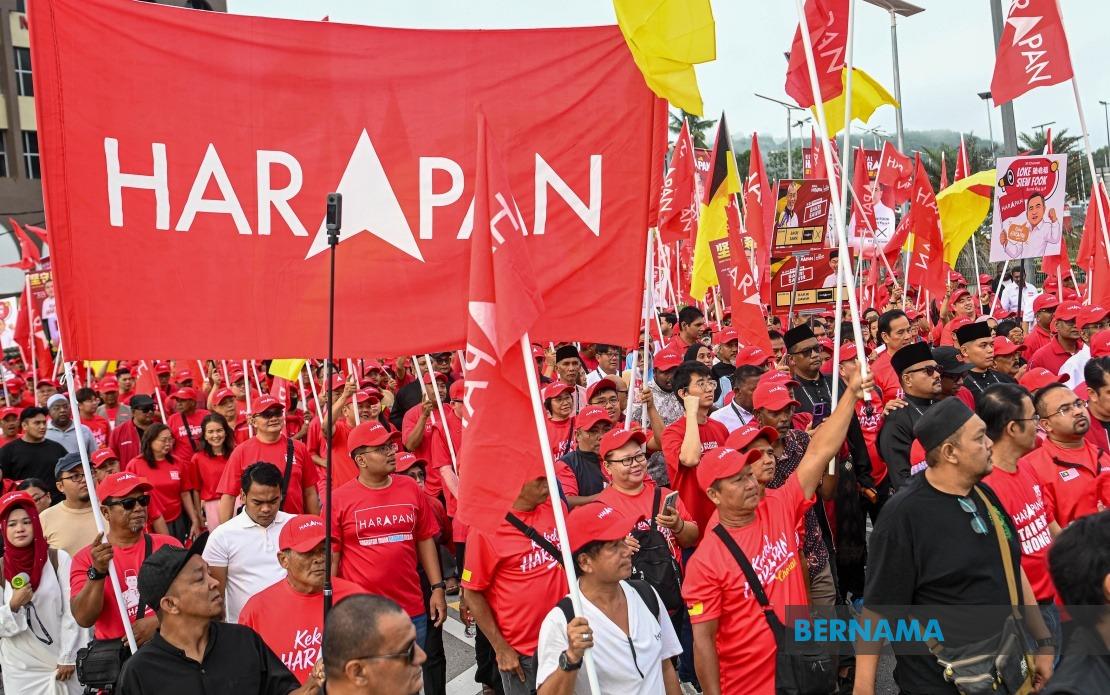
The 16th Negeri Sembilan state election is shaping up to deliver intensely contested races, with three state seats confirmed for three-way battles following the close of nominations on July 18. The outcomes in Pertang, Klawang and Sungai Lui will likely prove pivotal in determining the overall composition of the state assembly, particularly given the fragmentation of voter support across an expanding array of political contenders. The process of candidate registration, which concluded at 10 am at Dewan Besar Kuala Klawang in Jelebu, revealed a political landscape considerably more complex than many anticipated, with established ruling-party representatives now bracing for simultaneous assaults from both traditional opposition movements and newer breakaway factions.
The Pertang seat epitomises this multifaceted political competition. Incumbent Datuk Seri Jalaluddin Alias, representing the Barisan Nasional coalition, enters the contest as the defending champion following a comfortable performance at the previous election when he accumulated 5,634 votes and defeated his nearest rival by a margin exceeding 2,800 votes. However, he must now contend with Mohd Umry Abdul Khois, the Pakatan Harapan standard-bearer seeking to chip away at BN's historical dominance in this constituency, alongside Mohd Faizal Fadli Mohd Idrus of Bersatu, the splinter party that has increasingly become a disruptive force in Malaysian electoral contests by fracturing support bases that once appeared reliably consolidated.
The Sungai Lui constituency presents an intriguing dimension rarely seen in Malaysian politics: the contest involves former schoolmates competing on opposite sides of the political divide. Datuk Mohd Razi Mohd Ali, carrying the Barisan Nasional banner, will face former classmate Zainal Fikri Abd Kadir, who represents the Pakatan Harapan opposition alliance, while Mazrulhisham Abd Mansor completes the trio as the Bersatu candidate. Such personal histories lend a localised, interpersonal texture to what are ostensibly ideological and organisational conflicts, potentially influencing voter calculations in ways that transcend conventional partisan loyalties. The personal dimensions of such contests frequently resonate deeply within Malaysian constituencies, where community ties and individual reputations often weigh heavily alongside party affiliation.
At Klawang, the incumbent Datuk Bakri Sawir of Pakatan Harapan faces an unexpectedly difficult re-election bid against Muhammad Adib Musa of Bersatu and Danni Rais representing Perikatan Nasional. This particular three-way contest underscores the challenges confronting the opposition alliance in retaining seats previously secured, as the emergence of competing candidates from other parties fragments what might otherwise constitute a consolidated anti-establishment vote. The presence of both Bersatu and Perikatan Nasional candidates suggests that Negeri Sembilan, like several other Malaysian states, has become a terrain where conventional two-sided electoral competition has evolved into something considerably more fluid and unpredictable.
The broad electoral context reveals important shifts in Malaysian politics. The proliferation of three-cornered contests reflects the fragmentation of party unity, particularly the splintering of Bersatu as a distinct political entity capable of mounting independent electoral challenges. For voters in these constituencies, the multiplication of choices adds complexity to electoral decision-making, requiring more granular assessments of individual candidate credentials and localised party performance rather than reliance on broad-brush partisan loyalties. This environment potentially benefits candidates with strong personal followings or superior grassroots organisation, while simultaneously creating openings for surprising outcomes.
For the Negeri Sembilan electorate more broadly, the state election represents an opportunity to recalibrate the provincial political balance following national developments. The state assembly comprises representatives from multiple constituencies, and shifts in seat distribution could significantly alter the composition of state government and influence the trajectory of state policy across economics, healthcare, education and local governance. Negeri Sembilan's position as a mid-sized state with meaningful economic importance—particularly in relation to manufacturing, agriculture and commerce—ensures that the results will reverberate beyond purely local significance.
The Election Commission has structured the campaign and voting timeline to accommodate necessary administrative requirements. Early voting opportunities are scheduled for July 28, providing opportunities for registered voters with specific circumstances to cast ballots in advance of the main polling day. The principal election will proceed on August 1, allowing the full electorate to participate in determining their preferred representatives. This timeline compresses the campaign period, requiring all contending parties and independent candidates to execute their outreach and persuasion activities within a relatively concentrated timeframe.
For Malaysian observers monitoring broader political trends, the Negeri Sembilan results may offer revealing indicators about voter sentiment regarding the national coalition government's performance, the efficacy of opposition messaging, and the extent to which Bersatu and Perikatan Nasional can sustain themselves as viable electoral forces distinct from their original parent organisations. The state election simultaneously tests local governance agendas and broader national political currents, making the outcome consequential for understanding the evolving landscape of Malaysian electoral politics beyond this particular state.

