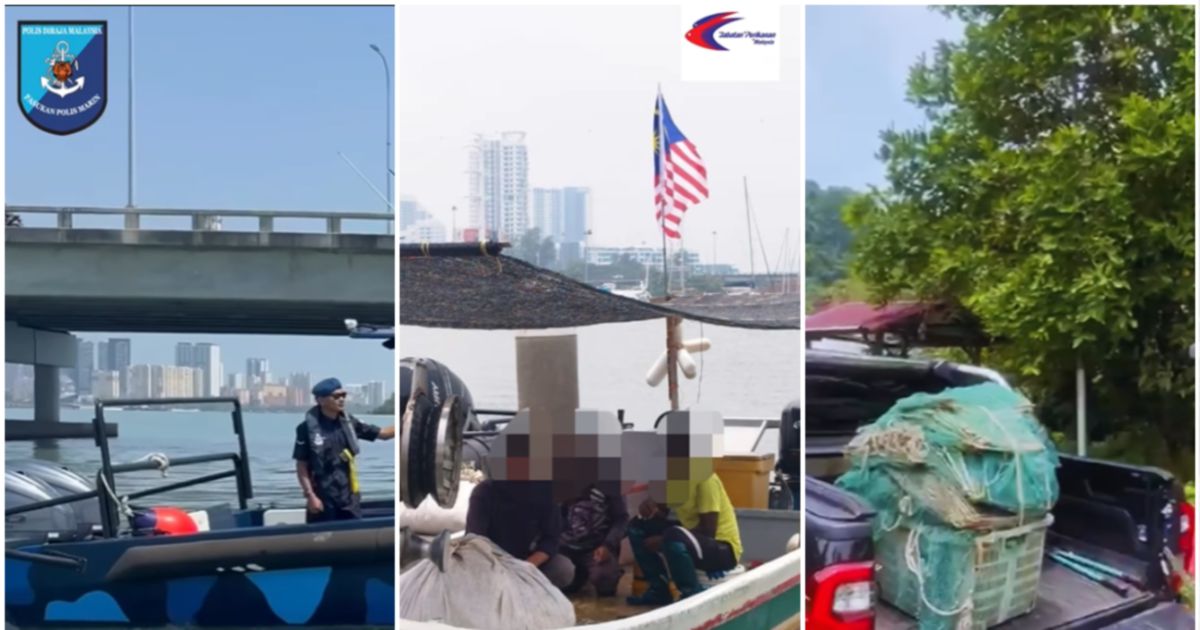
A major enforcement operation targeting illicit fishing activities has resulted in the arrest of three men in Penang waters, with authorities seizing assets worth RM75,360 in the process. The coordinated action, which involved multiple government agencies, represents the latest move by maritime authorities to combat ongoing violations of fishing regulations in Malaysian territorial waters.
The operation, conducted yesterday in the waters surrounding Penang, demonstrates the continued pressure being applied by enforcement bodies against illegal and unregulated fishing practices that threaten the sustainability of marine resources in the region. The confiscated materials included not only fishing implements and equipment but also the fishing vessel itself, suggesting a more substantial operation than routine violations typically encountered by patrols.
Inter-agency cooperation has become an increasingly important feature of Malaysia's maritime enforcement strategy. The joint operation structure adopted here reflects the recognition among federal and state authorities that combating organised fishing violations requires coordinated intelligence and simultaneous action across multiple jurisdictions. Such collaborative approaches are designed to prevent suspects from being tipped off and allowing vessels or equipment to escape before seizure.
Penang's strategic location at the intersection of major shipping routes and rich fishing grounds makes the state a consistent focus for maritime enforcement operations. The waters surrounding the island have historically been vulnerable to incursions by fishing vessels engaged in practices that violate local regulations, including the use of prohibited methods, operation within restricted zones, or failure to comply with licensing requirements.
The scale of assets seized in this operation—totalling RM75,360—indicates that the authorities were targeting more than casual fishing violations. The inclusion of the vessel itself in the seizure suggests the suspects were operating with some degree of sophistication and investment in their fishing activities, which may indicate connections to larger networks engaged in systematic resource extraction.
For Malaysian readers and businesses in the fishing industry, such enforcement actions carry important implications. Legitimate fishing operators depend on effective regulation to prevent their markets from being undermined by illegal competitors operating without compliance costs or licensing fees. The crackdown helps level the playing field, though enforcement alone cannot address the broader challenge of monitoring vast stretches of maritime territory.
The capture of three individuals provides authorities with an opportunity to gather intelligence about broader patterns of illegal fishing activity in the region. Interrogations of those arrested often reveal details about supply chains, market contacts, and the coordination methods used by fishing syndicates—information that can lead to more strategic future enforcement operations.
From a regional perspective, enforcement actions in Penang waters contribute to broader Southeast Asian efforts to combat illegal, unreported, and unregulated (IUU) fishing. The Association of Southeast Asian Nations has identified this as a critical challenge, with estimates suggesting that billions of dollars' worth of fish are harvested illegally across the region annually. Malaysia's internal enforcement efforts align with international commitments to sustainable fisheries management.
The environmental dimension of this crackdown should not be overlooked. Indiscriminate or illegal fishing methods often result in damage to marine ecosystems, including bycatch of protected species and destruction of seafloor habitats. By removing such operations from the water, enforcement teams contribute to the long-term sustainability of fish stocks that support both commercial and artisanal fisheries throughout the region.
The sentencing and prosecution of the three detained men will likely follow established legal procedures, with charges related to fishing without proper licensing, use of prohibited methods, or violation of marine protection orders being possible. The severity of sentences typically reflects both the value of confiscated materials and the intent demonstrated by the operation's scale and sophistication.
For the broader fishing community in Penang and throughout Malaysia, such operations send a clear message about government commitment to maritime law enforcement. However, observers note that the challenge of monitoring thousands of square kilometres of territorial waters remains formidable, and enforcement actions represent just one component of a comprehensive strategy that must also include port state control measures, licensing system improvements, and international cooperation.
The seizure of the vessel and equipment itself removes tools of illegal fishing from circulation, preventing their potential reuse in further violations. Depending on legal procedures, such confiscated materials are either destroyed, sold at government auction, or retained for use by enforcement agencies themselves, representing a practical consequence for those caught operating outside regulatory frameworks.

