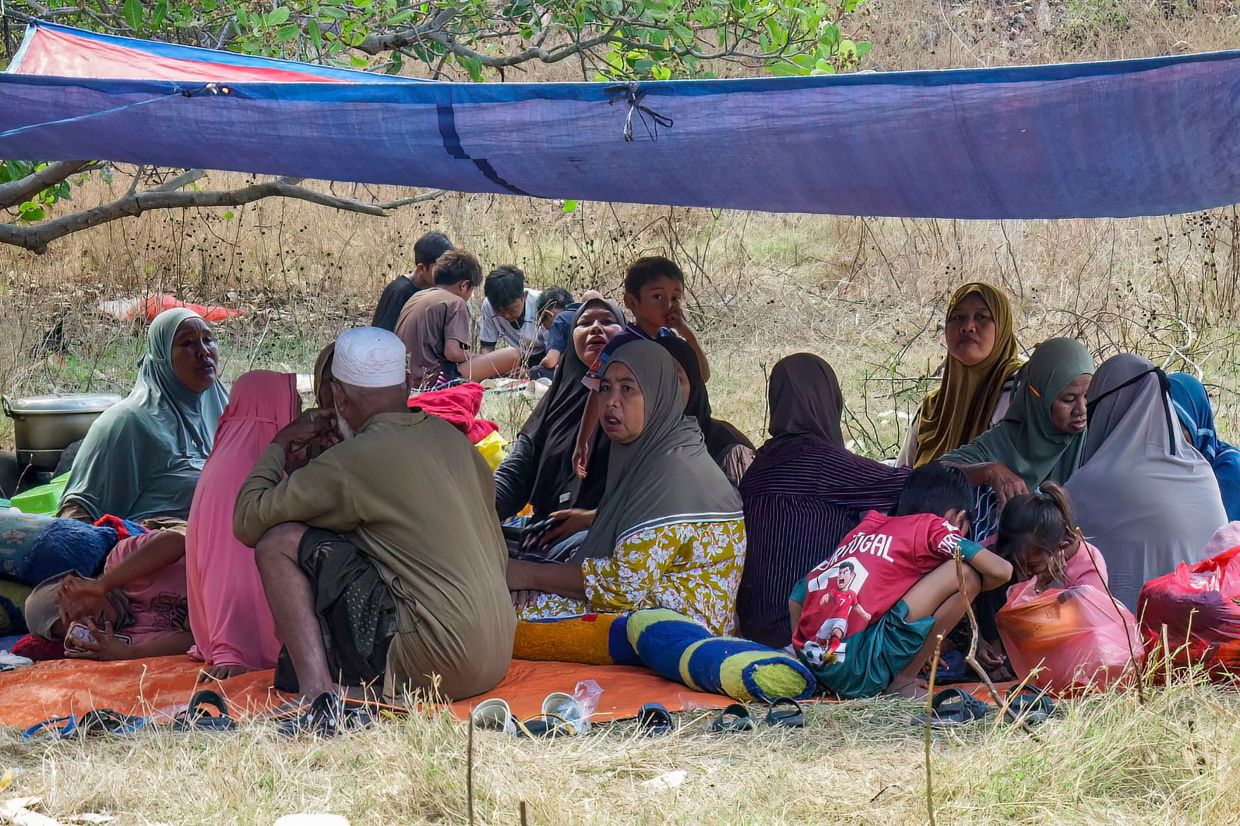
More than 5,000 people found themselves homeless on Sunday following a devastating 7.7-magnitude earthquake that struck Flores island in Indonesia's eastern reaches the previous day, claiming 48 lives and injuring at least 101 others. The initial tremor was followed by a relentless sequence of 341 aftershocks, creating an environment of persistent terror that kept survivors from returning to their damaged homes. Officials from the national disaster agency BNPB confirmed the scale of displacement, with entire communities forced to abandon their residences and seek higher ground as a precautionary measure against potential tsunami threats.
The earthquake's impact on critical infrastructure has compounded the humanitarian crisis. Power networks and telecommunications systems have been crippled across significant portions of the affected region, leaving survivors isolated and unable to contact relatives or coordinate assistance efforts. At least one major emergency access road remains impassable due to earthquake damage, severely hampering the delivery of supplies to the most vulnerable populations. These infrastructure failures represent a particularly acute challenge for a relatively remote island community that already faces geographic constraints in accessing rapid emergency support.
The human cost extends far beyond the immediate casualty figures. In Nangahale village on Flores's northern coast, residents like Umri have been camping on hilltops for extended periods, reluctant to descend despite the physical hardship. Speaking to journalists on Sunday morning, Umri articulated the desperation of those displaced, listing the critical shortages confronting the survivor population: "We need food, drink, medicines, and diapers for the children." This inventory of urgent needs reflects the basic survival requirements of thousands living in makeshift conditions without access to essential supplies or basic sanitation.
The psychological toll on survivors reflects deep historical trauma. Nurhidayati, a 55-year-old resident sheltering with others on the same hillside, described spending the night on a simple mat while consumed by fear and painful memories. She explicitly connected her current distress to the catastrophic 1992 earthquake that had previously struck Flores, killing approximately 2,500 people and triggering a destructive tsunami. Her declaration—"I'm still terrified; my heart is pounding hard remembering yesterday's tremor... I'm very scared now, still traumatised by the quake in 1992. I don't dare to go home"—captures how past disasters create lasting psychological vulnerability in earthquake-prone communities. For residents who lived through or inherited memories of that earlier devastation, the resurgence of seismic activity revives profound anxieties about survival and loss.
Material destruction across the affected region has been extensive and comprehensive. The BNPB reported that at least 914 residential structures sustained severe damage, with hundreds more experiencing varying degrees of harm. Beyond individual homes, critical public facilities have suffered substantial damage: 93 educational institutions were affected, disrupting schooling for thousands of children; 36 health facilities were damaged or destroyed, compromising medical access during a humanitarian crisis; and 38 government offices were impacted, potentially affecting administrative capacity to coordinate relief efforts. This distributed pattern of destruction indicates that the earthquake's force was broadly distributed rather than concentrated, suggesting widespread rather than localised rebuilding challenges.
The shallow character of the earthquake contributed to its widespread destructive power. Geological authorities identified the epicentre just off the northern coast of Flores, with the quake originating at a relatively shallow depth—a characteristic that typically amplifies ground shaking and surface damage compared to deeper seismic events. The affected communities have relatively low-rise building stock, meaning that structural collapse, while sometimes survivable for single-storey structures, typically resulted in complete destruction rather than partial damage that permits repair. This architectural reality means reconstruction will require substantial resources rather than incremental repairs.
Government response mechanisms have begun mobilising, though the scale of need appears to exceed initial response capacity. The East Nusa Tenggara provincial administration initiated procedures to establish formal emergency response status for a fourteen-day period, enabling access to extraordinary administrative and financial authorities necessary for large-scale disaster relief. The central government dispatched 50,000 aid packages totalling 275 tonnes to the disaster zone, demonstrating a rapid logistical response. However, officials and survivors indicated that immediate needs—emergency tents, potable water, medical supplies, blankets, and electricity generation capacity—significantly exceed what has been deployed thus far. The International Federation of Red Cross and Red Crescent Societies announced preparations to establish temporary shelters and coordinate humanitarian assistance through its network.
International support has been offered and mobilised. European Union Commission President Ursula von der Leyen announced that the bloc would deploy its Copernicus Earth observation satellite system to support search and rescue operations, providing aerial reconnaissance capabilities that could assist in locating survivors, mapping damage distribution, and identifying optimal routes for humanitarian supply delivery. This gesture represents recognition that earthquake disasters in strategically important Southeast Asian nations warrant coordinated international response and that technological capabilities available to developed economies can meaningfully support relief efforts in affected regions.
The tsunami dimension of the crisis, while ultimately avoided, initially intensified panic and displaced additional thousands. Following the main earthquake, coastal residents observed the ocean receding—a well-recognised harbinger of potential tsunami generation. This triggered immediate flight from low-lying areas to elevated terrain, adding to the displacement burden. The BMKG geological agency reported wave heights of up to 1.6 metres in some coastal regions, sufficient to cause damage to boats and waterfront structures though not generating the catastrophic inundation that characterised the 2004 Indian Ocean tsunami. A formal tsunami warning was subsequently lifted, but authorities have counselled residents against immediately reoccupying damaged structures, fearing that ongoing aftershocks could destabilise weakened buildings and trigger secondary collapses.
Flores's vulnerability reflects Indonesia's inexorable position within the Pacific Ring of Fire, an arc of extreme seismic activity encompassing the Japan Trench through Southeast Asia and across the Pacific basin. This geographic reality means that Indonesia as a nation experiences frequent earthquake events, ranging from minor tremors to catastrophic events. The 1992 Flores earthquake that haunts current survivors' memories demonstrated the region's capacity for generating major seismic events and associated tsunami hazards. Even more starkly, the 2004 Sumatra-Andaman earthquake, which measured 9.1 in magnitude, generated a tsunami that claimed approximately 220,000 lives across the Indian Ocean region, with roughly 170,000 fatalities in Indonesia alone. That event remains among the deadliest natural disasters in recorded history and shaped modern understanding of tsunami risk in Indian Ocean communities.
For Malaysia and other Southeast Asian nations, the Flores earthquake carries implications for disaster preparedness and regional coordination. The event underscores the geological volatility affecting the entire region and the importance of maintaining robust early warning systems, evacuation protocols, and regional mutual aid arrangements. Malaysian disaster management authorities monitor such events carefully as benchmarks for evaluating their own preparedness frameworks. The international response—particularly the EU's offer of satellite-based reconnaissance—illustrates how technological capabilities can enhance response efficacy, a consideration relevant for all regional nations. Additionally, the psychological and institutional challenges evident in Flores—where historical trauma influences current response and where infrastructure damage complicates relief delivery—represent generic challenges that transcend national boundaries and warrant regional attention to shared vulnerabilities and collective preparedness enhancement.

