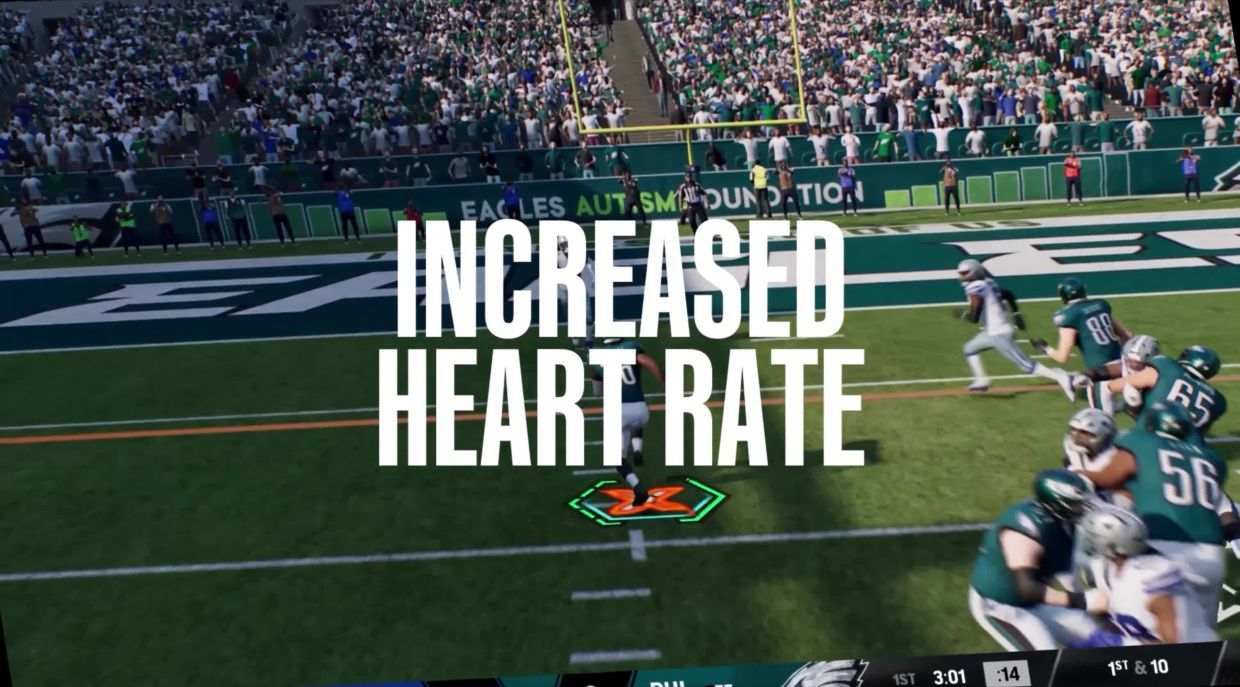
In Madden NFL, when a linebacker crushes a running back during a routine play and the player's head impacts the ground with force, the action continues seamlessly on screen. The virtual athlete rises and returns to the field as if nothing happened. But for a growing number of players using a free community-created modification, that moment tells a very different story—one marked by blurred vision, sensitivity to light, nausea, disorienting audio distortions, and the screen shaking violently to simulate the disorientation of a genuine concussion.
This simple yet powerful mod, consisting of 9,000 lines of code, represents a direct challenge to Electronic Arts and the National Football League over how the world's most popular American football simulation game portrays one of sport's most devastating injuries. By introducing gameplay mechanics that mirror the actual sensory experience of a concussed athlete, the modification forces players to confront the human cost of collisions that the official game has deliberately erased from its virtual field. The creators hope the experience will penetrate the consciousness of millions of gamers who may never encounter serious educational material about brain injuries, reaching an audience far beyond traditional medical and athletic safety communities.
The absence of concussions from Madden has a clear historical arc tied to the NFL's own reckoning with head trauma. Throughout the 1990s and well into the 2010s, the game included various depictions of injuries. Players who suffered head trauma would be escorted away by ambulances; others would undergo what appeared to be concussion evaluations on the sideline. But as mounting evidence of chronic traumatic encephalopathy and long-term neurological damage became impossible to ignore—particularly after Hall of Fame linebacker Junior Seau's suicide and autopsy findings of CTE—both the league and the game's developers faced mounting pressure. The turning point came as the NFL confronted lawsuits from thousands of former players alleging the league had hidden dangers of brain injuries. By 2015, the league had already paid more than US$1.5 billion in claims, and the narrative was shifting. Concussions gradually vanished from Madden's programming, even as all other injuries remained, creating an uncomfortable paradox in a game designed to simulate authentic football experiences.
The NFL's licensing department continues to review Madden annually for "quality control," maintaining direct influence over game features through discussions with EA Sports. According to former league executives, conversations about concussion mechanics have taken place, with officials noting that head injuries should be depicted realistically if included at all. The complexity lies in the science itself: two players may absorb similar impacts to the head yet experience entirely different outcomes, making consistent simulation challenging. During the 2024 NFL season, 168 concussions were officially reported—a significant jump from 129 the previous year, attributed partly to rule changes encouraging more kick returns. The league's formal concussion protocol now mandates a blue tent on sidelines where players must undergo testing if they show any signs of possible head injury.
Chris Borland, a linebacker who retired from the NFL during his rookie season specifically due to concerns about long-term brain injury effects, has publicly acknowledged the mod's intention to raise awareness. Yet he notes a fundamental limitation: experiencing distorted graphics on a couch cannot replicate the genuine neurological damage an athlete sustains. "It's really realism up to a point," Borland said, questioning whether the game could truly capture the lived experience of post-concussion syndrome, including cognitive issues like irritability that damage relationships. The distinction matters because video games shape expectations and normalize behaviors for young players who aspire to professional careers.
Ben Utecht, who retired from the NFL in 2010 due to concussion concerns, has articulated the league's underlying motivation for removing head injuries from Madden: maintaining the sport's appeal to parents and children. From the NFL's perspective, emphasizing the serious neurological risks in the game's depiction could discourage youth participation and parental support—concerns that directly conflict with the league's business model. Yet Utecht has also pointed out a logical inconsistency: if Madden includes other injuries that players must manage—ankle sprains, knee damage, and other conditions that require risk-benefit decisions—then excluding concussions specifically sends a problematic message about their relative importance. The selective erasure implies concussions are either less concerning than other injuries or so politically sensitive that they warrant special treatment.
The mod's creators are driven by personal tragedy as much as principle. Kristen Thomson Sheely, executive director of the Derek Sheely Foundation, knew firsthand how deeply Madden penetrated youth culture because her son was an avid player. Derek Sheely was a fullback at Frostburg State University in Maryland when he complained of a headache during practice after an apparent head injury. Despite his symptoms and concerns, coaching staff dismissed his complaint and sent him back onto the field for a 7-on-7 drill. During that drill, Sheely collided with a defensive back, walked off the sideline, and then collapsed within minutes, never regaining consciousness. He died at age 22. The family ultimately reached a US$1.2 million settlement with the NCAA and Frostburg State, which retired his number 40 and displays it permanently on campus.
The Derek Sheely Foundation now sees the Madden mod as a vehicle for reaching audiences that would never voluntarily engage with educational materials about concussions. When players complete a game using the modification, a banner unfurls displaying Sheely's retired jersey number 40—a moment of remembrance embedded in entertainment. This approach transforms casual gaming into a platform for public health advocacy, potentially influencing how an entire generation understands brain injuries in sports. Rather than lecturing young players, the mod teaches through experience, letting them feel even a fraction of the disorientation that could signal genuine damage.
The broader tension between realism and responsibility in sports entertainment extends far beyond video games. Major professional sports leagues have increasingly come under scrutiny for how they balance transparency about injury risks with promotion of their products. The Madden franchise, which generates hundreds of millions in annual revenue, occupies a unique position where it can either reinforce the NFL's preferred narrative—that the sport has adequately addressed safety concerns—or challenge that narrative by depicting injuries with unflinching accuracy. The current official game chooses the former path, omitting concussions from gameplay mechanics while preserving all other medical setbacks.
EA Sports declined to comment on the mod or its concussion mechanics, a silence that reflects the broader reluctance of major entertainment properties to engage substantively with player safety criticisms. The company faces genuine pressure from multiple directions: the NFL as a licensing partner prefers the current approach, players and families demand recognition of genuine risks, and the gaming community itself increasingly expects both artistic authenticity and ethical responsibility. The mod exists precisely because this middle ground feels untenable to those who view concussion awareness as essential public health education.
Modifications have long constituted a vital component of gaming culture, allowing communities to express creative and political perspectives that official developers cannot or will not address. College football fans have downloaded decade-old games featuring updated rosters; role-playing game enthusiasts modify everything from character creation to inventory systems. The concussion mod represents this same tradition of community-driven enhancement, yet with specific stakes: it channels grief and advocacy into a medium consumed by millions of young people annually. Whether it ultimately influences broader industry standards remains uncertain, but its very existence demonstrates that authentic representation of football's true cost—to the brain, to families, to futures—matters enough to people that they will invest significant technical effort to insert it into entertainment products designed to omit it.

