In a quiet moment during a hectic afternoon at a hospital in northwestern England, a simple act of kindness—a colleague offering to peel a mandarin orange—triggered a profound realisation about the human condition. The gesture transported a Malaysian doctor working abroad back through decades of memory, illuminating how food has always served as the primary currency of affection and belonging within Malaysian households and communities. What initially seemed like a universal moment of care unveiled itself as something both deeply personal and remarkably cross-cultural, challenging assumptions about whether certain expressions of love are uniquely tied to any single nation or whether they form part of humanity's shared emotional vocabulary.
The everyday rituals surrounding food within Malaysian family life often go unexamined until distance forces reflection. Growing up, this doctor experienced what many Malaysian children take for granted: the patient peeling of fruits by grandmother and mother, the careful preparation of favourite dishes, and the unspoken understanding that to feed someone is to demonstrate profound care. These acts were not performed out of obligation but emerged naturally from a cultural framework where nourishment carries meaning beyond mere sustenance. A grandmother who hand-fed a stubborn, book-obsessed child for years well into adolescence was not simply ensuring adequate nutrition; she was communicating acceptance of the child's quirks and unconditional support for their individuality.
Personal food preferences within Malaysian families become touchstones of identity and connection. The blue packets of Hup Seng Teddy biscuits, a childhood staple, continue to arrive whenever the doctor returns home, decades later. This ritual of purchasing a specific brand year after year demonstrates how mothers encode love into small, consistent gestures—even when those gestures might seem forgetful or imperfect on the surface. Similarly, the mother's persistent confusion about which crisp flavour her child preferred becomes endearing in retrospect, revealing the gap between intention and memory that characterises familial relationships. Yet despite this occasional muddiness of detail, the underlying commitment remains crystal clear: the act of buying something specifically for a child, regardless of minor errors, constitutes a form of devotion.
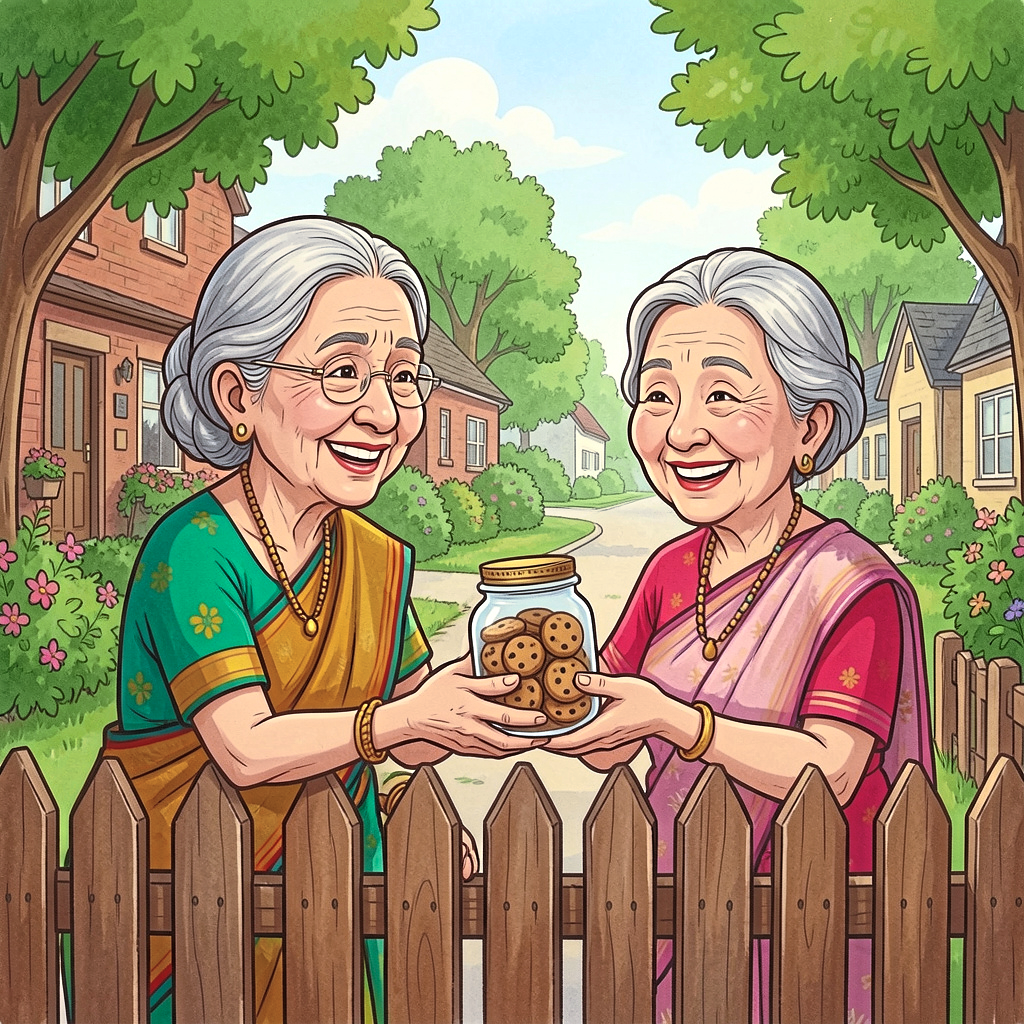
Intercultural neighbourhoods and multi-ethnic communities have historically used food as a bridge for building and maintaining relationships across religious and cultural boundaries. The Deepavali chicken curry with extra potatoes, prepared specifically because an aunt knew her niece's preferences, exemplifies how Malaysian families customise their cooking to honour individual family members. The annual appearance of a colleague's chocolate moist cake on the doorstep during Deepavali season, unprompted and expected, created an anticipatory joy that became woven into festive memory. These are not casual gestures but rather commitments that reshape how families understand their place within community networks. The reciprocity embedded in these exchanges—cookies returned, mandarin oranges offered, containers sent back full rather than empty—creates bonds that transcend formal relationships.
The enduring nature of these food-based rituals speaks to something fundamental about how humans mark time and belonging. A retired colleague from decades past still appears at the door every Chinese New Year with mandarin oranges, while the doctor's mother, herself retired for eight years, continues the counter-ritual of delivering cookies. Neither person requires this cyclical exchange; neither would suffer materially from its cessation. Yet both continue because these actions communicate that connection persists, that relationships formed years earlier retain meaning, and that community is something actively maintained rather than passively inherited. The regularity of these rituals creates a temporal anchor, a way of marking seasons and years not through calendars but through the appearance and reappearance of specific foods.
The figure of the long-time neighbour who prepared sweet upma and onion cucur throughout the doctor's childhood represents a particular kind of cross-generational care that has become increasingly rare in contemporary urban life. Over fifty years of proximity created an intimacy where checking on neighbours through food was automatic and expected. The neighbour did not announce her intentions or seek gratitude; she simply appeared with offerings that reflected detailed knowledge of family preferences. This demonstrates how in traditional Malaysian communities, private family life and public neighbourhood life existed on a spectrum rather than in opposition. The stroke that eventually silenced her kitchen and the move away from the neighbourhood mark not the end of this relationship but rather the preservation of it in memory—shaped primarily by the taste of her sweet upma, the dish that best captured who she was and how she expressed her place in the community.
Working far from Malaysia, the doctor has gradually come to understand that while the specific manifestations of care through food may vary across cultures, the fundamental impulse appears universal. The English colleague's instinctive offer to peel fruit for a hungry colleague mirrors the peeling of mandarins by Malaysian mothers and grandmothers. Both communicate the same essential message: your comfort and nourishment matter to me enough that I will expend my own effort. This realisation dissolves the assumption that Malaysian expressions of care through food represent a localised, culturally specific phenomenon. Instead, they constitute variations on a theme that runs through human societies—the conversion of time, attention, and labour into edible form as a primary language of affection.
The implications of understanding food as a universal human language of care extend beyond nostalgic reflection about family dynamics. In contemporary Malaysia, where rapid urbanisation, changing work patterns, and smaller family units are transforming how people interact, the maintenance of food-based rituals becomes a conscious choice rather than an automatic inheritance. Young Malaysians living in cities, working demanding jobs, or maintaining long-distance relationships face genuine logistical challenges in preserving these traditions. Yet the persistence of bringing food to gatherings, the continued expectation that important occasions be marked by special meals, and the way food preferences remain encoded in family memory suggests that this language is not disappearing but rather adapting. The ritual of sending home-cooked meals to relatives abroad, the careful packing of local delicacies for friends working in distant cities, and the maintenance of favourite recipes across generations all represent contemporary expressions of enduring impulses.
The significance of these observations for Malaysian society lies partly in recognising what is being maintained and what is being lost as lifestyles change. The casual, frequent dropping-by with food dishes that characterised mid-twentieth-century neighbourhood life has largely vanished, replaced by more scheduled and structured sharing. Yet the underlying desire to express care through food persists, manifesting in different forms—the carefully curated care packages sent overseas, the favourite foods prepared specifically for returning family members, the ethnic cuisines that link diaspora communities to heritage. Understanding food as a primary language of care rather than merely a practical necessity helps explain why Malaysian families invest such emotional significance in cooking, why food preferences function as markers of identity and belonging, and why the loss of someone's presence is often first registered as the absence of their particular dishes.
The doctor's experience also illuminates how migration and distance can sharpen awareness of cultural inheritance. Living in England, preparing Malaysian food becomes a loaded activity, freighted with homesickness and intentionality. The taste of familiar dishes triggers not just nostalgia but a sense of continuity with family and community stretching back decades. For second-generation Malaysians abroad, learning family recipes represents a form of cultural maintenance that would seem unnecessary if they still lived in proximity to grandmothers and aunts. The mandarin oranges offered by the English colleague, while kind, lack the accumulated meaning that attaches to the same fruit when offered by a Malaysian mother—the gesture is identical, but the context transforms its significance. This gap between universal human impulses and culturally specific meanings is crucial to understand when considering how traditions persist and evolve across generations and geographies.
Ultimately, the realisation that food constitutes a fundamental human language transforms how one understands both personal history and present relationships. The Malaysian doctor's childhood was saturated with this language spoken fluently by multiple speakers—grandmothers, mothers, aunts, neighbours—each with their own vocabulary of dishes and gestures. The accumulation of these small acts of care created a sense of being held and valued that shaped fundamental assumptions about belonging. Now, working abroad and encountering this same language spoken with different accent and vocabulary, the universality becomes apparent. Yet rather than erasing the distinctiveness of Malaysian expressions, recognising the universal impulse deepens appreciation for how particular communities have developed rich, nuanced ways of speaking it. The challenge for contemporary Malaysia lies in preserving these languages of care—adapting them to modern realities while maintaining the consciousness that feeding others is never merely functional but always, at its heart, an act of love.

