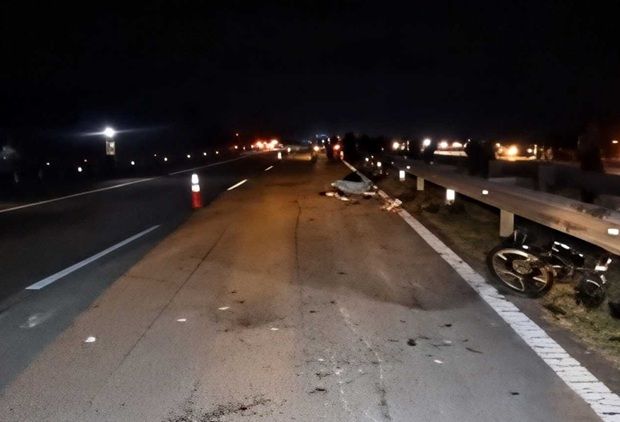
A Saturday morning collision on the East Coast Expressway left a trail of devastation that extended far beyond the initial tragedy. The crash, occurring around 1am, killed three victims at the scene and claimed a fourth life in hospital, while 13 others sustained injuries. Yet behind the immediate shock and the inevitable rush to assign blame through social media channels lay a profound human cost that demanded careful reflection: eight children, ranging in age from one to thirteen years old, had suddenly lost their fathers and the economic anchors holding their families together.
The natural instinct following such disasters is to scrutinise the circumstances and identify culpability. Questions about reckless riding behaviour and negligence dominate public discourse, and rightfully so—dangerous conduct that endangers others must face legal consequences. However, this legitimate focus on accountability can overshadow a deeper responsibility that society owes to the collateral victims of tragedy: the mothers left to raise children alone and the youngsters themselves, who bear no responsibility for the misfortune that has befallen them.
For these eight children, the immediate challenges are brutally concrete. Their mothers now shoulder the burden of single parenthood while managing financial obligations that were previously shared. Milk powder and nappies for the youngest, school uniforms and textbooks for those approaching adolescence, rental payments that cannot be deferred, and healthcare expenses all demand money that no longer flows from the lost breadwinner's wages. As the children grow, education costs will accumulate, and their mothers must somehow provide not merely survival but the foundation for stable, healthy development during their formative years.
This scenario crystallises the essential purpose of social security systems, a concept often misunderstood or undervalued in Malaysian society. Social security is not charity extended to the perpetually unfortunate, nor is it a temporary subsidy for those facing short-term hardship. Rather, it represents a profound social contract rooted in solidarity—a collective agreement that those spared by misfortune extend protection to those devastated by circumstances beyond their control. The healthy support the sick; those who retain their ability to work assist those whose capacity has been diminished; and society ensures that families torn apart by tragedy do not spiral into poverty as a secondary consequence of loss.
In the case of this expressway collision, the Social Security Organisation (PERKESO) translated this principle into concrete financial support for three of the four deceased workers' families. The late Che Mohd Suffian Che Gani's family became eligible for a monthly Survivors' Pension of RM2,207.63, distributed as a lifelong pension to his widow and supplementary payments to his dependants. Similarly, the families of the late Muhammad Hafiz Al Hakim Mazlan and the late Mohd Aizat Husni qualified for RM1,258.33 and RM708.33 monthly respectively. The widows themselves receive permanent pensions—RM1,325, RM755, and RM425 per month—while the collective eight children share an additional RM1,670 monthly allocation.
When these figures are extended across their full duration, the financial reality becomes striking. The three widows' lifetime pensions, calculated conservatively over thirty years, represent a combined value exceeding RM901,800. The children's collective monthly allocation of RM1,670, distributed over the fifteen years until they reach adulthood, totals RM300,600. Together, PERKESO's commitment to these families transcends RM1.2 million in long-term support—a demonstration that the contributions these workers made throughout their employed lives now flow back to shield their dependants from destitution.
Many workers view their mandatory social security contributions as modest deductions from their monthly payslips, barely noticed in the press of daily financial obligations. Yet this tragedy illustrates the profound value embedded in those seemingly small amounts. The contributions made by these workers during years of health and stable employment transform into a continuous protective stream precisely when families face their greatest vulnerability. This is not temporary relief to bridge a crisis; it is an institutional commitment to prevent the secondary tragedy of a family's descent into poverty following the primary tragedy of a breadwinner's death.
Yet the story does not end with the three deceased workers whose contribution records qualified their families for established benefit schemes. Five of the thirteen injured victims sustained injuries serious enough to potentially disable them from work, and for these individuals, a relatively recent policy development changed their prospects entirely. Before June 1, these crash victims might simply have joined the unfortunate cohort of applicants whose claims PERKESO was legally unable to approve, leaving them to navigate disability and lost earning capacity without institutional support. Instead, the introduction of Lindung 24 Jam—a scheme designed to extend coverage beyond traditional contribution-based frameworks—provided access to benefits that would otherwise have remained unavailable.
The expansion represented by Lindung 24 Jam reflects a maturing understanding of social security's proper scope. Traditional contribution-based systems necessarily limit themselves to workers with sufficient contribution histories, creating gaps where accidents claim workers with partial contribution records or those in informal employment. A twenty-four-hour accident coverage scheme acknowledges that the principle of social solidarity cannot depend entirely on bureaucratic calculations of past contributions; it must extend to those whose need is greatest and whose vulnerability is most immediate.
For Malaysian society, this tragedy and the social security response it triggered offers several critical lessons. First, understanding social security as a collective responsibility rather than individual benefit fundamentally reframes how we discuss these systems in public discourse. When another motorcycle accident generates fierce debate about rider behaviour—debate that is entirely appropriate—it need not displace concern for the families economic survival becomes secondary to questions of blame. Both considerations matter, and both demand attention.
Second, the substantial sums involved in supporting affected families demonstrate that these systems represent genuine long-term commitments, not bureaucratic gestures. Over RM1.2 million in support across one family cluster, extended across decades, represents a significant institutional undertaking that depends on the ongoing contributions of current workers. The system functions only through this intergenerational transfer: those currently working support those no longer able to work, understanding that they too may eventually depend on similar protection.
Third, recent expansions like Lindung 24 Jam address genuine gaps in coverage that left vulnerable individuals without protection. The fact that injured workers from this very crash could access benefits under the new scheme, whereas their counterparts in accidents occurring weeks earlier might have been denied coverage, illustrates how policy refinement directly improves protection for those facing disasters.
The East Coast Expressway tragedy will likely fade from news cycles and social media feeds within weeks, replaced by other incidents and controversies. Yet for eight children and their mothers, the consequences will extend across decades. The social security system's response—however quietly executed compared to the initial sensational reporting—represents the quiet, steady work of institutional protection that prevents personal catastrophe from metastasising into family destitution. Understanding and valuing this function, rather than belittling it as mere welfare bureaucracy, reflects a mature society's commitment to collective responsibility.

