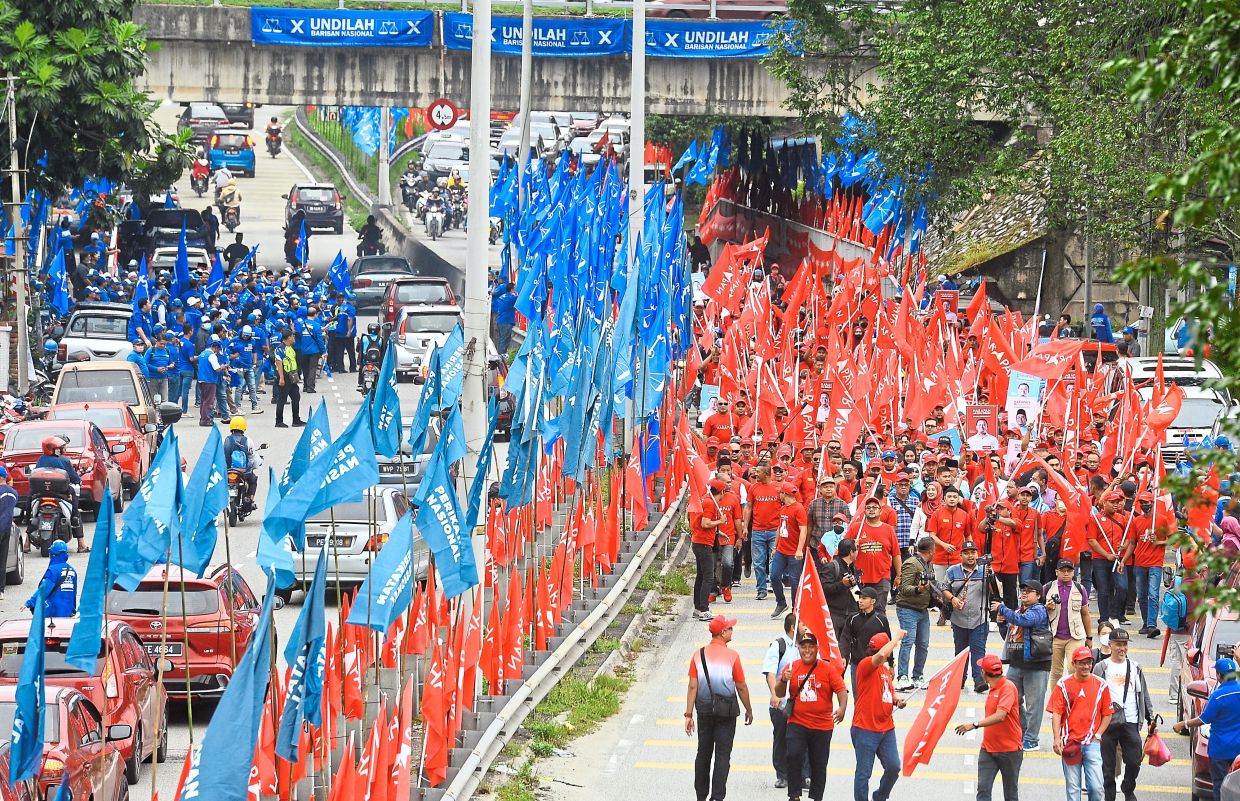
The approaching state elections in Johor and Negri Sembilan promise to unleash considerable emotional upheaval across Malaysia's political landscape, affecting not only the politicians vying for nomination and office but also the broader electorate watching these contests unfold. For candidates themselves, the electoral cycle represents a period of acute psychological strain, beginning long before voting day arrives. Those awaiting nomination decisions face an extended period of uncertainty, wondering whether party leadership will select them to represent their constituencies. This preliminary anxiety, rooted in career and reputational concerns, establishes an unsettling emotional baseline from which further pressures accumulate.
For politicians who have secured nomination, a different but equally potent form of stress emerges. Sitting legislators and established figures confront the genuine prospect of electoral defeat, a possibility that carries profound consequences beyond simple loss of office. Rejection at the ballot box threatens not only immediate income and institutional power but also long-term political viability and personal standing within their communities. The psychological weight intensifies for those with decades of political investment, where losing an election can feel like a catastrophic dismantling of carefully constructed careers and influence networks. This existential dimension of electoral competition distinguishes political stress from ordinary workplace anxiety, as the stakes involve identity, legacy, and future opportunity.
The campaign period itself compounds these pressures through physical and mental exhaustion. Politicians endure disrupted sleep patterns, chronic fatigue, and heightened irritability as they balance constituency engagement with media appearances and party obligations. Yet beyond these self-inflicted campaign rigours lies a more insidious threat: the proliferation of unverified claims and character assassination circulating across social media platforms. These digitally amplified narratives, often deliberately designed to damage reputations, create an environment where politicians must simultaneously defend their records while contending with false allegations and manipulated information. The psychological burden of fighting invisible and unsubstantiated attacks represents a modern dimension of electoral stress unknown to previous generations of candidates.
However, Malaysian politicians have historically demonstrated resilience in confronting these challenges, drawing strength from competitive instinct and determination even when circumstances appear disadvantageous. Their capacity to persevere through anxiety-inducing periods reflects both personality traits and years of political conditioning. Yet this resilience among candidates masks a broader phenomenon: election season amplifies stress across the entire voting population. Malaysians increasingly find themselves emotionally invested in electoral outcomes, a development that transforms elections from procedural civic exercises into high-stakes competitions where personal identity becomes intertwined with political affiliation.
For ordinary voters, the mounting stress stems from multiple reinforcing sources. Constant media coverage, workplace discussions, and social media debates create an inescapable electoral environment where political commentary penetrates nearly every space of daily life. Beneath this surface-level information saturation lies deeper anxiety about how electoral outcomes will reshape government policy, economic conditions, and social priorities. This uncertainty about future governance directly threatens financial security and personal wellbeing, particularly for vulnerable population segments. Voters also navigate increasingly fragmented political landscapes, where traditional party alignments have fractured into complex permutations and unexpected alliances, leaving many uncertain which party best represents their interests and values.
The polarization of contemporary Malaysian politics intensifies these tensions by transforming electoral competition into something resembling identity warfare. When political affiliation becomes a proxy for deeper identity categories—ethnicity, religion, class orientation, or generational positioning—political disagreement ceases to feel like rational debate over policy alternatives. Instead, it feels like personal rejection or cultural threat. Supporting the opposing candidate no longer represents a straightforward political choice but appears as betrayal of community, family values, or ethnic solidarity. This ideological hardening transforms election campaigns into emotionally charged periods where political differences generate genuine animosity, even among family members and friends.
The psychological consequences of this stress directly impact physical health through well-established biological mechanisms. Election anxiety triggers the autonomic nervous system, flooding the body with adrenaline and cortisol—stress hormones that served ancestral survival needs but prove damaging in prolonged modern contexts. Chronically elevated adrenaline increases cardiovascular risk, particularly stroke and heart attack, while sustained cortisol elevation disrupts metabolic function, suppresses immune response, and creates chronic inflammation. Additionally, the amygdala—the brain's emotional processing centre—becomes hyperactive during sustained periods of stress, causing disproportionate and irrational emotional responses to routine occurrences. These neurobiological consequences mean that election anxiety extends beyond emotional discomfort to constitute genuine medical risk for vulnerable populations.
International research documents this phenomenon across diverse democracies. British research during the 2019 general elections found that one in three people reported negative mental health impacts from perceived uncertainty about post-election policy changes. Similarly, American surveys conducted a year before the 2024 presidential elections revealed that 56 percent of adults identified the election as a significant life stressor. These findings from mature democracies suggest that Malaysia's experience with election anxiety likely mirrors global patterns, even without localised research documentation. The universality of election-induced stress across different political systems and cultural contexts suggests that the phenomenon reflects fundamental aspects of how humans process uncertainty and threat within competitive democratic environments.
Malaysian society has historically demonstrated a remarkable capacity to set aside electoral bitterness once voting concludes, with fierce political rivals and supporters seemingly able to resume normal social relations and community cooperation. This capacity for post-electoral reconciliation, though genuinely valuable, should not obscure the real costs incurred during campaign periods. The negativity, resentment, and hostility that permeate campaign seasons create measurable damage to social fabric and interpersonal relationships, with people becoming noticeably more reactive, irritable, and withdrawn. These behavioural changes persist throughout the election period and gradually diminish only after results are finalised and normal political rhythms resume.
Voters approaching the 2026 elections would benefit from acknowledging these psychological dynamics and implementing deliberate stress-reduction practices. Understanding that election anxiety represents a normal response to political uncertainty, rather than personal failing or character weakness, creates psychological permission to actively manage stress through exercise, meditation, limiting social media consumption, and maintaining relationships focused on topics beyond politics. Conscious separation of political disagreement from personal identity—recognising that supporting a different candidate does not constitute fundamental incompatibility—helps preserve social relationships through contentious campaign periods. Political leaders similarly bear responsibility for moderating campaign intensity and discouraging the most toxic forms of personal attack and misinformation.
Ultimately, the emotional dimensions of elections warrant serious attention alongside procedural and policy considerations. Malaysian voters exercising franchise in 2026 will bring various motivations to polling stations—gratitude toward incumbent representatives, commitment to civic participation, and carefully considered policy preferences developed through months of intellectual engagement. Yet many will also carry accumulated campaign stress, anxiety about political uncertainty, and anxious hopes for electoral outcomes aligned with their preferences. Acknowledging these emotional realities and creating conditions—both individual and societal—to manage them constructively represents an important dimension of democratic health that extends beyond simple vote counting and seat allocation.

