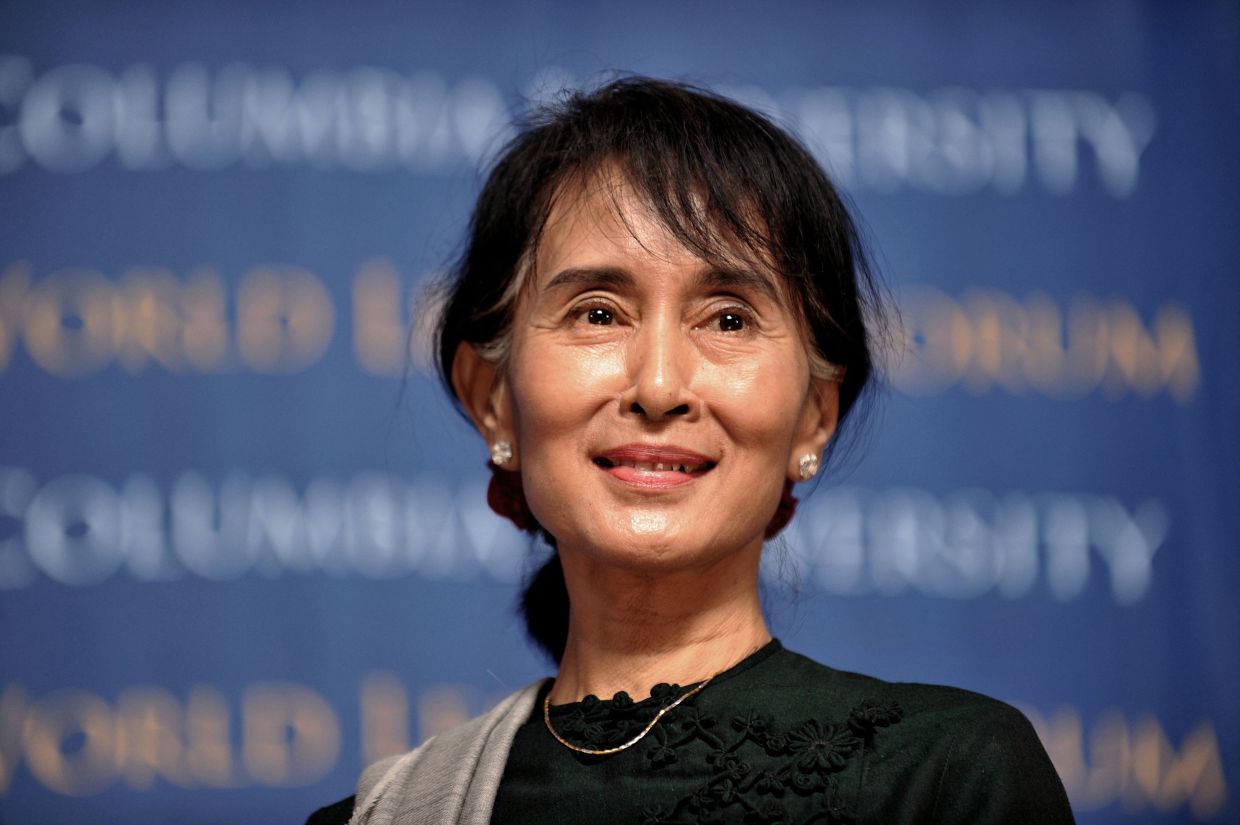
The whereabouts of Aung San Suu Kyi, Myanmar's deposed leader, has become one of the junta's most closely guarded secrets. According to military officials who orchestrated her removal from power, the 81-year-old independence icon is under house arrest somewhere in Naypyidaw, the country's purpose-built capital. Yet determining precisely where she is confined appears to be an impossible task, even for those within the government apparatus itself. This opacity reflects the deliberate design of a city constructed to serve the interests of Myanmar's rulers while remaining inscrutable to the outside world and its own inhabitants.
When Myanmar's coup leader Min Aung Hlaing announced Suu Kyi's transfer from a prison facility to house arrest in April, he framed the decision as a humanitarian gesture. The move coincided with his carefully choreographed transition from military ruler to civilian president, preceded by elections in January that were tightly restricted and stage-managed to ensure pro-military dominance. By releasing Suu Kyi from confinement and allowing her to be placed under house arrest instead, the junta sought to present itself as magnanimous and reform-minded, attempting to rehabilitate its international image after a decade of military rule and a controversial coup that triggered ongoing armed resistance and civil conflict across the country.
Critics and human rights observers, however, dismiss the gesture as little more than a public relations exercise designed to obscure the fundamental reality of Suu Kyi's captivity. They argue that the distinction between prison and house arrest is meaningless for a woman now confined to an undisclosed location within a city specifically engineered to prevent such transparency. At 81 years old, separated from her family and kept in complete isolation, Suu Kyi's circumstances have not materially improved. If anything, the secrecy surrounding her current detention may have intensified, with even the regime's own officials unable to reveal or perhaps even know her location.
Government spokespeople offer only evasive responses when questioned about Suu Kyi's whereabouts. Thein Tun Oo, a Member of Parliament and spokesman for the Union Solidarity and Development Party that won the January elections under junta supervision, admitted he has no knowledge of where Suu Kyi is being held. His statement that "not everyone can know her location" and his personal confession of ignorance highlight the compartmentalized nature of the detention, suggesting that information about her location is restricted to an extremely narrow circle within the military hierarchy. This deliberate withholding of information, even from government representatives, demonstrates how thoroughly Suu Kyi has been removed from public view and access.
The city of Naypyidaw itself is perfectly suited to maintaining such secrecy. Named "The Abode of Kings" when it was established as the capital in 2005 by former military ruler Than Shwe, Naypyidaw was built as a masterstroke of authoritarian urban planning. Located in Myanmar's geographical centre, deliberately distant from the cosmopolitan port city of Yangon and the secondary urban hub of Mandalay, the capital was conceived to insulate military leadership from potential popular uprisings and foreign interference. With a population of just one million inhabitants spread across a landmass nine times larger than New York City, Naypyidaw is a sprawling maze of anonymous compounds connected by vast, largely deserted highways that cut through jungle and agricultural land. The city feels simultaneously serene and unsettling, a place where security apparatus is omnipresent yet human activity appears scarce.
The architectural intentionality behind Naypyidaw's design speaks volumes about its purpose. Its parliament campus alone comprises 800 acres and ranks among the world's largest parliamentary complexes, an extraordinary allocation of space for a nation with a protracted history of authoritarian governance. Mobile internet jammers disrupt navigation applications, making it genuinely difficult for residents and visitors to navigate the city's monotonous expanse. Gangs of gardeners tend manicured lawns along highways that stretch endlessly toward the horizon, often outnumbering the handful of vehicles and pedestrians that occasionally venture out. Galen Pardee, an urban theorist and adjunct professor at Columbia University, has characterised the city as the antithesis of conventional urban design principles. Rather than creating vibrant, accessible public spaces that facilitate human connection and commerce, Naypyidaw embodies a political agenda of control and isolation, making it a kind of open-air prison for those compelled to reside there.
Ordinary residents of Naypyidaw testify to the disorienting quality of their environment. Young inhabitants report being genuinely confused about their own surroundings, unable to distinguish between neighbourhoods and streets because of the uniformity and scale of the city's design. When asked about Suu Kyi's location, one 25-year-old female resident, speaking on condition of anonymity for safety reasons, expressed both her concern for the detainee and her own bewilderment: "Everything looks the same to us. We are still confused by some roads. We do not know where she's kept." This sentiment reveals how Naypyidaw's disorienting geography serves as an effective tool for concealment, rendering not only state prisoners but also ordinary citizens perpetually lost within its confusing sprawl.
The security apparatus involved in Suu Kyi's detention appears equally confused or deliberately obscured. Police sources from two separate jurisdictions, speaking on condition of confidentiality, indicated that when her house arrest was announced, she had been transferred to areas that are out of bounds even to the police officers who normally exercise authority in those regions. One source's stunning admission—"Even generals do not have her information"—suggests that Suu Kyi's detention is compartmentalised at such a high level that even senior military officials lack access to knowledge about where she is being held. This arrangement ensures maximum security and absolute control while simultaneously rendering any potential rescue or political negotiation virtually impossible.
The historical context surrounding Suu Kyi's current predicament underscores the magnitude of her fall from power and influence. The daughter of Myanmar's independence hero Aung San, Suu Kyi spent much of her early life abroad before returning to Myanmar in 1988 to champion democratic governance and human rights. Her sustained activism, despite tremendous personal cost, earned her fifteen years of house arrest confined to her family's Yangon mansion, a period that paradoxically transformed her residence into a pilgrimage site for pro-democracy activists. She received the Nobel Peace Prize in 1991 in recognition of her courage and moral leadership. After decades of struggle, the military eventually permitted her to lead the government during a decade-long supposed transition toward democracy, only to overturn that transition with the 2021 coup that plunged the country back into military rule and sparked widespread armed resistance.
Since the coup, Suu Kyi has been prosecuted on charges that international human rights organisations characterise as fabricated and politically motivated. She has not appeared in public since her detention began, leading to widespread concern about her health and wellbeing. One villa in Naypyidaw where she had resided before assuming office has been demolished, erasing even that physical reminder of her previous status. Her son, Kim Aris, speaking by telephone from London, has rejected the regime's characterisation of her house arrest as a compassionate alternative. He argues that any house in which his mother is detained against her will constitutes merely another form of imprisonment, a private prison offering no genuine comfort, autonomy, or dignity. The distinction between prison and house arrest, in his assessment, is purely semantic and lacks any meaningful humanitarian significance.
The junta's presentation of elections in January and Suu Kyi's subsequent house arrest as evidence of democratic progress and reform rings hollow to international observers and Myanmar's suffering population. Min Aung Hlaing orchestrated polls that excluded Suu Kyi's National League for Democracy party, ensuring a walkover victory for the military-backed Union Solidarity and Development Party. The parliament in Naypyidaw still displays old magazines containing laudatory coverage of Suu Kyi from her time in office, a jarring reminder of her eclipse. Yet government parliamentarians now insist, as Aye Chan of the USDP stated bluntly, that "her era is over." This pronouncement reflects the junta's determination to erase Suu Kyi from Myanmar's political landscape, replacing her vision of democratic governance with sustained military control cloaked in the thin disguise of electoral legitimacy.
For Myanmar and the broader Southeast Asian region, Suu Kyi's invisible detention in Naypyidaw's labyrinthine sprawl represents a troubling turning point in the country's democratic trajectory. Her disappearance into the capital's secretive depths signals that the military has abandoned even the pretence of rule of law or international accountability. The fact that even government officials cannot or will not disclose her location demonstrates the junta's contempt for transparency and its absolute prioritisation of control. As Myanmar descends deeper into civil conflict and humanitarian crisis, Suu Kyi's physical invisibility becomes a metaphor for the broader erasure of democratic hopes and the consolidation of authoritarian power. The mystery of her whereabouts will persist as long as the junta maintains its stranglehold on Myanmar's future.

