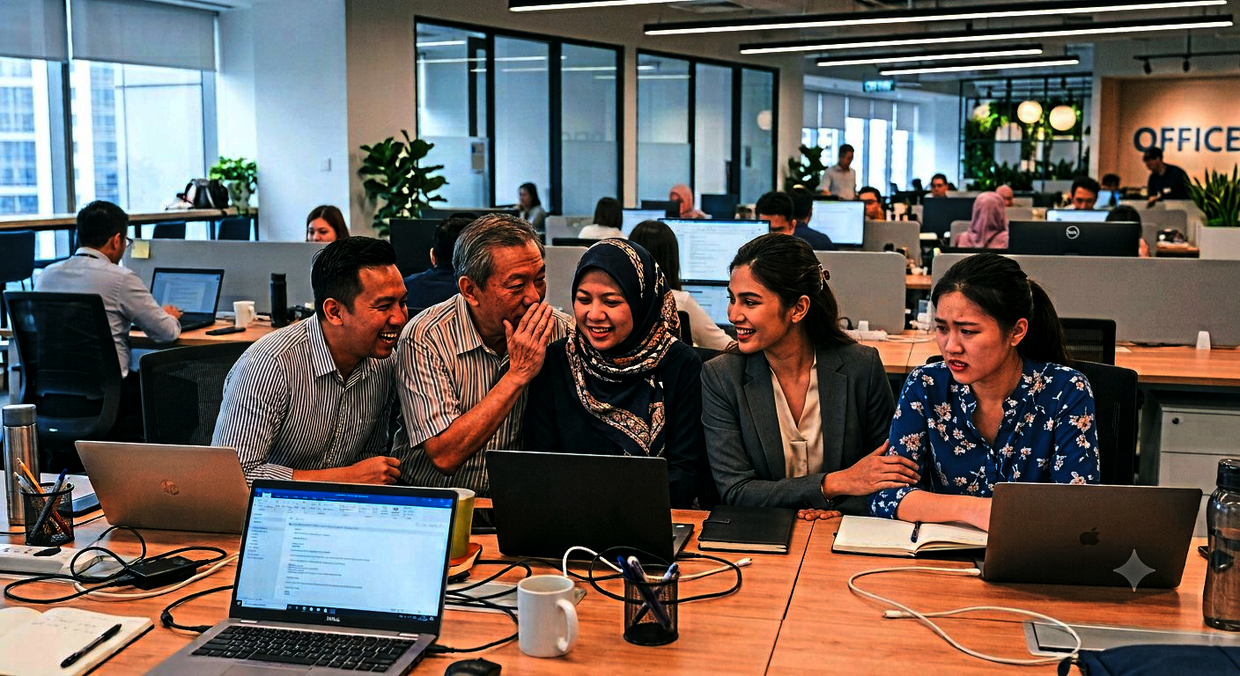
Casual remarks that spiral into character assassination, dinner table conversations that veer from disagreement into personal attacks, family chat groups that transform into echo chambers of complaint—most Malaysians recognise these patterns. What begins as innocent discussion often deteriorates into something more corrosive, leaving participants with an unexplained heaviness they carry long after the words have been spoken. The person being discussed is absent, yet somehow the conversation has ceased to be about solutions or understanding, instead becoming an exercise in collective judgment and condemnation.
The shift is subtle but consequential. What separates healthy dialogue from toxic exchange is neither the topics chosen nor the complexity of the disagreement, but rather the underlying intention and emotional tenor. Conversations that build understanding, even when contentious, leave people feeling seen and intellectually engaged. Toxic conversations—those designed to belittle, judge without curiosity, or inflame rather than illuminate—create a residue of anxiety that lingers far longer than the actual discussion. This distinction matters particularly in Malaysia's increasingly polarised social landscape, where WhatsApp groups, Facebook threads, and workplace chats have become primary venues for community discourse.
As Patron of the Malaysian Mental Health Association, opportunities arise to listen to the lived experiences of Malaysians struggling with anxiety, burnout, depression and isolation. Yet a pattern emerges that rarely dominates mental health conversations: the cumulative damage caused by habitually negative or corrosive dialogue. Mental health professionals typically address acute crises or diagnosable conditions, but the slow erosion of wellbeing through daily exposure to judgmental, gossipy or inflammatory speech operates in the shadows. These are not dramatic ruptures requiring intervention, but rather gentle, persistent wounds inflicted through accumulated small moments.
The emotional climate in which we operate—shaped by the tone of our homes, workplaces, friendships and online spaces—determines how secure and connected we feel. Words function as architects of that climate. When conversations consistently prioritise finding fault, assigning blame, or diminishing others, they establish an atmosphere of conditional acceptance where mistakes are weaponised rather than treated as learning opportunities. Over time, people begin to monitor their speech obsessively, withdraw from genuine sharing, and adopt personas they believe will withstand scrutiny rather than revealing their authentic selves. The irony is that this defensive posture, born from toxic conversational patterns, paradoxically increases isolation and anxiety.
It is important to emphasise that this analysis does not advocate for avoiding difficult conversations or suppressing legitimate disagreement. Honest debate strengthens societies. Critical examination of institutional failures drives improvement. Constructive conflict, approached with good faith and genuine interest in understanding different perspectives, deepens relationships. The distinction lies in motivation and method. Conversations aimed at understanding—even when they expose profound disagreement—operate differently from conversations designed primarily to judge, humiliate or trigger outrage. One category expands our capacity for nuance; the other contracts it.
Traditional Malaysian and broader Asian wisdom has long recognised this truth. Proverbs across cultures warn of words as weapons sharper than swords, acknowledging that careless remarks spoken in moments can inflict damage requiring years to heal. Modern psychology validates what ancestors understood intuitively: language shapes neural pathways, influences stress hormone production, and determines whether our nervous systems settle into safety or remain locked in defensive vigilance. The mechanisms differ, but the fundamental insight remains constant—words matter profoundly for human flourishing.
Consider the specific mechanism of gossip. Even if a person remains silent during such conversations, never contributing a single accusatory sentence, something shifts internally. An unconscious calculation occurs: if these people speak about others this way in private, what narratives are constructed about us during our absence? This knowledge generates ongoing vigilance and suspicion, even if unexpressed. The conversation concludes in fifteen minutes, but the anxiety persists for days. Trust becomes conditional rather than foundational, creating a relational landscape where people are always somewhat guarded.
The same psychological pattern emerges in environments where conversations habitually revolve around identifying faults, dissecting mistakes, critiquing parenting choices, mocking political opinions, or judging appearance and life decisions. Participants absorb a corrosive message: that perfection is the baseline expectation, that mistakes warrant public condemnation rather than private support, that compassion is distributed only to those whose choices align with prevailing opinion. Under these conditions, people gradually cease offering genuine perspective. They calculate responses carefully, present curated versions of themselves, and withdraw the vulnerability required for authentic connection.
For Malaysian readers navigating increasingly fragmented social landscapes—with family members holding divergent political views, workplace teams spanning multiple generational perspectives, and online communities organised around tribal identity—the implications are significant. The quality of our conversations determines not only individual mental health but collective resilience. Communities capable of maintaining warm, curious dialogue across difference build stronger institutions and more robust social bonds. Those trapped in cycles of judgment and defensive posturing experience both individual anxiety and institutional fragmentation. Malaysia's multicultural character, properly harnessed, creates natural opportunity for developing robust skills in difficult dialogue. Yet the same diversity, when filtered through toxic conversational patterns, becomes an accelerant for polarisation.
The practical wisdom lies in recognising that we retain agency in conversational moments. When gossip begins circulating, we can acknowledge it and gently redirect. When discussions veer into character assassination, we can name what is happening and propose returning to specific behaviours or policy disagreements rather than personal judgment. When we notice our own irritation rising, we can pause and ask whether we are genuinely seeking understanding or simply building a case against someone. These are not complicated interventions requiring clinical expertise—they reflect attention and intentionality.
The healthiest choice in many moments remains surprisingly straightforward: walking away. Not from all conflict or difficult conversations, but specifically from exchanges designed to demean rather than develop, to condemn rather than comprehend, to reinforce tribal certainty rather than expand understanding. This is not avoidance born from weakness but rather protection of the emotional space required for genuine growth. Malaysian communities would benefit from normalising this boundary-setting as an act of emotional wisdom rather than stigmatising it as social rejection.
Ultimately, the conversation about toxic conversations is fundamentally about recognising our interdependence. The words we choose, the tone we adopt, the willingness we demonstrate to understand perspectives different from our own—these shape the emotional environment in which our families, colleagues and neighbours must live. In a nation as diverse and complex as Malaysia, where trust across difference is essential for coexistence, the quality of our everyday dialogue is not a minor social courtesy. It is foundational infrastructure for collective wellbeing.

