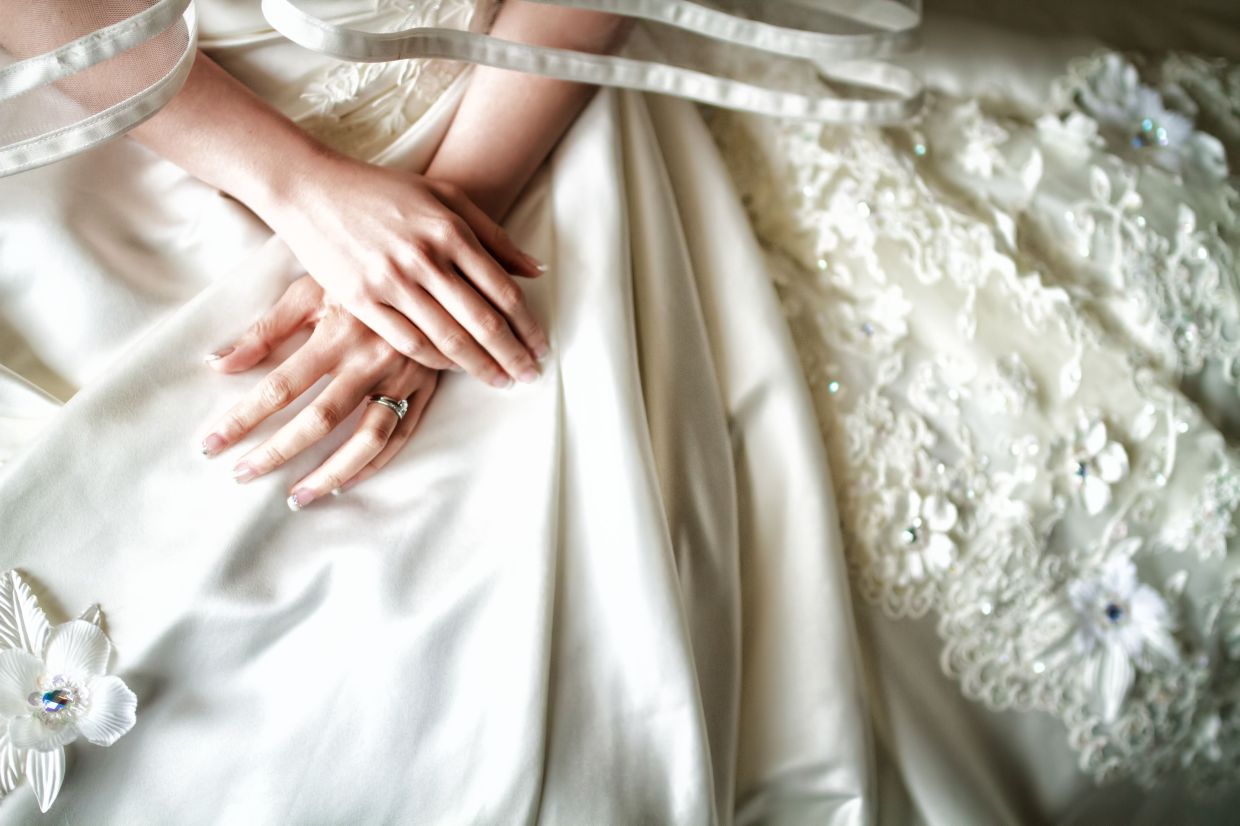
Inheriting your mother's wedding dress and wearing it yourself creates an extraordinarily complex emotional landscape, especially when there are no daughters or daughters-in-law to continue the tradition. The dress becomes more than fabric and thread—it transforms into a tangible connection to a woman's pivotal life moment and the era in which she lived. Many families face this dilemma, yet few have clear pathways for deciding what happens next. The question of whether to keep, alter, donate, or document these garments reflects broader tensions in contemporary life between preserving heritage and embracing practical necessity.
Clothing functions as what historians and psychologists call repositories of lived experience. A wedding gown carries within its seams not merely the memory of a single day, but evidence of the wearer's youth, hopes, and the cultural moment in which she married. Books and academic studies have extensively examined this phenomenon, recognising that discarding such items can feel almost sacrilegious. Parents often experience this acutely when discovering their adult children's childhood clothes—garments that are frequently the last tangible remnants of phases that have otherwise dissolved into memory. The longer a dress has circulated through a family, passed from mother to daughter across generations, the heavier its symbolic weight becomes. It represents not one woman's story but multiple timelines woven together.
This phenomenon extends beyond sentimentality into what might be termed fashion's own form of anthropomorphism. A mother's wedding dress encapsulates both her individual identity and the broader historical context of her wedding day. It speaks to available materials, prevailing silhouettes, economic circumstances, and cultural traditions of its time. Yet contemporary life presents genuine physical constraints. Closets have finite capacity, storage spaces cost money, and the psychological burden of maintaining items we may never wear again can paradoxically diminish rather than enhance our quality of life. Experts increasingly acknowledge that a meaningful distinction exists between honouring heritage and succumbing to emotional hoarding. Liberation, paradoxically, can come through thoughtful release.
Cameron Silver, a luxury brand consultant and founder of Decades, a pioneering high-end vintage retailer, offers valuable perspective on navigating these decisions. Silver positions himself as something closer to a therapist than a traditional fashion advisor when clients deliberate about their wardrobes and inherited pieces. His role, as he articulates it, involves helping people understand their own motivations rather than pressuring them toward predetermined outcomes. He recommends beginning with three clarifying questions: Does the dress fit my current body? Will I realistically wear it again in the foreseeable future? Most tellingly, how would I genuinely feel if this item disappeared? These questions shift focus from abstract duty toward concrete, personal reality.
Several structured approaches have emerged for those seeking alternatives to simple disposal. The first involves transforming the original garment into something entirely new—a christening gown for a grandchild, a cushion cover, decorative framing, or components of a completely different outfit. This route preserves the material while divorcing it from its original purpose. Transformation creates what some describe as a secret password to the past, yet something intangible may be surrendered in the process. The dress's identity as a wedding gown becomes subsumed into its new function, potentially diminishing the narrative power it once held.
Donation represents a second pathway, particularly through organizations specifically designed for this purpose. Brides Across America, for instance, channels wedding gowns to engaged military personnel and emergency medical workers who may lack financial resources to purchase their own. Such programmes grant dresses genuinely transformative second lives while serving communities in need. Emily Spivack, who facilitates this work, recommends attaching written provenance notes to donated garments. This practice ensures that the dress's history—information about who wore it, when, and under what circumstances—travels alongside the physical object. Future wearers gain not merely a gown but a tangible connection to a stranger's story, creating unexpected intergenerational bonds.
A third option involves deliberate documentation before release. Spivack conducts workshops where participants bring garments of family significance, photograph them professionally, and record their associated stories. Participants report feeling genuinely resolved afterward, having symbolically processed the attachment through narrative and image. This approach acknowledges that the emotional and historical content of the dress can be preserved through recording even after the physical object moves elsewhere. Family members can subsequently access these documented stories, maintaining connection to heritage without maintaining the garment itself. Schools and universities increasingly recognise this value, establishing textile collections explicitly designed to preserve ordinary rather than rare garments.
Academic institutions like Smith College, Drexel University, and Ohio State University have pioneered collection models that treat everyday clothing as primary historical documents rather than artistic artifacts. These programmes use garments to teach about women's lives, labour conditions, economic circumstances, and cultural values across different periods. Cornell University's Fashion + Textile Collection, directed by Denise Green, currently houses nearly 350 wedding gowns alongside more than 11,000 other textiles. These objects serve pedagogical purposes, illuminating how ordinary people lived and what they valued. A 1942 British wedding gown created by dressmaker Cylka Berke exemplifies this approach—the dress tells stories about wartime rationing, material scarcity, and innovative design solutions when resources were desperately limited.
The Berke gown particularly illustrates how academic preservation can resurrect significance from obscurity. Although Berke remains largely unknown outside specialised circles, her wedding dress documents crucial historical realities. Constructed from rayon rather than silk—which militaries required for parachutes, escape maps, and blood chits—the garment testifies to civilian sacrifice and substitution during global conflict. Remarkably, the rayon fabric has retained its original brightness across eight decades, unlike silk pieces from the same era that have darkened considerably. This technical detail itself becomes historically revealing, showing how material science intersected with wartime necessity. A dress that might otherwise seem entirely personal actually preserves complex historical information accessible to students and researchers.
For Malaysian and Southeast Asian readers, these considerations carry particular resonance given regional traditions of wedding ceremony significance and the cultural importance of heirloom preservation. Many families across the region maintain practices of passing elaborate wedding garments—whether Western-style gowns, traditional baju kurungs, or qipao—through generations. The decisions outlined above apply equally to these treasured pieces. Documentation becomes especially valuable in multicultural societies where family members may live across different countries, preventing physical sharing of items while enabling story-sharing. Digital archives and family record-keeping serve the same heritage function as physical storage, with significantly lower space demands.
The broader question underlying these practical decisions concerns what we owe to the past and to future generations. Preserving every item our parents owned contradicts reasonable living standards and psychological wellbeing. Yet entirely severing ourselves from material connections to family history impoverishes our understanding of who we are and where we come from. The most mature approach recognises that heritage preservation and personal liberation need not conflict. Documented stories matter as much as preserved objects. Shared knowledge carries as much weight as shared possessions. A wedding dress's true legacy lies not exclusively in its continued existence, but in what it continues to teach us about the woman who wore it and the world she inhabited.

