The calculus reshaping the technology industry represents a fundamental shift in how software gets built and who gets hired to build it. Startup leaders are increasingly seeking what they describe as experienced 'architects'—mid-career developers who can leverage artificial intelligence coding assistants to exponentially multiply their productivity rather than write code line by line. This preference for seasoned talent comes from a straightforward economic logic: why hire three junior programmers when one experienced developer armed with AI tools can accomplish the same output? The trade-off is brutal for anyone trying to break into the field.
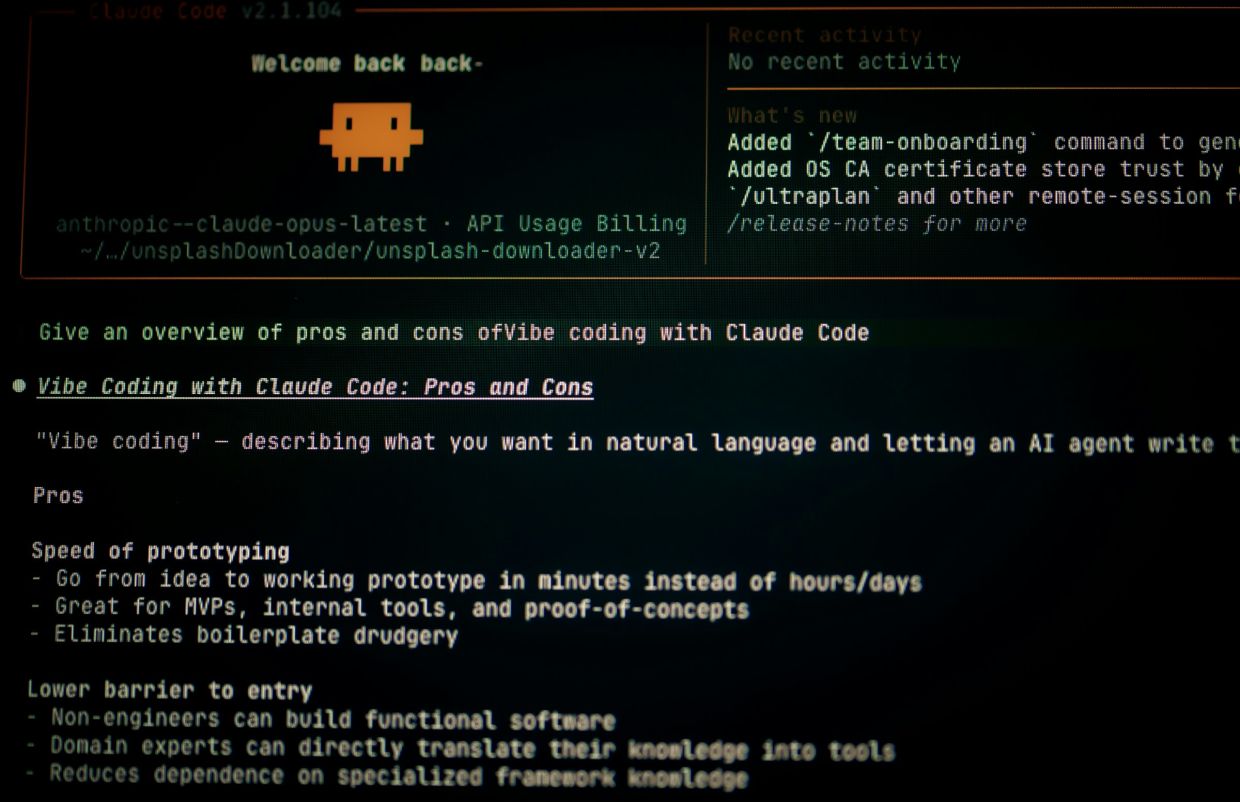
AI-powered coding platforms such as Anthropic's Claude Code and OpenAI's Codex have fundamentally transformed the programming workflow. Instead of typing out hundreds of lines of code manually, developers now function more as project architects and quality controllers. They describe what they want to build in plain language, let the AI generate the code, then review, test, and refine the output. The efficiency gains are staggering. At Giftory, a startup with roughly 30 employees, management found that spending approximately US$200 (RM816) monthly per developer on premium AI subscriptions delivers more value than the hiring and onboarding costs of additional junior staff. With average developer salaries running around US$100,000 (RM408,130) annually, the arithmetic becomes obvious: invest in AI tools for experienced teams rather than expand headcount.
The adoption rate among ambitious startups is accelerating. According to Jared Friedman, managing partner at Y Combinator, one quarter of startups in the programme's Winter 2025 batch were building products where 95 percent or more of the code was generated by artificial intelligence. This represents a generational shift in software development practices. Companies that might have previously required teams of fifteen to twenty engineers are now accomplishing comparable work with five or six highly skilled operators augmented by machine learning. Haitham Mengad, co-founder of Stems Labs, articulated this thinking plainly: having already assembled a lean, talented engineering team, the natural approach was to have those same people accomplish substantially more through AI integration rather than pursuing traditional growth through hiring.
The dollar savings extend beyond direct labour costs. Lindsay Euller, vice president of customer success at software company Espresa, stated that her team's integration of AI tools is generating savings measured in the millions of dollars annually. She also observed a troubling shift in corporate approval processes: she anticipates that requesting additional headcount will increasingly trigger questions about AI optimisation strategies before any hiring decision is authorised. This represents a cultural transition where AI augmentation becomes the default assumption, and human hiring the exception requiring special justification.
Yet this efficiency miracle carries a devastating shadow for the next generation of technology professionals. Research from Stanford's Digital Economy Lab, which examined payroll records from millions of American workers, documented that employment among 22- to 25-year-olds in occupations most vulnerable to AI disruption—including software development—declined by nearly twenty percent from its late 2022 peak. The data reveals not mere slowdown but absolute contraction in entry-level positions. Harvard researchers conducted a more granular analysis examining resume submissions and job postings across approximately 62 million American workers at 285,000 firms. They found that companies actively adopting generative AI reduced junior employment by roughly nine percent relative to non-adopting competitors within six quarters, while simultaneously maintaining or expanding senior-level hiring.
The hiring freeze at many technology companies reflects both genuine economic uncertainty and strategic recalibration. Ian Amit, chief executive of cybersecurity startup Gomboc AI, describes widespread corporate hesitation across the industry. Companies are interviewing numerous candidates but deferring actual hiring decisions, effectively freezing the entry pathways where junior developers have traditionally gained experience. This creates a troubling bottleneck: employers want experienced architects but have stopped nurturing the junior developers who become tomorrow's architects. The feedback loop threatens to undermine the entire talent pipeline.
Some industry veterans recognise the danger in this trajectory. Matt Garman, chief executive of Amazon Web Services, has publicly criticised the strategy of replacing junior developers with artificial intelligence as fundamentally misguided. He warned that the technology sector risks denying itself access to the next generation of engineering leaders, suggesting that short-term cost savings could create long-term competitive disadvantage. His perspective reflects a concern that optimising for immediate efficiency may be sacrificing strategic human capital development.
Early indicators suggest his warnings merit serious consideration. Computer science enrolment across American universities has begun declining measurably. The University of California system experienced a six percent drop in computer science enrollments, and two-thirds of computing programmes nationwide reported similar decreases, according to the Computing Research Association. Young people are making rational economic calculations: if entry-level jobs are disappearing and the field demands pre-existing expertise, why pursue computer science education at all? The incentive structure that once encouraged talented individuals into technology is weakening.
For Southeast Asia and Malaysia specifically, this trend carries particular significance. The region has been positioning itself as an emerging technology hub, with governments investing in tech education and startup ecosystems. However, if the global technology industry is consolidating opportunities for experienced professionals while eliminating entry-level positions, Malaysian youth pursuing computer science degrees may find fewer pathways into the international market. Moreover, if artificial intelligence tools reduce the labour intensity of software development, one of Malaysia's historical competitive advantages—lower-cost technical talent—becomes progressively less relevant. The region's technology strategy may need recalibration toward more sophisticated roles and innovation rather than competing on volume of junior developers.
For now, the economic forces pulling startups toward leaner, AI-augmented teams show no sign of weakening. As one startup founder observed, the fundamental trade-off remains unresolved: allocate resources either to hiring additional people or to investing in more powerful AI systems. Across the technology sector, the answer is increasingly clear. Companies are choosing artificial intelligence and smaller teams. The question of whether this produces a healthier long-term technology ecosystem—one capable of nurturing the next generation of talented builders—remains deliberately unaddressed by those making these hiring decisions.

