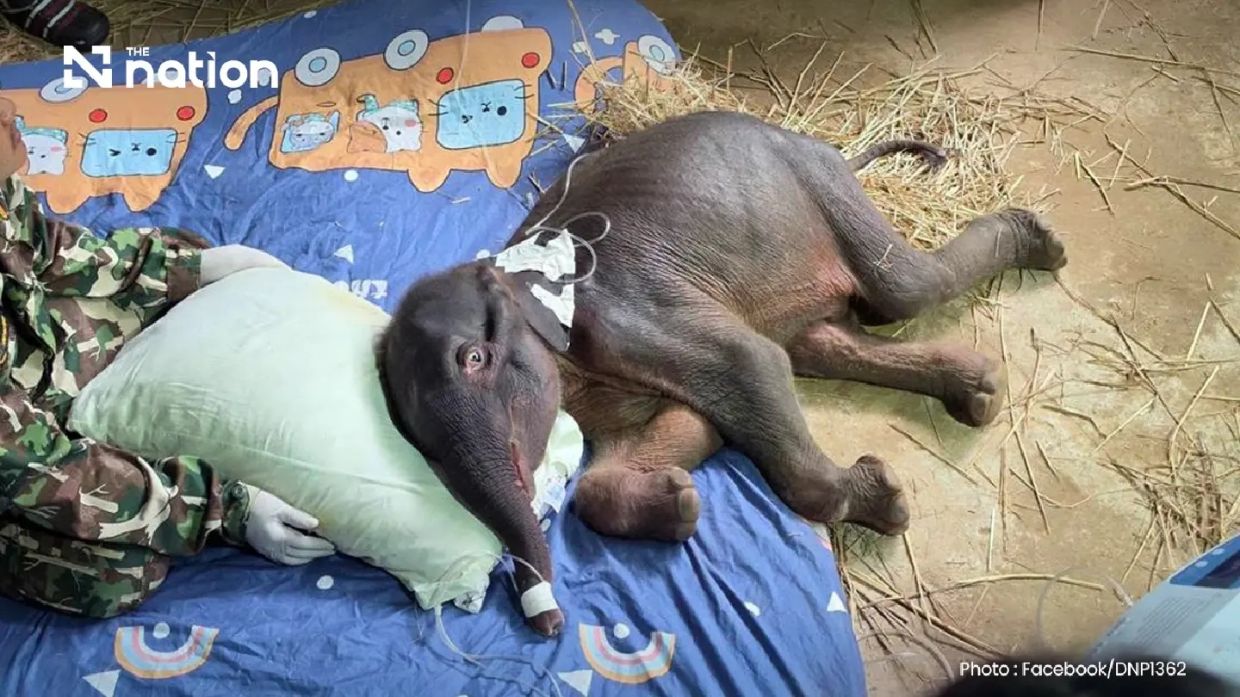
A young wild elephant calf named Jiew Sai Yok has died at Sai Yok National Park in Thailand's Kanchanaburi province, ending a rescue effort that captured the hearts of park officials and veterinarians who fought to save the distressed animal. The Department of National Parks, Wildlife and Plant Conservation announced the death early Tuesday morning, August 4, noting that the calf passed away peacefully around 2am after weeks of intensive care. Preliminary examination by the veterinary team suggests acute kidney failure as the likely cause, though laboratory results and a full necropsy are pending to establish the definitive reason for the animal's death.
The dramatic rescue began on July 30 when villagers discovered the abandoned calf near the Huai Mae Nam Noi riverbank, apparently orphaned and without any sign of its mother or extended family group. The remote location and difficult terrain required rescuers to undertake a challenging boat journey to reach the young animal, which was visibly weak and showed signs of extreme distress. Initial observations suggested the calf had been separated from its herd for approximately two days before discovery, leaving it vulnerable and desperate in the Thai wilderness.
Rescuers maintained a vigil through the first night, hoping that the calf's persistent vocalisations calling for its mother would elicit a response from other members of the herd. The animal cried repeatedly throughout the darkness, yet no adult elephants emerged from the surrounding forest to reunite with the youngster. This realisation forced officials to accept that the calf would require human intervention and medical care rather than reunion with its natural family group.
When a veterinary assessment team arrived on July 31, they encountered a severely compromised animal displaying multiple health complications. The calf presented with pronounced dehydration, various sores and blisters distributed across its body, mouth lesions approximately one centimetre in diameter, a compromised navel area, and dead tissue developing on its trunk. Insect infestation around the eyes had triggered secondary conjunctivitis, while the colour and consistency of the calf's urine and faecal matter pointed to systemic infection or profound fluid loss. Despite these substantial challenges, the young elephant retained enough strength to consume small quantities of milk and displayed a will to survive.
Transporting the animal to the national park headquarters presented significant logistical challenges, as the veterinary team required one to two hours by boat to navigate to the rescue site. Seasonal rainfall had swollen waterways throughout the region, elevating risks of flooding and forest runoff that could have endangered both the calf and the rescue personnel. Once relocated to the park's central facilities, the calf entered a programme of intensive 24-hour supervision, with veterinarians and park staff rotating shifts to monitor vital signs and provide continuous care.
Treatment protocols focused on addressing the calf's most critical needs: intravenous fluid replacement to reverse severe dehydration, supplemental oxygen therapy to support respiratory function, and regular feeding with appropriate milk formulations every two to three hours in quantities of 350 to 500 millilitres per session. The medical team observed some encouraging signs of resilience, as the young animal maintained adequate appetite and periodically summoned sufficient strength to attempt standing. However, the persistent diarrhoea and dark-coloured urine remained indicators of deeper physiological dysfunction that proved increasingly difficult to reverse.
As the animal's condition deteriorated through the night leading into early Tuesday morning, the veterinary team exhausted their therapeutic options. When the calf entered a deep sleep around 2am, respiration ceased and the animal slipped away despite the team's immediate application of full resuscitation protocols. The peaceful manner of death offered some consolation to the rescue workers who had invested enormous emotional energy and professional expertise in attempting to save the orphaned youngster.
Blood test results obtained during the calf's hospitalisation pointed toward acute kidney failure as the primary culprit, though veterinarians could not rule out the possibility of congenital abnormalities affecting internal organs. The kidney dysfunction would have prevented the animal's body from effectively filtering waste products and maintaining proper fluid balance, a condition particularly difficult to reverse in a young animal already weakened by abandonment and malnutrition. The planned necropsy and laboratory examination of tissue samples will provide definitive answers about whether the kidney damage was an acute event triggered by the animal's deteriorated condition or whether structural abnormalities present from birth had compromised organ function.
The death of Jiew Sai Yok represents a poignant reminder of the vulnerability wild elephants face when separated from their family groups and social structures. Elephant calves remain dependent on their mothers and herd members for both emotional stability and practical knowledge about survival in the forest environment. The loss underscores the complex challenges facing wildlife conservationists in Thailand, where human activity increasingly fragments elephant habitat and disrupts family units that have evolved over generations to navigate their natural range.
The Department of National Parks, Wildlife and Plant Conservation publicly acknowledged the dedication shown by all veterinary personnel and rescue teams who maintained their commitment to the calf's welfare throughout the intervention. Even as the outcome proved tragically unsuccessful, the professional response demonstrated the Thai government's commitment to protecting the nation's remaining wild elephant population. The case of Jiew Sai Yok will likely inform future rescue protocols and treatment strategies for young elephants found separated from their herds in remote locations.

