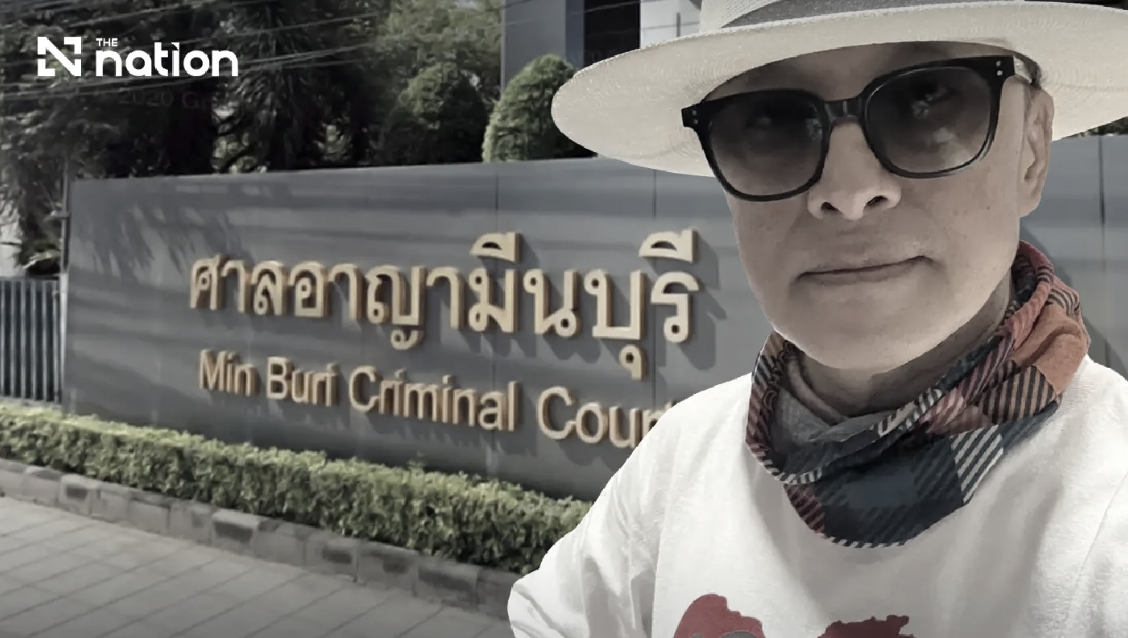
A Bangkok criminal court has handed down a two-year prison sentence to Manasawin Nantasen, the acclaimed Thai singer popularly known as Tik Shiro, following his conviction for driving under the influence and causing the deaths of two people in a collision incident that unfolded last October. The 64-year-old performer, who achieved international recognition during the late 1980s and 1990s for his distinctive stage presence—replete with fedora hats, studded leather jackets, and sophisticated choreography reminiscent of the late Michael Jackson—was found guilty of what prosecutors termed "drunk driving resulting in loss of life" by the court on Wednesday.
The tragic incident occurred when Manasawin was operating his vehicle across a Bangkok bridge in October 2024 and struck a stationary motorcycle that had been left along the roadway. The collision proved immediately fatal for a 28-year-old woman who was positioned on the motorbike at the time, while her younger brother, aged just 21, sustained catastrophic injuries after being propelled from the bridge by the force of impact. The male victim was transported to a nearby hospital in critical condition but ultimately succumbed to the severity of his wounds several days later, according to police records of the incident.
Manasawin's career trajectory had positioned him among Thailand's most recognisable entertainment figures during his peak years. His carefully cultivated image—complete with the iconic accessories and dance vocabulary borrowed from the King of Pop—had earned him a devoted following across Thailand and parts of Southeast Asia. The comparison to Michael Jackson, while perhaps somewhat superficial, underscored the degree to which his aesthetic choices and performance style had resonated with audiences seeking homegrown talent with international polish and sophistication.
In rendering its judgment, the Bangkok court acknowledged certain mitigating factors that had emerged during proceedings. The judgment noted that Manasawin had cooperated with authorities by surrendering voluntarily and providing testimony that proved useful to the prosecution's case. Furthermore, the court observed that the defendant had demonstrated remorse through concrete actions—notably by attending the funeral services of both deceased victims and arranging financial compensation to be paid to their bereaved families. Despite these demonstrations of contrition, the court proceeded with issuing the custodial sentence and additionally revoked Manasawin's driving privileges indefinitely.
The case has reignited a contentious debate within Thai society regarding the extent to which wealth and celebrity status insulate high-profile individuals from the full consequences of their actions. Accompanying Manasawin's sentencing came the release from prison of rock musician Sek Loso, who had completed a sentence of just over one year for drug possession and unlicensed firearm offences. The near-simultaneous handling of these two celebrity cases has prompted many Thai citizens to question whether the country's judicial system applies consistent standards or whether influential personalities benefit from lenient treatment.
Historical precedent in Thailand suggests genuine cause for public scepticism on this point. In 2012, Vorayuth Yoovidhya, the heir to the Red Bull fortune and one of Thailand's wealthiest individuals, was involved in a high-profile incident in which his Ferrari vehicle struck and killed a Bangkok police officer in an upscale neighbourhood. Despite launching a formal investigation into the circumstances, prosecutors ultimately declined to press charges against Yoovidhya, leaving many Thais convinced that his enormous resources had enabled him to evade accountability for a fatal transgression.
Another instructive case dates to 2001, when the son of former Pheu Thai Member of Parliament Chalerm Yubamrung became implicated in a shooting death at a crowded Bangkok nightclub, allegedly arising from a personal dispute. Despite the public nature of the incident and the presence of multiple witnesses, the defendant was subsequently acquitted on grounds that prosecutors had failed to present sufficient evidence to establish guilt beyond reasonable doubt. Critics contended that the privileged background and political connections of the accused had substantially influenced the outcome.
These historical instances of apparent preferential treatment have created a backdrop of public cynicism against which Manasawin's conviction and imprisonment must be assessed. While the severity of his sentence—effectively two years of incarceration—might be considered appropriate punishment in absolute terms, the contrast with how other high-profile cases have been handled raises uncomfortable questions about equity and the rule of law. The fact that Manasawin did receive a custodial sentence at all could be interpreted as a positive signal that even celebrity status cannot guarantee complete immunity from prosecution, yet the acknowledged mitigating factors and relatively modest duration of his sentence may do little to assuage broader public concerns.
For Malaysian observers, the case offers instructive parallels to discussions within Malaysian society about celebrity accountability and the perceived vulnerabilities of its own legal system. Malaysia has experienced comparable controversies involving high-profile figures who allegedly benefited from their status or connections when facing serious allegations, creating similar questions about whether justice is administered fairly across different social strata. The Manasawin case thus resonates beyond Thailand's borders as a regional illustration of persistent tensions between legal theory and practical application in Southeast Asian jurisdictions.
The symbolic significance of Manasawin's moment of grief captured on video immediately following the collision—when the performer knelt at the scene in what appeared to be genuine anguish—cannot be overlooked in assessing public reaction. This spontaneous expression of remorse, which circulated widely across Thai social media platforms, may have influenced both public perception and judicial deliberation. Whether genuine or perceived by observers as a calculated appeal to sympathy, the image humanised a tragedy that might otherwise have reinforced cynicism about celebrity entitlement and the apparent insulation that fame provides from ordinary consequences.
The intersection of entertainment, tragedy, and justice in the Manasawin case ultimately illustrates the complex terrain navigated by Thailand's legal system when celebrity defendants face serious charges. While the two-year sentence represents concrete punishment and stands as evidence that some accountability is possible, the wider pattern of how similar cases involving the privileged elite have been resolved leaves considerable room for scepticism about whether genuine justice has been served or merely the appearance of it maintained.