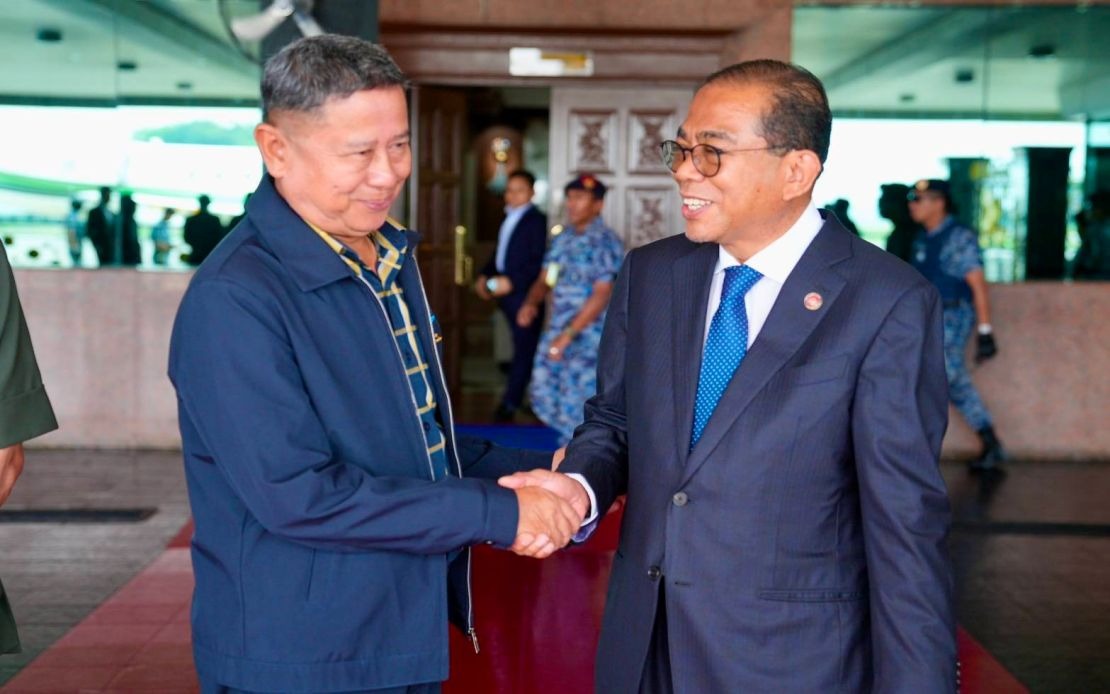
Thailand's Defence Minister Lt Gen Adul Boonthamcharoen travelled to Kuala Lumpur on Wednesday for urgent discussions with his Malaysian counterpart, signalling heightened concerns over deteriorating security conditions in Thailand's restive southern border region. The high-level engagement between the two nations' defence establishments underscores the cross-border dimensions of the longstanding insurgency and highlights Malaysia's critical role as both neighbour and mediator in regional stability efforts.
The timing of the meeting proved particularly significant, arriving just one day after Bangkok announced a temporary halt to peace negotiations with the southern insurgent group. Those talks, previously scheduled for September and slated to occur on Malaysian soil, represented a carefully orchestrated diplomatic process aimed at resolving decades of armed conflict in Narathiwat, Yala, and Pattani provinces. The suspension followed a devastating attack in Narathiwat that prompted the Thai government to declare martial law across thirteen districts, reflecting the sharp deterioration in the security environment that has consumed Thailand's southernmost regions.
During the Kuala Lumpur session, Lt Gen Adul and Datuk Seri Mohamed Khaled Nordin engaged in substantive exchanges regarding the evolving threat landscape affecting Thailand's border provinces. Beyond immediate crisis management, both defence officials reaffirmed their commitment to strengthening the bilateral security partnership that has grown increasingly vital as transnational security challenges multiply across Southeast Asia. The discussions encompassed not merely the immediate tactical response to violence, but also the broader strategic architecture necessary for long-term stability.
Thailand's Defence Ministry characterised the engagement as an opportunity to update Malaysian leadership on progress across multiple initiatives aimed at building sustainable peace. The Thai government emphasised its dual commitment to advancing dialogue with insurgent elements while simultaneously ensuring the immediate safety and welfare of civilians caught in the conflict zone. This balancing act reflects the complex political calculus that Bangkok must navigate—pursuing negotiations while maintaining security operations and protecting communities from armed attacks.
Critically, both nations reaffirmed their intention to deepen strategic security cooperation through enhanced intelligence sharing and improved border security coordination. In a region where insurgencies and criminal networks frequently exploit porous borders and jurisdictional gaps, such mechanisms prove essential. The commitment to closer coordination acknowledges that security challenges in Thailand's south cannot be addressed unilaterally; they require sophisticated cross-border frameworks and genuine information exchange between Malaysian and Thai authorities.
Lt Gen Adul's statements emphasised Thailand's valuation of Malaysia as a neighbouring state and indispensable security partner. This language carries particular weight given Malaysia's geographical proximity, its role in hosting previous peace talks, and its own historical experience managing internal security challenges. Thailand's reiteration of commitment to working on bases of mutual trust and respect suggests an effort to reinforce confidence in the bilateral relationship at a moment when the collapse of scheduled negotiations might otherwise create diplomatic distance.
The Defence Minister articulated a vision of lasting peace achievable only through sustained cooperation and collective commitment from multiple stakeholders. This framing acknowledges that no single nation or security force can impose stability in the southern provinces; rather, durable solutions require buy-in from political leadership, civil society, security forces, and insurgent representatives. By positioning Malaysia as a strategic partner in this endeavour, Thailand signals both its appreciation for Malaysian mediation efforts and its recognition that regional peace serves broader Southeast Asian interests.
The suspension of scheduled September talks represents a setback for a peace process that has endured numerous previous interruptions and restarts over many years. The timing—coinciding with martial law declarations and reactive security measures—suggests that military and political hardliners in Thailand may have gained influence following the Narathiwat attack. Yet the immediate decision to brief Malaysian counterparts indicates that Bangkok remains committed to the broader diplomatic framework even as tactical negotiations pause. This distinction matters significantly for understanding Thailand's strategy: security operations may intensify temporarily, but long-term policy orientation toward negotiated settlement appears intact.
For Malaysia, these developments carry direct implications. As a country that has hosted previous rounds of peace talks and maintains its own Muslim-majority population with religious and cultural ties to southern Thailand, Malaysia occupies a uniquely influential position. The nation's ability to facilitate dialogue, provide security guarantees for negotiating parties, and offer neutral territory has made it invaluable to the peace process. This latest meeting reaffirms that role even as circumstances grow more challenging.
The broader regional context amplifies the significance of bilateral defence cooperation between Bangkok and Kuala Lumpur. Southeast Asia faces multiplying security pressures from transnational terrorism, organised crime networks, and maritime vulnerabilities. Effective responses require the kind of sustained, trust-based partnership that Thailand and Malaysia are consciously cultivating. The commitment to intelligence sharing and coordinated border operations serves not merely the specific southern insurgency challenge, but builds institutional capacity for addressing diverse future threats.
Observers of the Thai-Malaysian relationship note that security cooperation has deepened substantially despite periodic diplomatic tensions over other issues. This compartmentalisation—maintaining robust defence and intelligence partnerships while managing disagreements in other domains—demonstrates both nations' understanding that regional stability transcends individual bilateral friction points. The willingness of both defence ministers to engage substantively during a crisis moment reflects this mature strategic approach.
Moving forward, the effectiveness of intensified bilateral coordination will likely prove decisive in determining whether the suspension of peace talks represents merely a tactical pause or a more fundamental fracturing of the negotiation process. Malaysia's continued commitment to mediating dialogue, combined with enhanced cross-border security measures, may help create conditions for resuming formal negotiations once immediate security concerns subside. The mutual commitment expressed during this Kuala Lumpur meeting suggests that both nations remain invested in achieving the durable peace that has eluded the southern provinces for decades.

