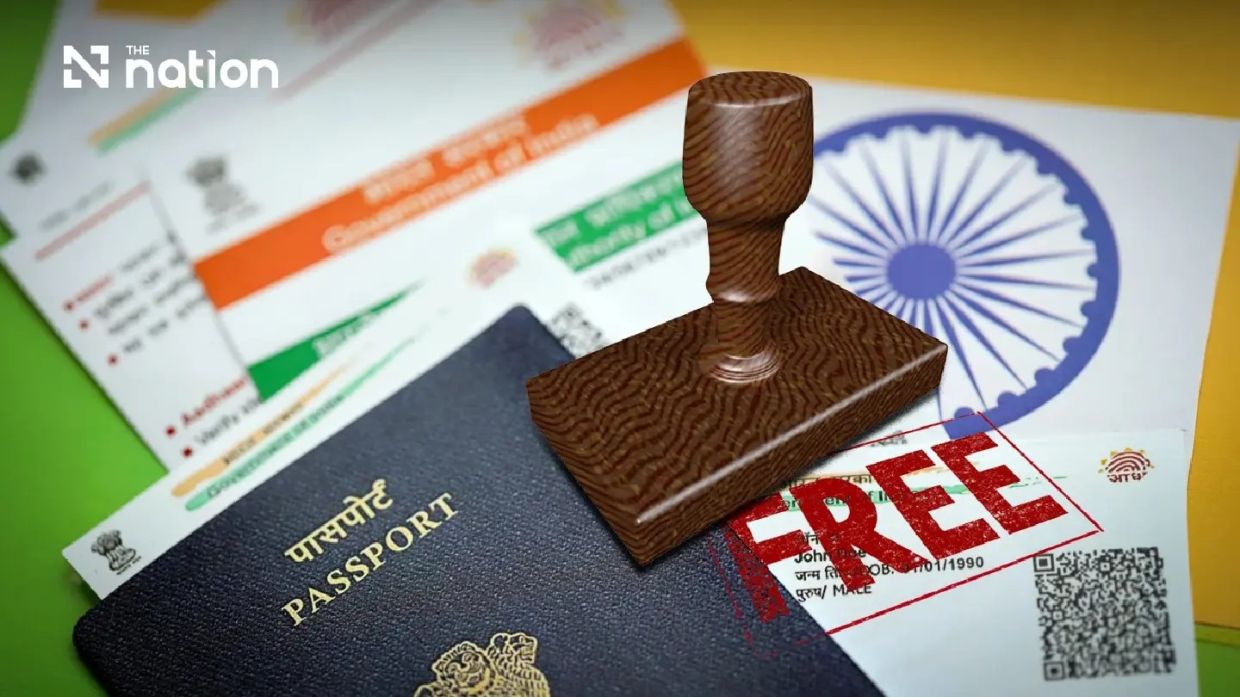
Thailand's decision to grant Indian tourists 30-day visa-free entry has become central to the kingdom's strategy for capturing one of Southeast Asia's most lucrative and fastest-growing tourism markets. Tourism and Sports Minister Surasak Phancharoenworakul championed the extended visa exemption after an initial proposal would have capped visa-free stays at just 15 days, a restriction he argued would have severely hampered Thailand's competitive position. The minister emphasised that many high-value Indian tourists travel specifically for destination weddings and extended celebrations that can span several weeks, requiring lengthy preparation periods and multiple event components that a fortnight would struggle to accommodate.
The newly approved framework, confirmed by the Thai Cabinet on July 14, elevates India to a privileged position among 59 countries and territories enjoying the full 30-day visa-free privilege. This aligns Indian passport holders with tourists from other major markets, reinforcing Thailand's commitment to treating the Indian market with the same respect and encouragement afforded to other key sources. The extension also signals a philosophical shift in how Thailand views its relationship with Indian travellers: not as occasional visitors but as valued contributors to the kingdom's economic and cultural landscape. By matching the entitlement available to other comparable markets, Thailand demonstrates confidence that Indian tourists will respond with increased spending and longer stays that benefit local businesses across multiple sectors.
India represents Thailand's third-largest source market, a position consolidated through consistent growth over recent years. The Tourism Authority of Thailand projects that 2.55 million Indian tourists will visit in 2026, climbing to a record 2.7 million by 2027, representing a 5.8 percent annual increase. This trajectory reflects momentum already established during 2025, when Thailand welcomed 2.48 million Indian visitors generating 90.425 billion baht in tourism revenue, a 16.82 percent increase from the preceding year. Through the first half of 2026, arrivals maintained a healthy 3.06 percent growth rate, suggesting that the extended visa exemption arrives at a moment when market conditions favour substantial expansion. By July 2026, India had already contributed approximately 1.3 million arrivals, placing it firmly ahead of most competing nations in Southeast Asia's tourism hierarchy.
The decision to extend visa-free access emerged from concerns among Thailand's tourism industry when the government initially moved to discontinue a temporary 60-day visa-exemption programme covering 93 countries and territories. Many operators feared that Indian tourists would be relegated to the Visa on Arrival category, introducing bureaucratic friction that could push travellers towards competing destinations. Vietnam, Malaysia and Singapore have all intensified efforts to attract Indian visitors through simplified visa procedures and targeted marketing, creating pressure on Thailand to maintain its accessibility advantage. The revised framework addressed these concerns by positioning India within a standard visa-exemption category rather than forcing visitors through the Visa on Arrival process, preserving streamlined access while introducing a structured digital arrival system applicable to all non-Thai nationals.
The average Indian tourist spends approximately 6,203 baht daily in Thailand, translating to roughly 36,354 baht per trip. This spending level exceeds many comparable markets and underscores why Thailand's government prioritises policies that encourage longer stays and repeat visitation. The demographic composition of Indian visitors offers additional appeal: first-time tourists represent 59.68 percent of arrivals, indicating substantial potential for conversion into long-term repeat customers, while 40.32 percent represent returning visitors demonstrating proven loyalty. Independent travellers account for 68.63 percent of the market, while 31.37 percent travel through organised tour groups, providing diverse revenue streams across accommodation, food service, attractions and transport sectors. Thai cuisine ranks as the primary attraction for Indian tourists, followed closely by beach experiences and wellness services including spas and yoga retreats, activities that generate consistent spending throughout their stays.
Thailand's expansion strategy extends beyond traditional metropolitan markets to tier-two and tier-three Indian cities showing robust economic growth and rising disposable incomes. The Tourism Authority has identified Lucknow, Chandigarh, Guwahati, Ahmedabad, Surat and Pune as priority markets warranting dedicated promotional campaigns. Surat's concentration of diamond industry wealth creates a particularly affluent customer base with high spending potential, while Pune's automotive and industrial sectors provide access to upper-income professionals seeking leisure experiences. Air connectivity strengthens Thailand's competitive position, with approximately 144 flights weekly from the New Delhi TAT office's region connecting nine Indian cities to Bangkok, Krabi and Phuket, while the Mumbai office oversees roughly 160 weekly flights providing approximately 33,000 seats. Combined capacity across all Thailand-India routes reaches approximately 66,000 seats weekly, though some services were temporarily suspended due to Middle Eastern regional tensions and elevated fuel costs. The TAT expects capacity restoration during peak season as airlines gradually restore suspended routes and Indian carriers expand services from secondary cities.
Indian tourists' travel patterns demonstrate average stays of approximately 7.17 days per trip, yet the regulatory framework permitting 30-day visa-free residence accommodates longer itineraries increasingly chosen by wealthy travellers and family groups. The TAT's analysis identifies strong demand from Indian families and larger tour parties, with many choosing seven to 15-day itineraries that exceed the previous global average. This extended-stay cohort typically represents higher-income households seeking immersive experiences rather than rushed sightseeing circuits, precisely the demographic Thailand's premium positioning strategy targets. The 30-day entitlement removes barriers that might discourage such visitors, while the mandatory Thailand Digital Arrival Card system—completable within three days of scheduled arrival—maintains immigration oversight without introducing visa-application delays or bureaucratic friction.
Thailand's positioning strategy increasingly emphasises experience-led tourism responding to evolving preferences among Indian travellers. Contemporary Indian tourists progressively reject conventional photography-focused sightseeing in favour of immersive engagement with local food cultures, community interactions and authentic lifestyle experiences. The TAT's campaign messaging now highlights food, cultural traditions, local communities, wellness services and community-based tourism as differentiating factors against regional competitors. This repositioning acknowledges that affluent Indian travellers, particularly younger cohorts with significant disposable incomes, seek meaningful cultural exchange and personal transformation rather than transactional leisure. Thailand's wellness tourism ecosystem—encompassing traditional Thai massage, yoga retreats, herbal treatments and holistic health programmes—aligns naturally with this evolved traveller mentality, positioning the kingdom distinctly against regional alternatives.
Regional competition for Indian tourism spending has intensified considerably as Southeast Asian governments recognise the market's economic significance. Vietnam aggressively pursues Indian visitors through competitive pricing and incentive structures, Malaysia actively promotes visa-free access arrangements, while Singapore has strategically positioned itself within the family tourism segment. Thailand's decision to maintain streamlined visa access through the 30-day exemption represents a direct competitive response, but success ultimately depends on translating policy access into marketable experiences and compelling reasons to choose Thailand over alternatives. By extending visa-free privileges while simultaneously expanding promotional campaigns into secondary Indian cities, investing in air connectivity expansion and repositioning tourist experiences around authentic cultural engagement, Thailand constructs a comprehensive strategy addressing multiple decision factors influencing Indian tourists' destination choices. The government's acknowledgment that stronger visa access, combined with strategic marketing and experience differentiation, remains essential to capturing growing Indian tourist numbers suggests confidence that the expanded exemption will yield measurable returns through both increased arrivals and enhanced per-visitor spending.

