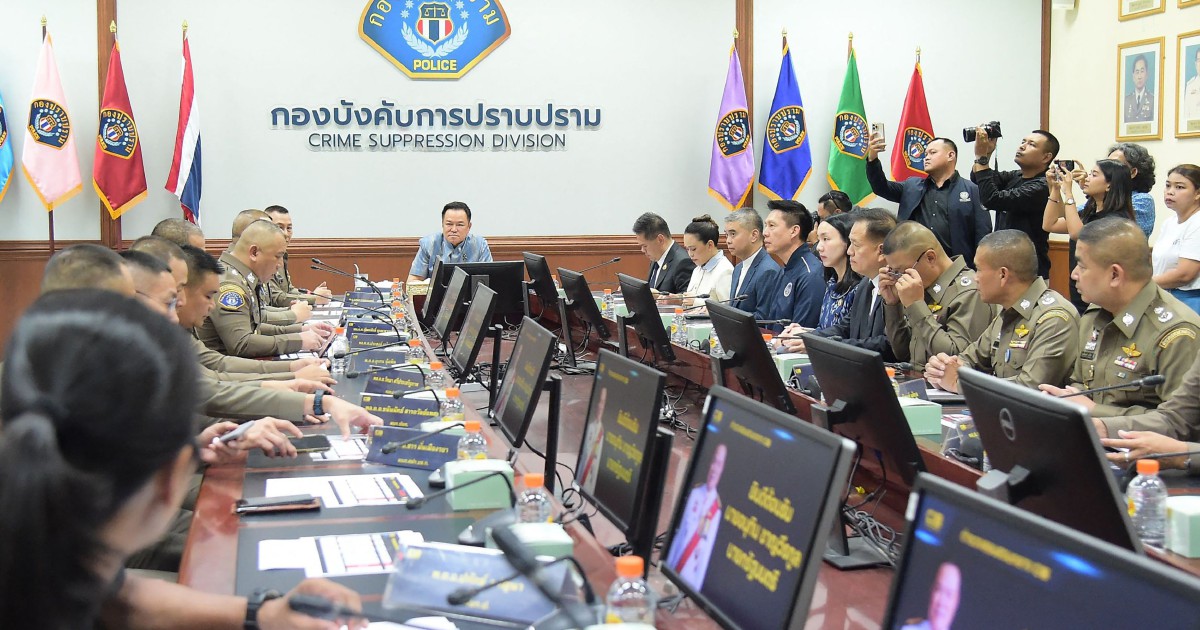
Thailand's civil service system faces an unprecedented integrity crisis as authorities announced Thursday that nearly 6,000 officials will be suspended following discovery of widespread examination fraud. The decision marks an extraordinary intervention in the country's bureaucracy, signalling the scale of what investigators characterise as a coordinated cheating operation that undermined the merit-based recruitment process supposed to govern entry into government service.
The emerging scandal represents far more than isolated incidents of rule-breaking among test-takers. Rather, the scope of the investigation suggests systemic vulnerabilities in how Thailand administers examinations for civil service positions, a process meant to ensure qualified and ethical individuals enter government ranks. The authorities' decision to suspend such a large number of officials indicates either widespread participation in cheating activities or a precautionary approach to separating compromised officials pending investigation outcomes.
Three individuals have already been arrested in connection with the scheme, according to authorities overseeing the probe. Their detention represents the initial enforcement action in what investigators signal will be an expanding operation to identify and hold accountable those responsible for orchestrating or facilitating the examination fraud. The arrests suggest criminal charges may accompany administrative suspensions as the case develops through both bureaucratic and judicial systems.
The investigation's expansion beyond the initial detainees raises questions about the sophistication and reach of the cheating apparatus. Whether the scheme involved collusion between examination administrators and candidates, or operated through other means such as advance access to test materials or coordinated answer sharing, remains under investigation. Each scenario carries different implications for how deeply rooted corruption may be within the civil service recruitment apparatus.
For Malaysian observers, the Thai situation offers instructive parallels regarding the vulnerability of merit-based systems when institutional oversight weakens or when financial incentives for cheating become sufficiently attractive. Both nations have attempted to modernise their civil services through competitive examination frameworks, making the integrity of these processes fundamental to governance quality and public trust. The Thai experience underscores how even well-intentioned systems require robust monitoring mechanisms and transparent investigation protocols.
The suspension of 6,000 officials, while necessary for restoring public confidence, also creates immediate operational challenges for Thailand's government machinery. Removing such numbers from active service simultaneously risks disrupting service delivery across multiple agencies, potentially creating bottlenecks in essential functions while replacements are vetted and trained. This operational tension between accountability and continuity represents a difficult calculus for policymakers managing the scandal's fallout.
The timing of the scandal's exposure also matters significantly. Public revelation of systematic cheating strikes at the legitimacy not only of recent recruitment cohorts but also of existing officials who may have competed fairly but now work alongside those who gained positions fraudulently. This creates internal morale complications and raises questions about whether current officials who passed fair examinations will experience resentment or whether they will embrace the cleanup effort as necessary for institutional credibility.
Investigators' decision to widen their probe suggests they are following evidence trails that extend beyond the initially identified suspects. This expansion indicates the scandal may involve multiple agencies, diverse geographic locations, or coordinated networks rather than isolated incidents at particular offices. The scope of widening investigations often correlates with the complexity of the underlying operation and the number of institutions potentially compromised.
Thailand's approach to managing the scandal—through suspension prior to final determination of individual guilt or innocence—reflects a pragmatic calculus that public confidence in the civil service depends on visible decisive action. However, this mass suspension approach also raises due process questions about whether individuals suspended will receive fair hearings and whether the suspension period will have time limits or be extended pending investigation completion. How thoroughly and fairly the authorities conduct individual assessments will itself become a measure of institutional integrity during a period when such integrity is already questioned.
The scandal carries broader implications for Southeast Asia's governance architecture. Regional governments increasingly compete to attract talent and investment by emphasising professional bureaucracies and transparent institutions. When large-scale exam fraud surfaces in any major nation's civil service system, it reverberates across the region as investors and analysts reassess institutional reliability across comparable systems. Thailand's credibility as a functional governance space depends significantly on how thoroughly and transparently it addresses this crisis.
Long-term consequences will likely extend beyond the immediate suspensions and arrests. The scandal will probably prompt Thailand to review and strengthen examination administration procedures, implement enhanced monitoring technologies, and establish clearer protocols for managing fraud allegations. These institutional reforms, though disruptive in the short term, could ultimately result in more resilient recruitment systems better protected against future manipulation.
As the investigation continues and additional details emerge, regional observers will watch closely how Thailand balances accountability with fairness, systemic reform with operational continuity, and public confidence-building with individual rights protection. The manner in which authorities navigate these tensions will significantly influence public perception of governmental institutions across Thailand and neighbouring countries grappling with similar governance challenges.

