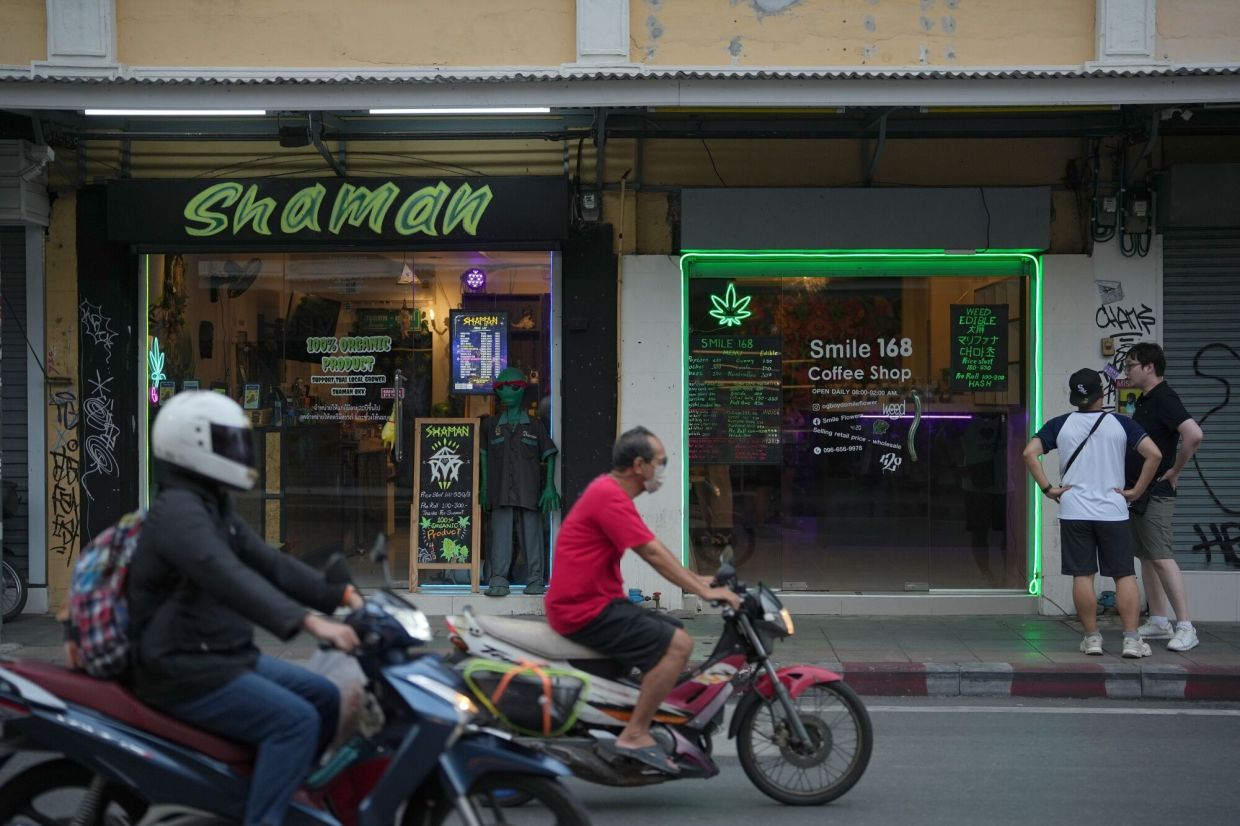
Thailand's approach to cannabis regulation is entering a new phase of enforcement as Public Health Minister Pattana Promphat accelerates efforts to contain its use strictly within medical boundaries. The government has prioritised completion of the Cannabis and Hemp Control Act ahead of parliamentary consideration, signalling that the kingdom's cannabis experiment—which began with controlled liberalisation in 2018—will now be subjected to considerably tighter administrative and legal constraints. The shift reflects mounting concern over the policy's unintended consequences, particularly the proliferation of unlicensed retailers and the contraband movement of cannabis across borders to countries where it remains prohibited.
The proposed legislation represents a fundamental restructuring of how cannabis is regulated in Thailand. Where existing frameworks rely on the Act on the Protection and Promotion of Herbs and various ministerial regulations covering sales, transfers, and extraction, the new statute would extend governmental control backwards to the cultivation stage itself. This comprehensive approach signals an attempt to eliminate gaps in the regulatory chain that have allowed illicit operators to source material outside formal channels. By controlling production from the outset, Bangkok aims to ensure that only approved medicinal cannabis reaches authorised distribution points, preventing the diversion of products into recreational or export markets.
The minister emphasised that the Bhumjaithai Party, which championed Thailand's initial cannabis liberalisation, now stands behind a strictly medical-use policy. This represents a significant recalibration of political positioning on the issue, suggesting that initial enthusiasm for cannabis industry expansion has given way to concerns about social and security implications. The commitment to medical-only use indicates that Thailand will not follow jurisdictions permitting adult recreational consumption, instead positioning cannabis as a controlled pharmaceutical product rather than a commercial commodity for general consumers.
A central challenge facing Thai authorities is the explosive growth of cannabis retail outlets, many operating without proper authorisation or with expired credentials. Since 2023, approximately 18,000 outlets have operated under various licensing regimes, but around 6,000 licences expired at the end of that year, with only roughly 1,500 subsequently renewed. The licensing structure itself creates recurring compliance issues, as each permit lasts exactly three calendar years, resulting in waves of outlets falling out of legal status annually. The ministry estimates that approximately 6,000 additional outlets will face expiration during 2026 and 2027, creating an ongoing enforcement nightmare and a persistent pool of potentially illegal operations.
To combat this landscape of compliance drift and outright illicit retail, the Public Health Ministry has deployed technological and administrative solutions. The Department of Thai Traditional and Alternative Medicine has established a GPS-based registry listing all legitimately registered outlets, displaying their precise coordinates alongside licence expiration dates. This digital transparency mechanism transforms inspectors' ability to distinguish authorised from unauthorised retailers instantaneously. Any shop not appearing on the registry is automatically presumed illegal, enabling police and local authorities to take immediate enforcement action without requiring prior investigation. The ministry has also expanded the cadre of authorised inspection officers by enlisting police and local administrative organisations, effectively creating tens of thousands of potential enforcement personnel throughout the country.
Amendments to ministerial regulations now require properly licensed outlets to reconstitute themselves as medical facilities, fundamentally altering their operational character. These establishments must station licensed doctors on premises to supervise all cannabis dispensing, ensuring transactions occur only for patients with legitimate medical needs. This transformation from informal retail environments to clinical settings imposes substantial compliance costs on operators and creates additional barriers to illegal recreational distribution. The doctor-in-residence requirement also enables real-time monitoring of consumption patterns, allowing the detection of suspicious purchasing behaviour such as repeated bulk supplies to individual customers, which would trigger detailed examination and potential legal prosecution.
Illegal cannabis trafficking across Thailand's borders presents a particular governance challenge, given that Thailand's relatively permissive domestic framework contrasts sharply with the stringent prohibitions in most destination countries. Although cannabis holds legal status domestically, it remains classified as a narcotic in most regional and international jurisdictions, creating fundamental conflict between Thai law and the legal systems of buyers and transit nations. The Department of Thai Traditional and Alternative Medicine has coordinated with the Customs Department and Airports of Thailand to intercept contraband shipments, transitioning from paper-based licensing that was susceptible to forgery to electronic licensing systems providing additional verification layers. However, minister Pattana acknowledged that sophisticated smuggling operations occasionally circumvent these controls, particularly when large quantities are involved, revealing the persistent challenge of regulating cross-border flows of controlled substances.
The question of whether cannabis might eventually be reclassified as a narcotic remains contingent on parliamentary passage of the control legislation. Such reclassification would likely proceed under existing narcotics law administered by the Ministry of Justice rather than through public health frameworks, representing a fundamental policy reversal. For now, the government emphasises completion of the Cannabis and Hemp Control Act as a prerequisite for any such dramatic pivot, suggesting that enhanced medical-focused regulation represents the preferred pathway forward rather than blanket prohibition. The public consultation phase for the draft legislation already concluded last month, though parliamentary deliberation did not occur during the most recent session.
The proposed penalties under the new framework are described as relatively high and serious, suggesting that violations will carry substantial criminal or administrative consequences. Such stringent enforcement approaches reflect determination to transform compliance culture within Thailand's cannabis sector, moving from the relatively light-touch oversight characterising early liberalisation toward a more punitive model discouraging participation in illicit markets. For retailers operating unlicensed or unregistered premises, the enforcement path is unambiguous: immediate arrest without requiring prior administrative compliance attempts.
From a regional perspective, Thailand's regulatory recalibration carries implications extending beyond its borders. As the most prominent Southeast Asian jurisdiction permitting cannabis use—albeit increasingly constrained—Thailand's pivot toward restriction may signal to other nations in the region that cannabis liberalisation carries governance risks justifying continued prohibition. The administrative burden of managing illicit outlets, preventing border contraband, and policing recreational misuse appears to have sobered initial policy enthusiasm, suggesting that controlled access to cannabis may prove more challenging than anticipated. Other Southeast Asian governments contemplating similar policy adjustments can observe Thailand's experience with medical cannabis frameworks and the enforcement complexities that emerge from rapid industry expansion.

