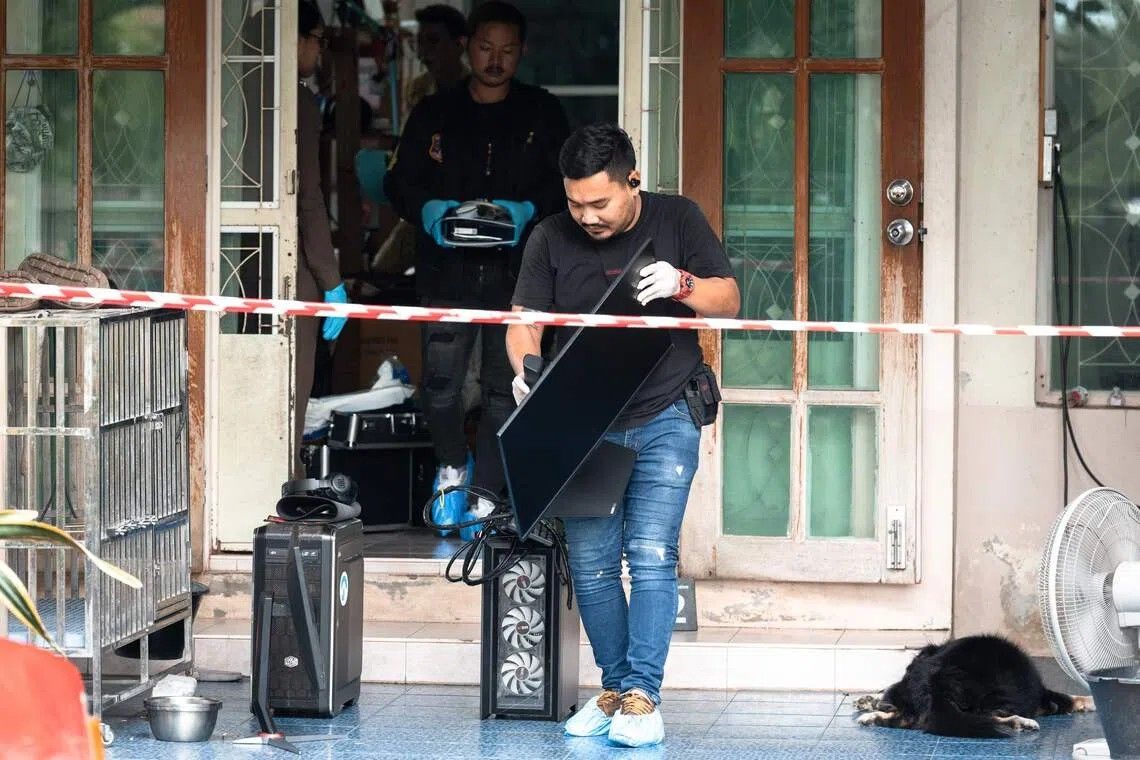
Thai authorities probing the August 7 shooting at Debsirin Nonthaburi School have uncovered evidence that the 14-year-old gunman conducted online searches related to school shootings in the United States, investigators disclosed as they work to piece together what motivated the attack. Police are systematically reviewing the teenager's digital footprint in their effort to determine the circumstances surrounding the incident, which claimed multiple lives and shocked the nation.
Investigators believe the suspect killed his grandparents at their home in Bang Khu Rat subdistrict, Bang Bua Thong district, before travelling to the school where the shooting took place. Officers and forensic teams discovered the bodies after entering the property during their initial inquiries. Wattana Yichin, commissioner of Provincial Police Region 1, personally oversaw the inspection of the residence as part of the widening investigation into the tragedy.
According to police findings, the front door of the grandparents' house had been secured from the outside, suggesting the teenager departed after the deaths occurred and subsequently made his way to Debsirin Nonthaburi School. This sequence of events, as reconstructed by investigators, places the school shooting later that same morning. Police are currently focused on establishing the precise timeline of events and identifying any contributory factors that may have led to the violence.
Digital forensics have become central to the inquiry. Preliminary analysis of the teenager's computer revealed that he had engaged with video games featuring violent content and had conducted searches for information regarding school shootings in the United States, with these online activities recorded from approximately July 30. However, authorities have cautioned against drawing premature conclusions, stating they have not yet established whether the gaming habits or search history directly motivated or caused the attacks. The investigation remains broad-based, with police examining multiple possible factors including potential interpersonal difficulties the teenager may have experienced within the school environment.
Details provided to police by the suspect's uncle paint a picture of an isolated adolescent. According to the relative's account, the teenager had resided with his grandparents since childhood, spent considerable time absorbed in computer gaming, and maintained a withdrawn lifestyle. The uncle reported observing no obvious signs of family disputes or visible stress indicators prior to the incident, suggesting the attack may have come without warning to those closest to him.
The firearm used in the shooting was legally registered to the teenager's grandfather, according to official reports. This fact raises questions about weapon security and storage practices, though investigators have not yet commented on whether inadequate safeguards contributed to the tragedy. The gun's accessibility to the young suspect remains a focus of the ongoing inquiry.
Thananyaporn, the 60-year-old younger sister of the deceased grandfather and aunt to the student involved, provided family context to investigators and media. She emphasised that the teenager had lived with his grandparents, noting that his parents had separated years earlier. The grandparents had assumed primary responsibility for raising him and provided considerable care and affection, according to Thananyaporn's account. She described him as a quiet, polite child who rarely ventured outdoors and lacked the typical peer groups and social activities that most young people enjoy.
The daily routine she outlined reflects a life heavily centred on home and family. His grandfather would escort him to school each morning and collect him in the evening, minimising unsupervised time outside the family unit. The teenager did not participate in typical childhood social activities or maintain friendships beyond family connections, instead spending most of his time at home engaged with computer games. This isolated existence contrasts sharply with the active social lives of most peers his age.
Thananyaporn expressed confidence that family dysfunction played no role in the tragedy, insisting that the three household members maintained close bonds and harmonious relationships. She characterised the grandfather as a gentle former bank manager who treated his grandson with kindness and spoke to him softly, while noting that the grandmother worked as a teacher. Despite this apparent domestic stability and care, the sudden eruption of violence has left investigators and family members struggling to understand how such an attack could have occurred within what appeared to be a loving household.
The investigation underscores a troubling global pattern of youth violence increasingly linked to online exposure to real-world shooting incidents and violent media content. For Malaysia and other Southeast Asian nations, the case raises critical questions about digital safety, mental health support systems for isolated adolescents, and firearm security protocols. School administrators across the region are likely to review their own safety procedures in response to this incident.
The Thai authorities' methodical approach to examining both environmental factors and digital influences reflects growing international recognition that mass violence rarely stems from a single cause but rather emerges from complex interactions between access to weapons, social isolation, media consumption, and undiagnosed psychological distress. As the investigation continues, mental health professionals will scrutinise whether warning signs were missed and what intervention points might have existed to prevent the tragedy.

