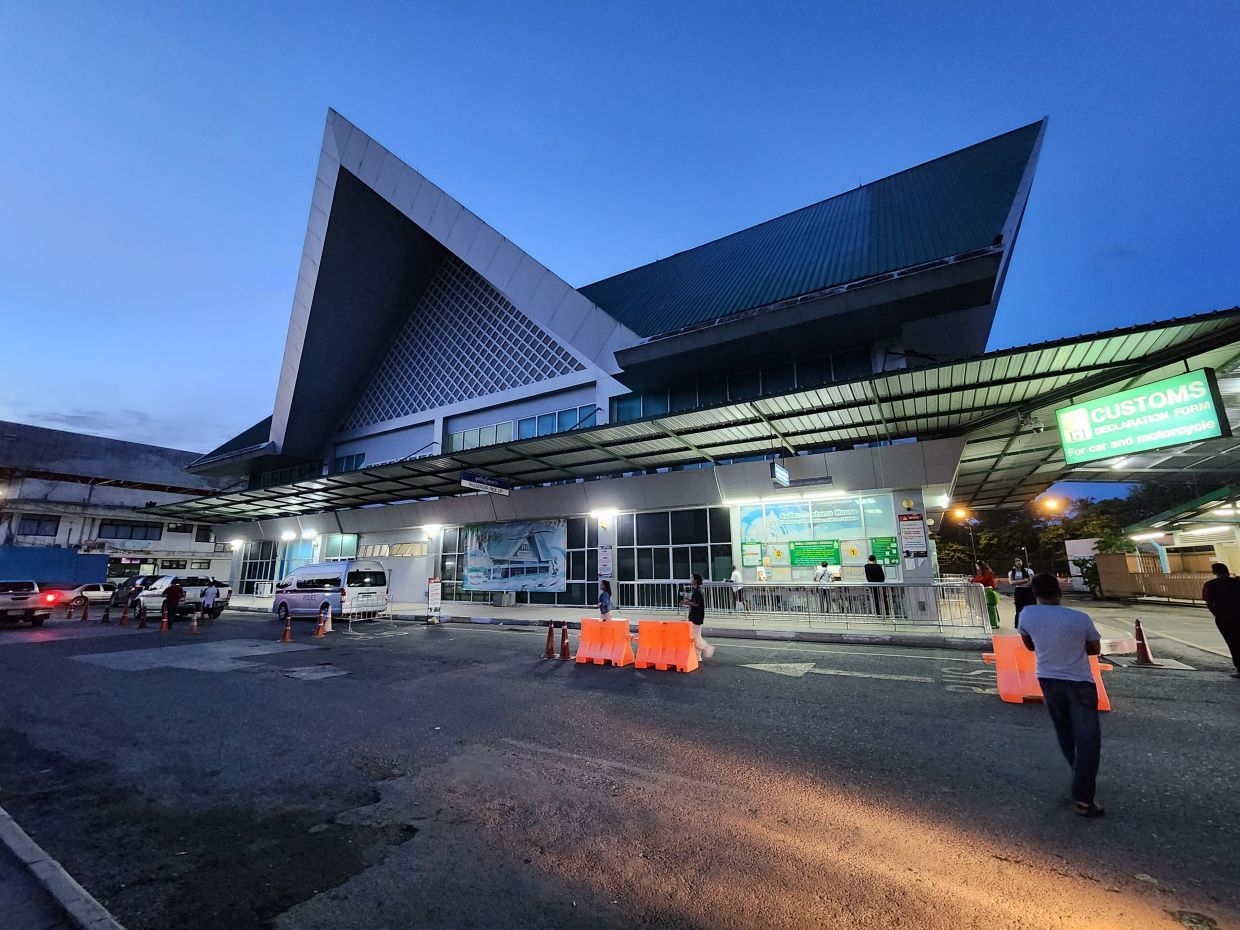
Thailand's cabinet has given the green light to establish a fresh land border crossing point at Sadao, Malaysia, marking a significant shift in cross-border infrastructure between the two nations. The new checkpoint, formally approved on Tuesday and scheduled to commence operations on July 11, represents a strategic pivot in how Thailand and Malaysia manage their shared frontier and the movement of people and goods across it. This development comes as both countries seek to deepen economic integration and position themselves as competitive logistics hubs within Southeast Asia's increasingly interconnected trade landscape.
The relocation involves shifting the border post from its current position at boundary markers 22-23 to a new site situated between markers 23/9 and 23/10. Rather than representing merely a geographic adjustment, this repositioning reflects careful planning to address longstanding operational constraints and congestion issues that have historically hindered smooth cross-border commerce. The new facility will maintain a 18-hour operational window daily, opening from 05:00 to 23:00, providing businesses with clearly defined access hours for conducting trade activities and facilitating the movement of workers and tourists.
Thai government spokesperson Ratchada Thanadirek underscored the urgency with which Bangkok is approaching the infrastructural requirements needed to maximize the checkpoint's potential. Construction crews have been tasked with accelerating development of connecting roads and addressing traffic management challenges on the Thai territory surrounding the new crossing. Beyond road infrastructure, authorities are arranging shuttle services to smoothen the passenger experience, demonstrating a holistic approach to addressing the full spectrum of logistical needs associated with border transit. The Songkhla provincial government, within whose jurisdiction the checkpoint falls, has assumed responsibility for monitoring implementation progress and coordinating with relevant agencies.
Recognizing that successful border operations depend not only on physical infrastructure but also on informed stakeholders, Thai officials are implementing a comprehensive public awareness campaign. Government agencies have been instructed to communicate transparently with businesses, traders, and local communities about the practical realities of using the new checkpoint. This outreach will cover essential details such as traffic route protocols, customs clearance procedures, and immigration protocols, ensuring that the private sector can plan accordingly and adjust supply chains and logistics networks in response to the new crossing's availability. Such communication efforts represent an acknowledgment that bureaucratic clarity and predictability are themselves forms of infrastructure investment.
The broader context for this initiative extends beyond mere logistical convenience. For Malaysia, which sits at the heart of Southeast Asian trade networks and whose Klang Port and Penang Port serve as critical regional transhipment hubs, enhanced connectivity with Thailand offers opportunities to capture more overland trade flows from northern Thailand and Myanmar. For Thailand, improved access to Malaysian ports and supply chains supports its ambitions to become a regional logistics nerve centre. For Malaysian readers, the expanded Sadao crossing represents potential opportunities in cross-border commerce, employment, and tourism ventures, while potentially easing transportation costs for businesses operating in both countries.
Thailand's cabinet simultaneously approved a draft joint statement in anticipation of Prime Minister Anutin Charnvirakul's official visit to Malaysia on July 9-10, scheduled at the invitation of Malaysian Prime Minister Anwar Ibrahim. The timing of these two developments—the border crossing announcement and the high-level bilateral visit—reflects coordinated diplomatic messaging and suggests that the infrastructure initiative enjoys political backing from both governments at the highest levels. This synchronization indicates that border development forms part of a larger framework of bilateral engagement rather than an isolated administrative matter.
The proposed joint statement emerging from the upcoming visit encompasses cooperation across multiple sectors critical to both nations' prosperity and security. Border development and regional connectivity naturally feature prominently, given their fundamental importance to trade and tourism flows. Security cooperation against transnational crime addresses shared challenges including human trafficking, drug smuggling, and arms trafficking that have long afflicted the Thailand-Malaysia border region. Such security collaboration becomes increasingly vital as trade volumes rise and cross-border movement intensifies, requiring robust regulatory frameworks and coordinated enforcement.
Economic partnership provisions within the joint statement reveal particular emphasis on food and energy security, two areas where Thailand and Malaysia possess complementary strengths and vulnerabilities. Thailand's agricultural prowess and energy production capacity can offset Malaysia's reliance on imports in certain commodities, while Malaysia's downstream petroleum refining capabilities and petrochemical industries offer technological expertise and manufacturing capacity that benefit Thai industrialisation efforts. Energy security cooperation holds particular significance given volatile global oil markets and regional competition for liquefied natural gas supplies, making bilateral coordination increasingly valuable for both nations' energy independence and cost management.
From a Malaysian perspective, this border initiative aligns with government priorities to enhance ASEAN connectivity and reduce impediments to intraregional trade. Malaysia has long championed enhanced Southeast Asian integration through infrastructure improvements, and the Sadao crossing represents a concrete manifestation of such principles being implemented through bilateral cooperation. The crossing may also benefit Malaysian tourism, as improved overland access from Thailand could increase visitor flows to northern Malaysia's attractions in Perlis, Kedah, and Penang.
The expansion of border crossing capacity arrives at a moment when global supply chains remain fragmented following pandemic disruptions and when Southeast Asian economies are actively competing to attract logistics investment and manufacturing relocation away from East Asia. Countries that can offer streamlined cross-border operations, predictable procedures, and robust infrastructure gain competitive advantages in attracting multinational enterprises seeking to diversify their production and distribution networks. Both Thailand and Malaysia recognize this reality, explaining the substantial government resources being invested in making the Sadao crossing operationally efficient and business-friendly.
Looking forward, the success of the Sadao checkpoint will likely influence future cross-border infrastructure decisions within Thailand-Malaysia relations. Should the new facility perform effectively in reducing transit times, lowering logistics costs, and facilitating legitimate commerce while maintaining appropriate security and customs oversight, it could serve as a model for further border development initiatives. Conversely, any operational difficulties would prompt policymakers to reconsider approaches and potentially accelerate reforms to regulatory frameworks governing cross-border trade within the bilateral relationship and potentially across ASEAN more broadly.
The checkpoint's establishment also reflects broader Thai-Malaysian cooperation that has intensified in recent years across defence, education, and cultural exchanges. The border crossing thus represents not an isolated infrastructure project but rather a tangible symbol of deeper bilateral integration and shared commitment to leveraging geographic proximity and complementary economies for mutual benefit. For the region, enhanced Thailand-Malaysia connectivity contributes to the broader ASEAN integration project and potentially demonstrates to other member states the benefits of bold infrastructure investment in cross-border cooperation.

