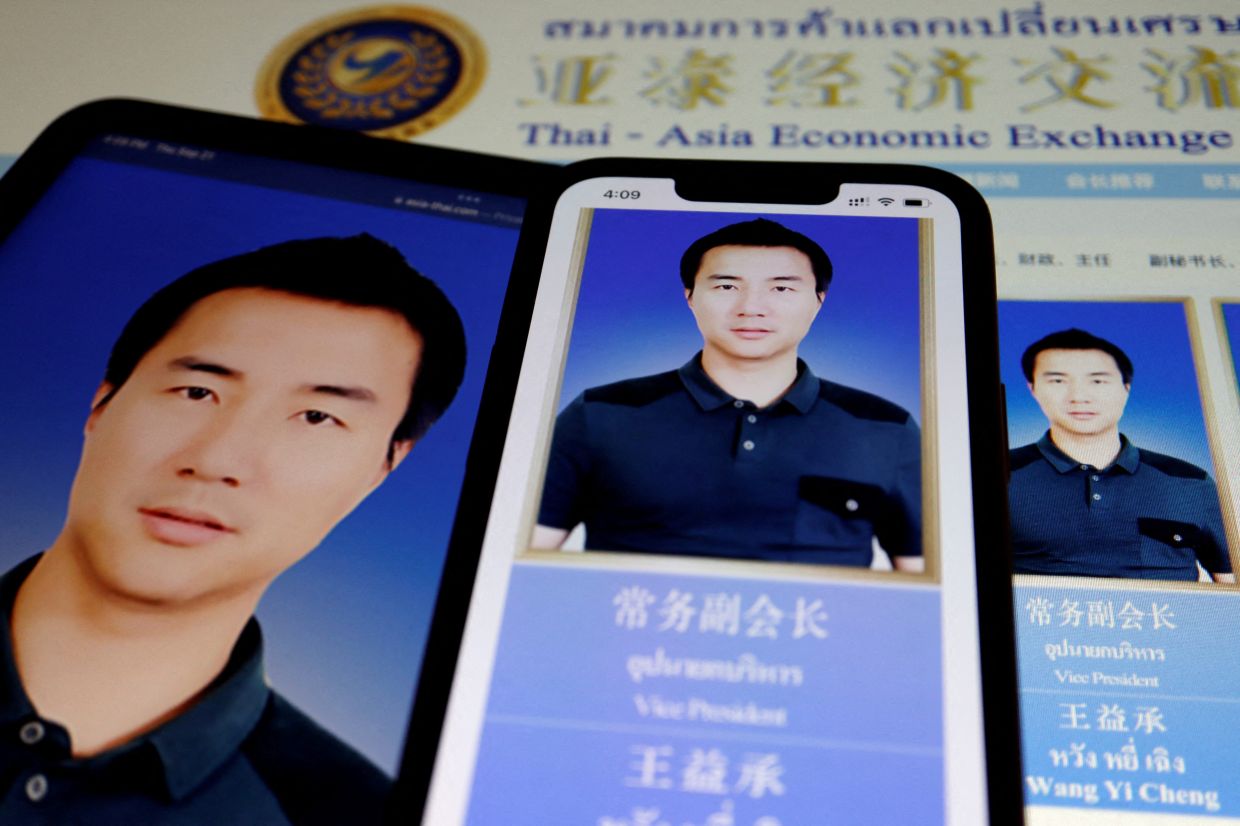
Thailand's Department of Special Investigation has moved to apprehend Wang Yicheng, a Chinese businessman now believed to be a fugitive, on charges connected to a sprawling network of cryptocurrency-related crimes that investigators say exploited millions of dollars through unlawful mining operations. The warrant, issued in November, represents a significant escalation in Bangkok's efforts to dismantle transnational organised crime networks that have increasingly used digital currencies to obscure the origins of stolen funds and gambling proceeds. According to Major Woranan Srilam, the DSI spokesman, authorities are collaborating with international law enforcement counterparts to track down the suspect, who is thought to have left Thailand.
Wang's troubles stem partly from a comprehensive 2023 Reuters investigation that exposed how cryptocurrency accounts bearing his name received at least US$9.1 million between 2021 and 2022 from wallets that blockchain analysis firms linked to "pig-butchering" scams. These sophisticated cons involve perpetrators posing as romantic interests or investment advisers online, gradually persuading victims to channel money into fraudulent cryptocurrency schemes. One documented victim, a 71-year-old Californian, lost his entire life savings of US$2.7 million after being deceived by someone claiming to be a young woman offering investment opportunities. The sheer scale and emotional toll of these scams underscore why they have become a focal point for regional law enforcement.
The charges against Wang span multiple legal frameworks, reflecting the complexity of his alleged activities. Thai authorities formally charged him under provisions covering theft as well as the Computer Crimes Act, which addresses unauthorised interference with digital systems. The breadth of these charges indicates prosecutors believe Wang's involvement extended beyond passive participation to active orchestration or facilitation of illegal operations. US law enforcement has separately identified him as a suspect in digital-asset fraud cases. In June 2023, American authorities froze approximately US$500,000 in cryptocurrency held in accounts associated with Wang after tracing stolen funds from a Massachusetts victim to those holdings.
The investigation that led to Wang's warrant uncovered what investigators describe as a significant illegal mining operation. The DSI determined that the network had illicitly consumed approximately US$28 million worth of electricity, placing this among the largest cryptocurrency mining crime cases prosecuted in the region in recent years. Illegal mining operations carry particular significance for Southeast Asian governments because they not only drain national electricity supplies but also represent a critical juncture in money laundering chains. By converting illicit cash into cryptocurrency through mining operations, criminal networks obscure the paper trail that investigators typically follow, making the proceeds difficult to trace and seize.
Wang's position within Thailand's business and political circles adds another troubling dimension to the case. At the time his cryptocurrency accounts received transfers from scam-linked wallets, he served as vice president of the Thai-Asia Economic Exchange Trade Association, an organisation that promotes bilateral business ties between Thailand and China. This group has cultivated relationships with senior officials from both countries, including prominent figures within Thailand's law enforcement hierarchy. Such connections potentially provided Wang with valuable intelligence about investigative activities and regulatory enforcement, though the exact nature and extent of any such relationships remain unclear. The Thai-Asia Economic Exchange Trade Association later stated that Wang had departed from its board following the Reuters report, with the group claiming that background checks had previously revealed no criminal record.
The criminal enterprise Wang allegedly participated in operated across multiple Southeast Asian jurisdictions, reflecting the highly mobile and networked nature of contemporary transnational organised crime. The DSI's broader investigation has already produced arrest warrants for four unnamed Chinese nationals and four Myanmar citizens, suggesting this was no isolated operation but rather a coordinated scheme with cells operating in different locations. Some of the scams documented in Reuters' reporting were traced to KK Park, a sprawling industrial complex located on the Myanmar-Thailand border that has earned notoriety as a hub for cybercriminal activity. This location represents both a geographical and operational nexus where multiple criminal activities—human trafficking, online fraud, and illegal cryptocurrency operations—intersect and reinforce one another.
The scale of transnational scam syndicates affecting the region has prompted urgent coordinated responses from governments across Southeast Asia. Thailand and neighbouring countries have intensified enforcement operations targeting what are predominantly Chinese-run criminal networks. According to United Nations assessments, these operations generate billions of dollars in annual proceeds while often relying partly on trafficking victims coerced into labour within secured compounds. The work produces enormous suffering for individuals who lose their savings, their families who endure economic ruin, and communities where such crimes are organised. This has made scam operations a priority for both Thai police and regional security cooperation frameworks.
Bitmain, a major manufacturer of bitcoin-mining hardware, disclosed to Reuters in 2023 that Wang was a significant business partner and customer, emphasising that all equipment sales had been conducted through legitimate commercial channels. The company's statement underscores a persistent challenge in regulating the cryptocurrency ecosystem: legitimate businesses may unknowingly or indirectly facilitate illegal activity by providing equipment to individuals who subsequently misuse it. While Bitmain maintained that its conduct was wholly lawful, the company's relationship with Wang raises questions about due diligence protocols within the industry, particularly regarding customers in jurisdictions known for weak regulatory oversight.
The investigation into Wang illustrates how modern financial crime exploits gaps between traditional banking regulation and the emerging digital asset landscape. Unlike conventional money laundering, which relies on the physical movement of cash or layered transactions through financial institutions, cryptocurrency-based schemes can move large sums globally within minutes, with only digital traces left behind. Blockchain analysis firms like TRM Labs have developed sophisticated tools to identify suspicious patterns and link wallets to known criminal activity, yet determined adversaries continue to find methods to obscure ownership and control of digital assets. The fact that investigators could not definitively determine whether Wang personally controlled the accounts in his name versus someone else fraudulently using his identity highlights this investigative challenge.
The Thai authorities' inability to locate Wang suggests he may have anticipated the investigation or received advance warning. This possibility raises uncomfortable questions about information security within Thailand's law enforcement community and whether anyone provided Wang with intelligence about the investigation's progress. Such scenarios, while speculative, are not unprecedented in Southeast Asian crime investigations where corruption occasionally compromises enforcement efforts. The involvement of international partners in the manhunt suggests that regional law enforcement agencies recognise the seriousness of the matter and are committed to apprehending him regardless of where he may have sought refuge.
For Malaysian readers and businesses, the Wang case carries particular relevance given Malaysia's own experience with transnational crime networks and its position as a gateway jurisdiction within Southeast Asia. The techniques used by Wang's network—mixing legitimate business associations with illegal financial operations, relocating when threatened, and exploiting regulatory gaps—represent approaches that could emerge elsewhere in the region. Malaysian authorities monitoring cross-border transactions and international business activities should view this case as illustrative of how sophisticated criminal actors embed themselves within ostensibly legitimate commercial structures. The collaborative international response to Wang's case suggests that enhanced information-sharing and coordinated enforcement across Southeast Asian borders remain essential tools for combating such networks.
Looking forward, the investigation into Wang underscores the need for more robust regulatory frameworks governing cryptocurrency exchanges, mining operations, and cross-border fund transfers within the region. As digital currencies become more integrated into legitimate commerce, distinguishing between lawful and unlawful uses becomes increasingly difficult for border authorities and financial regulators. Enhanced due diligence requirements, particularly for individuals with histories of involvement in politically sensitive business associations or those operating in jurisdictions with known security concerns, may help prevent similar cases. The case also highlights the value of international investigative journalism in exposing crime networks that official investigations might miss, suggesting that continued cooperation between law enforcement and the media remains valuable for safeguarding the financial system's integrity.
China's Foreign Ministry stated it was unaware of the situation regarding Wang at the time of reporting, though this response may evolve as the case progresses. The involvement of Chinese nationals in transnational crime presents diplomatic sensitivities for Beijing, which has increasingly emphasised cooperation with Southeast Asian governments on organised crime and drug trafficking. Wang's case thus sits at the intersection of financial crime, diplomatic relations, and regional security cooperation. As investigations continue and international efforts to locate Wang intensify, the case will likely serve as an important test case for how effectively Southeast Asian nations can pursue high-level financial criminals across borders and how successfully they can navigate the diplomatic complexities that inevitably arise in such investigations.

