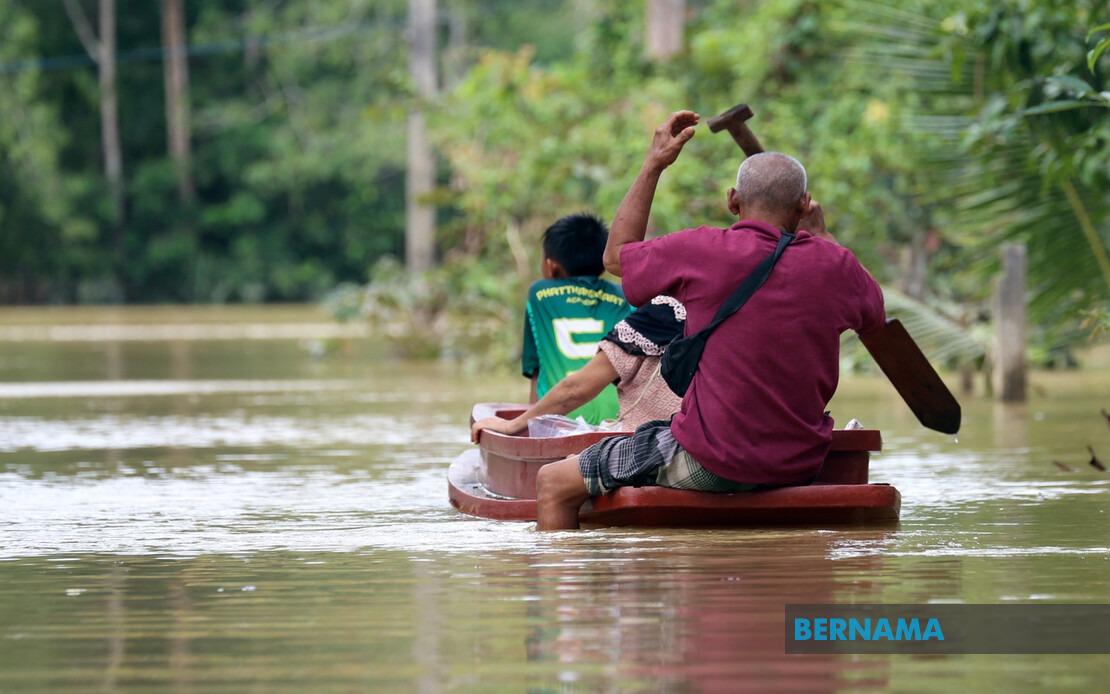
Thailand has fundamentally restructured its approach to managing natural disasters, creating a more agile and integrated system designed to respond swiftly to twin threats of flooding and extended drought. The Thai government's enhanced framework comes as meteorological data points to intensifying weather volatility across Southeast Asia, with particular concern over the months ahead. Deputy government spokeswoman Capt Patdarasm Thongsaluaykorn outlined the overhaul on Tuesday, emphasising that the new mechanisms would prioritise speed and coordination in delivering support to communities facing climate-related crises.
The centrepiece of Thailand's upgraded disaster architecture comprises four geographically distributed regional committees empowered to make decisions without waiting for approval from Bangkok-based officials. This decentralisation represents a philosophical shift in how Thailand addresses emergencies, moving away from a centralised, hierarchical decision-making process that historically slowed relief efforts. Each committee operates with unified command structures and enhanced inter-agency coordination, allowing them to mobilise resources across provincial boundaries more efficiently. Deputy Prime Minister and Minister of Higher Education, Science, Research, and Innovation Yodchayan Wongsawat chairs the northern regional committee, which held its inaugural meeting at the Department of Disaster Prevention and Mitigation on Tuesday, signalling the government's commitment to high-level oversight of the new system.
Currently, Thailand's disaster management authorities are tracking 1,363 locations classified as susceptible to flooding and an additional 444 communities facing heightened vulnerability to prolonged dry spells. These designations reflect the nation's complex geography, where certain regions experience cyclical inundation while others face water scarcity. The scope of monitoring demonstrates the scale of Thailand's climate exposure and the administrative complexity involved in managing such dispersed risk zones. By maintaining detailed surveillance of these areas, the regional committees can prioritise resource allocation and tailor response strategies to local conditions rather than applying uniform solutions across disparate environments.
The restructured committees carry broad mandates extending well beyond emergency response. Their responsibilities encompass real-time monitoring of meteorological patterns and water availability, active coordination of emergency operations during crises, and oversight of relief distribution and compensation mechanisms for affected residents. Additionally, these bodies direct post-disaster recovery initiatives, ensuring that affected areas receive support for reconstruction and economic rehabilitation. The committees possess authority to direct government agencies throughout their regions, assess situational developments, and communicate verified information to the public—a critical function in an era when misinformation can exacerbate panic and undermine official relief efforts.
Immediate weather threats have prompted heightened vigilance across much of Thailand. The Thai Meteorological Department has issued warnings of heavy precipitation, flash flooding, and riverine overflow affecting the northern, northeastern, and eastern regions. Maritime authorities have extended navigation advisories, instructing small vessel operators to remain in port in the upper Andaman Sea between August 4 and 9, and in the upper Gulf from August 6 through 9. These precautionary measures reflect the unpredictable intensity that tropical weather systems can achieve, with sudden downpours capable of overwhelming drainage systems and triggering dangerous runoff in hilly terrain.
Beyond the immediate meteorological concerns, Thailand confronts a more protracted climate challenge emerging from oceanic patterns thousands of kilometres distant. Scientists anticipate a Super El Niño phenomenon beginning in October and persisting through the early portion of the 2027 rainy season, which could suppress rainfall across the region by at least 10 per cent. Such a reduction, while seemingly modest on paper, carries severe consequences for an agrarian economy like Thailand's. Rice cultivation, the nation's foundational agricultural commodity, depends on reliable monsoon precipitation, and crop yields could decline substantially under persistently drier conditions.
The prospective rainfall deficit poses multifaceted threats to Thailand's development trajectory. Agricultural output forms a crucial component of rural incomes and export revenues, and diminished harvests would ripple through provincial economies dependent on crop sales. Water supply infrastructure, already strained in certain regions during seasonal troughs, could face critical shortages that affect both drinking water access and irrigation for secondary crops. Hydroelectric power generation, which supplies a meaningful portion of Thailand's electricity, could decrease if reservoir levels drop below operational thresholds. These cascading impacts underscore why disaster management in Thailand cannot remain confined to reactive emergency response but must encompass anticipatory planning.
For Malaysia and other Southeast Asian nations, Thailand's experience offers instructive lessons in climate adaptation urgency. The region as a whole faces intensifying rainfall variability, with some areas experiencing unprecedented downpours while others endure extended dry periods. Thailand's investment in institutional capacity building—specifically the establishment of empowered regional committees—reflects recognition that centralised bureaucracies often lack the geographic granularity needed to mount effective climate responses. Malaysia's own disaster management agencies could benefit from examining whether their current command structures allow sufficient local flexibility while maintaining coordination at the national level.
The financial implications of Thailand's enhanced disaster response system merit attention from Malaysia's perspective. Investing in preparedness infrastructure, trained personnel, and coordinated decision-making mechanisms requires substantial upfront expenditure. However, such investments typically generate significant returns through reduced disaster losses, faster economic recovery, and prevention of humanitarian crises. Developing nations frequently face fiscal constraints that complicate such investments, yet the long-term costs of inadequate preparation invariably exceed the expenses of preventive action. Thailand's decision to reorganise its institutional framework suggests that policymakers view climate-related disasters as sufficiently consequential to justify reorganisation despite bureaucratic inertia.
The temporal dimension of Thailand's dual challenges—immediate flooding threats and longer-term drought prospects—illustrates how climate change manifests through multiple channels simultaneously. Traditional disaster management frameworks organised around single hazard types prove inadequate when communities face overlapping risks requiring different preparedness strategies. The Thai government's establishment of integrated committees capable of managing both flood and drought concerns reflects adaptive institutional design. As Malaysia encounters similarly complex climatic futures, learning from Thailand's structural innovations could prove valuable for enhancing national resilience.
Thailand's experience also underscores the importance of accurate meteorological science and institutional transparency in disaster management. By publicly identifying 1,363 flood-risk locations and communicating El Niño forecasts, the government enables local communities and businesses to adjust behaviour and investment decisions accordingly. Information asymmetry historically left vulnerable populations disproportionately exposed to climate shocks; transparent hazard communication represents progress toward more equitable risk distribution. For Southeast Asia broadly, strengthening meteorological services and ensuring that climate intelligence reaches decision-makers at all governance levels constitutes essential infrastructure for adapting to climatic change.

