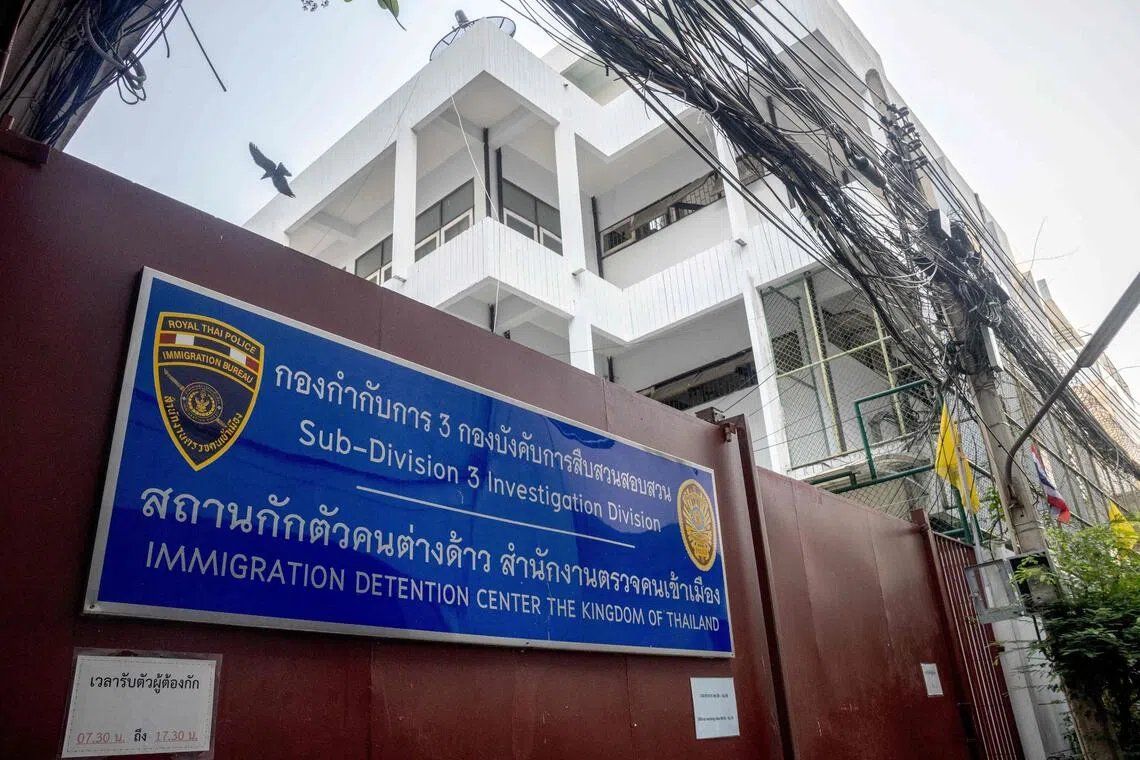
Thailand's Prime Minister Anutin Charnvirakul has formalized a sweeping new deportation framework designed to expedite the removal of foreign nationals found to be breaking Thai law or jeopardizing social stability. The Prime Minister's Office Regulation on Deportation B.E. 2569, signed on August 26 and published in the Royal Gazette two days later, became effective on August 28, marking a significant shift in how Thailand manages immigration enforcement. The regulation represents an attempt to create uniform, transparent procedures that consolidate decision-making authority and accelerate inter-agency coordination in deportation proceedings.
The legal instrument arrives as Thailand continues grappling with the management of its substantial foreign population, which encompasses tourists, expatriate workers, business owners, and undocumented migrants. While the regulation acknowledges that Thailand benefits from welcoming law-abiding foreigners engaged in legitimate tourism, employment, and commercial activities, it equally emphasizes the state's responsibility to protect citizens from those whose conduct threatens legal compliance and social welfare. This balancing act reflects broader regional concerns about immigration integrity shared across Southeast Asia, where governments increasingly scrutinize foreign presence while competing for legitimate international investment and talent.
At the centre of the new framework lies the Interior Minister, who gains considerable discretionary power to order deportations across six distinct categories of violations. The first encompasses unauthorized entry or unlawful residence under immigration statutes, a category addressing both initially unlawful border crossing and overstaying of valid visas or permits. The second targets employment law violations, recognizing that illegal migrant labour undermines local wage protections and labour standards. Unlawful business operations constitute a third category, addressing foreign nationals who circumvent Thailand's Foreign Business Act restrictions designed to reserve certain economic sectors for Thai nationals and properly registered foreign enterprises.
The regulation also establishes grounds for deportation based on document fraud, a persistent problem in Southeast Asian migration where forged credentials facilitate criminal activity and undermine border security. More broadly, any foreigner convicted under final court judgment for crimes carrying sentences of at least five years faces deportation eligibility. This threshold suggests Thailand's government perceives a distinction between minor offences and serious criminality warranting removal. Importantly, the regulation extends liability to principals, instigators, and supporters of these offences, potentially capturing a wider network of individuals than those directly committing violations.
The procedural architecture prioritizes speed and coordination. The Corrections Department must notify the Interior Ministry permanent secretary at least fifteen days before releasing any foreign prisoner covered by the regulation, providing criminal records and biographical data. This advance notification mechanism aims to prevent last-minute deportation processing. Where courts suspend sentences or impose fines rather than custodial punishment, the Judiciary Office must immediately alert the Interior Ministry permanent secretary, ensuring no cases slip through administrative gaps. This multi-agency information-sharing structure reflects recognition that effective enforcement depends on seamless bureaucratic coordination across traditionally siloed institutions.
Repatriation preference follows straightforward hierarchies. Deportees are ordinarily returned to their country of nationality, a principle rooted in international law and bilateral diplomatic relations. Where nationality remains unestablished, Thailand may return individuals to their last country of residence prior to Thai entry. However, the regulation acknowledges humanitarian and diplomatic complexities by permitting third countries or international organizations to request acceptance of deportees within seven days of a removal order. Such requests must cite legitimate safety concerns, including risks of torture, cruel or inhumane treatment, enforced disappearance, or violations of human dignity—a framework reflecting Thailand's international treaty obligations regarding non-refoulement protections.
These alternative placement procedures carry financial implications. The requesting country or organization must assume all costs associated with care and transfer of the deportee, and the individual must provide written consent. Transfers under this mechanism must conclude within thirty days, though the Interior Minister may grant up to two additional thirty-day extensions. Should transfer prove impossible within the allowable timeframe, authorities revert to standard repatriation procedures. This structure incentivizes third parties genuinely interested in receiving individuals to act expeditiously while preventing indefinite limbo where deportees languish in Thai custody awaiting placement decisions.
The regulation explicitly incorporates Thailand's international legal commitments into deportation decision-making, requiring consideration of applicable laws, Cabinet resolutions, and international obligations. This language presumably references Thailand's accession to various international human rights and refugee protection instruments, though the regulation offers limited detail on how these obligations navigate against the state's deportation imperatives. The Interior Minister's authority over dispute resolution—with their decision deemed final—concentrates considerable power in a single ministry without explicit appellate mechanisms, potentially raising concerns among civil liberties advocates regarding procedural fairness and judicial review.
For Malaysia and Southeast Asia broadly, Thailand's new framework illustrates regional governments' determination to reassert control over immigration enforcement amid transnational population movements. Thailand hosts approximately three million migrants, many undocumented, making immigration management crucial to social stability and public resource allocation. Malaysia, similarly hosting over two million migrants, faces parallel pressures and may view Thailand's approach as a regulatory template, though specific implementation would require adaptation to Malaysia's distinct labour market demands and bilateral agreements with source countries. The regulation's emphasis on systematic inter-agency coordination addresses inefficiencies that plague enforcement across the region, where deported individuals sometimes re-enter or communications between border, labour, and police agencies remain fragmented.
The timing and scope of Thailand's deportation regulation also reflects shifting political priorities under Prime Minister Anutin's administration. By formalizing deportation procedures through executive regulation rather than parliamentary legislation, the government demonstrated capacity to implement immigration enforcement changes rapidly without extended legislative debate. This approach prioritizes administrative efficiency but bypasses opportunities for parliamentary scrutiny and public deliberation characteristic of democratic legislative processes. For Malaysians observing Thai governance patterns, such regulatory strategies illustrate broader trends toward executive consolidation of immigration control authority across Southeast Asia.
Implementation challenges will likely emerge quickly. Thai courts may receive challenges alleging procedural irregularities or human rights violations under the new framework. The regulation's application to mixed-nationality individuals, stateless persons, or those with complex documentation histories remains ambiguous. Additionally, cooperation from receiving countries and international organizations—essential for the alternative placement provisions—depends partly on diplomatic relationships and geopolitical considerations that transcend migration management per se. As Thailand begins applying this regulatory apparatus across its ports of entry, enforcement agencies, and correction facilities, both the framework's practical efficacy and its human rights implications will become apparent, potentially influencing how other Southeast Asian nations calibrate their own deportation procedures.

