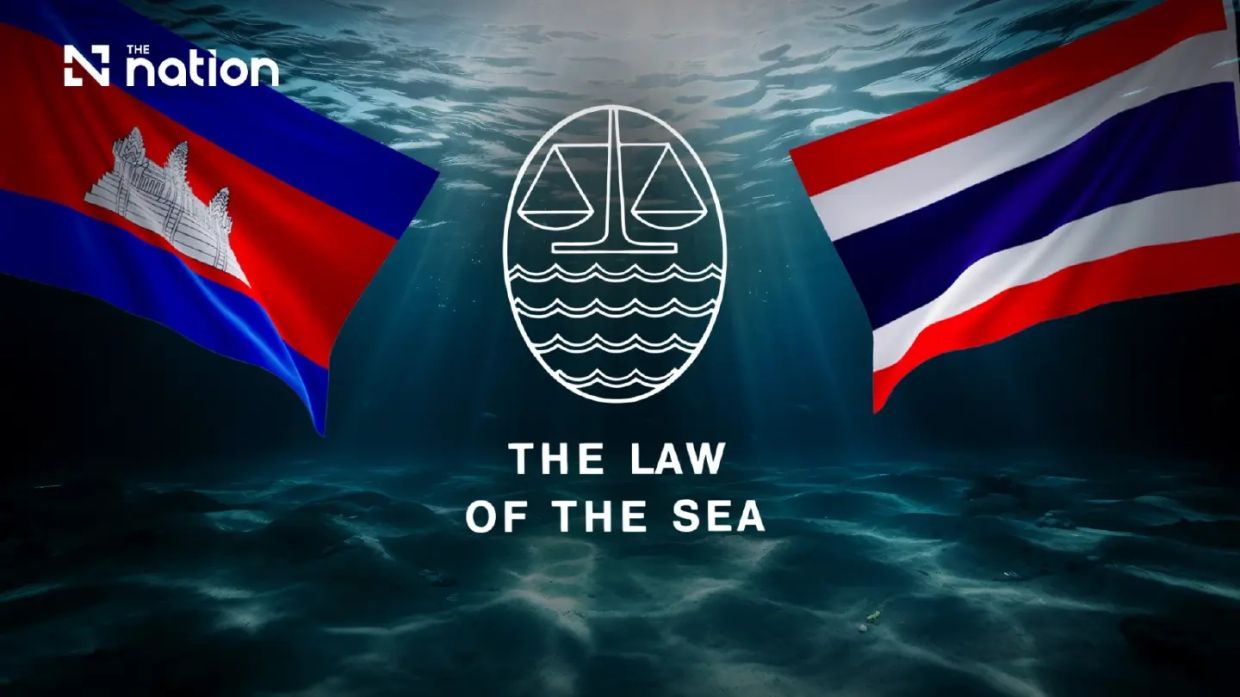
Thailand and Cambodia have taken concrete steps towards resolving their competing maritime claims in the Gulf of Thailand, yet fundamental disagreements persist over the scope of negotiations that could ultimately determine access to billions of dollars worth of oil and natural gas reserves. The two Southeast Asian neighbours are proceeding with the formation of a five-member conciliation commission under the United Nations Convention on the Law of the Sea, a mechanism designed to facilitate negotiations rather than impose binding rulings. However, their divergent priorities reveal deeper tensions about whether the process should narrowly focus on drawing maritime boundaries or also address the joint development and resource-sharing arrangements that Cambodia views as equally important.
The administrative machinery for the commission is gradually taking shape. Thailand and Cambodia have each nominated two independent conciliators tasked with jointly selecting a neutral chairperson to oversee the proceedings. The original deadline for appointing this chair had been set for July 19, but both countries agreed to extend the timeline to August 14 following a request from the four conciliators already in place. This extension reflects the challenging search for a candidate who commands sufficient international standing and maintains credible impartiality with respect to Southeast Asian geopolitics.
Thailand's conciliators represent heavyweight credentials in maritime jurisprudence. The country selected Rüdiger Wolfrum, a German jurist who led the International Tribunal for the Law of the Sea from 2005 to 2008, and Albert J. Hoffmann, a South African legal expert who served as president of the same tribunal during 2020 to 2023. These appointments signal Bangkok's commitment to anchoring the discussions in established international law precedent. Cambodia countered by appointing Peter Taksøe-Jensen, a Danish diplomat renowned for chairing the conciliation commission that resolved the Timor-Leste-Australia maritime dispute, and Jean-Marc Thouvenin, a French academic specialising in international law. Taksøe-Jensen's involvement carries particular significance given that the Timor-Leste case provides the primary template for the mechanism now operating in Thai-Cambodian waters.
Thailand formally joined the conciliation process on June 19, several weeks after Cambodia initiated it with its June 2 notification. Bangkok appointed Deputy Prime Minister and Foreign Minister Sihasak Phuangketkeow as its chief agent in the proceedings, with Thailand's ambassador to Kuwait, Songchai Chaipatiyut, designated as deputy agent. These high-level assignments underscore the political weight both governments attach to the outcome, despite their tactical disagreements about process and scope. The conciliation mechanism differs fundamentally from litigation in that it produces recommendations rather than enforceable judgments, requiring both parties to voluntarily reach a final settlement based on the commission's analysis and suggestions.
Once the chair is appointed and the commission reaches full strength, its members will undertake a detailed examination of the maritime boundary dispute, consult extensively with both governments, and canvas possible solutions grounded in international maritime law principles. The entire process is anticipated to span approximately twelve months, though Thailand and Cambodia may mutually agree to extend the timeline if substantive discussions warrant additional time. Thailand's Foreign Minister has specified that the commission should possess demonstrated expertise in international law, maritime law, and diplomacy, alongside genuine impartiality and nuanced comprehension of Thai-Cambodian bilateral relations. These criteria reflect Bangkok's determination to ensure the chair brings sophisticated understanding of the region's sensitivities.
The contested maritime zone encompasses between 26,000 and 27,000 square kilometres and harbours vast hydrocarbon reserves estimated at 11 to 12 trillion cubic feet of natural gas alongside significant oil deposits. Some analysts have valued the total potential of these resources at approximately US$300 billion, making the dispute a matter of profound economic consequence for both nations. International energy companies, including TotalEnergies, have indicated interest in offshore exploration should the boundary questions be resolved, though no formal investment commitments have materialised pending clarity on maritime jurisdiction.
Cambodia's urgency about settlement stems substantially from shifting global energy dynamics. Minister of Mines and Energy Keo Rottanak has argued that recent geopolitical upheavals involving Iran and disruptions in the Strait of Hormuz have elevated energy security concerns across the region, lending fresh impetus to resolving the Gulf of Thailand boundary question expeditiously. Cambodia currently depends heavily on hydroelectric power and expanding solar installations, but views access to fossil fuel reserves as strategically important for supporting longer-term industrial expansion and economic growth. Keo cautioned that even after a boundary agreement, exploration and development would require several years to commence, implying that delayed settlement risks missing the investment window entirely as global capital gradually shifts away from hydrocarbon projects.
Yet Thailand's government has adopted a considerably narrower interpretation of the conciliation's appropriate mandate. Bangkok insists the commission should concentrate exclusively on delimiting the maritime boundary and continental shelf, explicitly rejecting any negotiation of joint development zones or resource-sharing frameworks at this stage. Foreign Minister Sihasak has repeatedly stressed that boundary delimitation must logically precede any discussion of resource cooperation, and that premature engagement with development questions could complicate the core legal and geographical demarcation process. Thailand's position reflects a preference for sequencing the negotiations carefully, with Bangkok arguing that sovereignty, territorial integrity, and national interests must remain paramount throughout the entire process.
This strategic disagreement exposes contrasting national perspectives on how maritime disputes should be resolved in Southeast Asia. Cambodia advocates an integrated approach treating boundary settlement and resource-sharing as complementary elements of comprehensive maritime cooperation, viewing joint development as a mechanism that could satisfy both parties' interests simultaneously. Thailand, conversely, emphasises compartmentalisation, believing that establishing clear territorial limits must precede any discussion of joint arrangements. For Malaysia and other Southeast Asian states with their own overlapping maritime claims, this dispute offers instructive lessons about the tensions between narrowly technical boundary demarcation and the broader economic and developmental implications that inevitably accompany such settlements.
The Timor-Leste-Australia conciliation provides an important precedent demonstrating that the mechanism can function successfully despite initial complexity. That case culminated in a treaty establishing permanent maritime boundaries in the Timor Sea, validating the conciliation process as a viable alternative to protracted bilateral negotiations or international court proceedings. Both Thailand and Cambodia appear committed to working through the framework despite their disagreements, suggesting that the extended timeline and appointment of experienced jurists reflects genuine determination to achieve breakthrough rather than mere procedural compliance. The coming months will test whether the conciliation commission can find formulations allowing Thailand to prioritise boundary issues while creating space for Cambodia's eventual exploration of resource-development possibilities.
The broader significance extends beyond Thai-Cambodian relations. The Gulf of Thailand dispute occurs amid increasing regional competition for maritime resources and growing tensions over overlapping continental shelf claims. How Thailand and Cambodia manage their competing interests through this conciliation process will influence approaches adopted elsewhere in Southeast Asia, potentially establishing models for other boundary-adjacent nations seeking to balance sovereignty concerns against cooperative development opportunities. The involvement of internationally respected jurists and the transparent procedural framework offer Southeast Asian states a demonstrated pathway for resolving maritime conflicts through structured dialogue rather than confrontation, even when fundamental disagreements about process and scope initially appear intractable.

