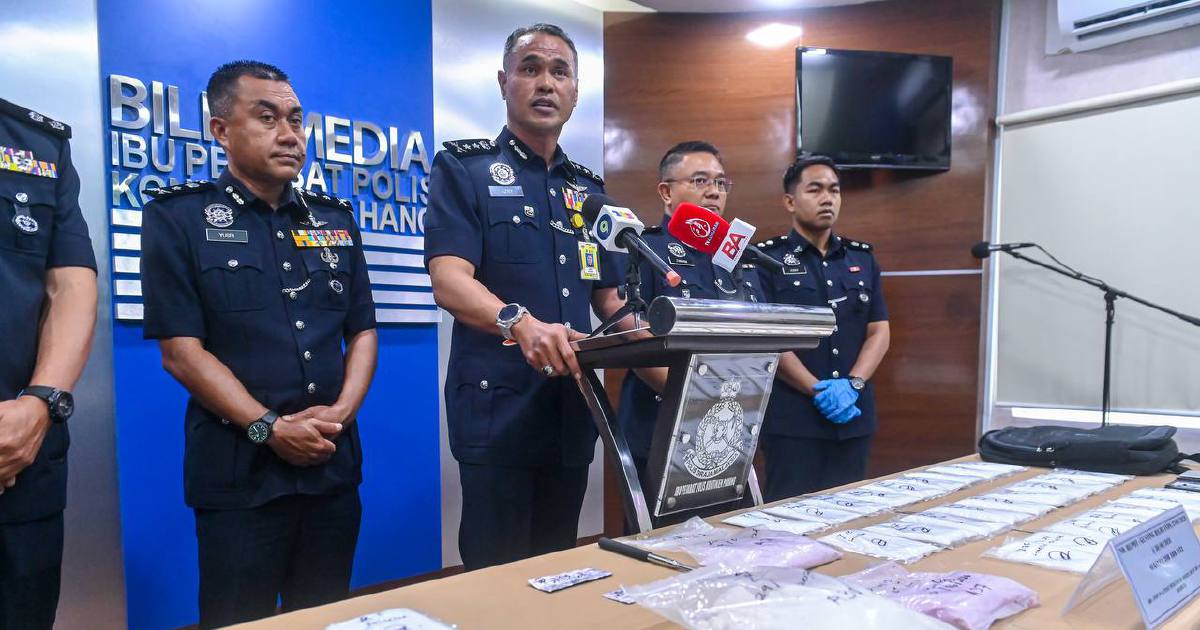
Authorities in Pahang have apprehended a Thai national and her Malaysian partner in connection with a significant drug trafficking operation uncovered in the Genting Permai area of Bentong. The arrests culminated a surveillance operation targeting suspected couriers who had allegedly been distributing controlled substances across the region for roughly three months prior to their detention. The seizure of narcotics valued at approximately RM728,000 represents a substantial disruption to organised drug networks operating across Malaysia's border regions.
The operation reflects the increasing role played by foreign nationals in Malaysia's illicit drug trade, particularly those recruited as low-level operatives by larger trafficking syndicates. Intelligence suggests that individuals from neighbouring countries are often employed as couriers due to their relative anonymity and perceived lower risk of detection by authorities. The involvement of both a Thai woman and a local partner in this case highlights how syndicates deliberately structure their operations with mixed-nationality teams to complicate investigation and reduce operational vulnerabilities.
The timing and location of this arrest carries particular significance for the Bentong district, which has become an increasingly active corridor for drug-related activities. Sitting near the border region and with multiple access points for moving contraband, Bentong has emerged as a critical enforcement area for the Pahang police narcotics division. This operation demonstrates the strategic focus local authorities are placing on dismantling supply chains at their transit points before drugs can be distributed to street-level dealers and users throughout the peninsula.
The three-month operational window mentioned in the arrest details suggests that the couple had successfully evaded detection for an extended period, indicating either sophisticated precautions or potential gaps in surveillance capacity. Drug enforcement agencies across Malaysia frequently face resource constraints that allow determined syndicates to maintain courier networks for months before identification. The duration of their alleged activity also implies they may have completed multiple drug runs, raising questions about how much contraband successfully reached end markets before the enforcement action.
The value of the seized narcotics—RM728,000—places this among the more significant recent drug busts in Pahang. While not approaching the scale of major hauls occasionally reported in seaports or major cities, the quantity is substantial enough to warrant sustained investigative effort. Authorities will likely now examine financial records and communications to establish the full scope of the syndicate's operation and identify upstream suppliers as well as downstream distribution networks that relied on this courier pair.
Investigators will particularly focus on the syndicate structure that employed these couriers. Understanding who recruited them, how they were compensated, and what other operatives they worked alongside could unravel a larger criminal enterprise. The partnership between a Thai national and a Malaysian resident suggests either a cross-border smuggling arrangement or local control of a network bringing foreign-sourced drugs into Malaysia. Both scenarios point to transnational criminal coordination that requires coordinated regional enforcement responses.
The nature of the controlled substances seized—though not detailed in the initial reports—will influence prosecution strategies and sentencing recommendations. Whether the haul consisted primarily of methamphetamine, heroin, or synthetic drugs affects the severity of charges and the profile of downstream dealers the syndicate supplied. Pahang's drug enforcement agencies will be particularly interested in tracing these specific drugs back to their source, potentially leading them toward larger manufacturing operations or key transit points used by transnational trafficking networks.
From a Malaysian enforcement perspective, this arrest reinforces the persistent challenge of drug trafficking along land borders and the necessity for enhanced intelligence cooperation with Thai authorities. The Royal Thai Police and Malaysian narcotics agencies maintain formal cooperation channels, yet the continued infiltration of couriers from Thailand suggests that preventive measures remain insufficient. Cross-border coordination on suspect movements, financial intelligence sharing, and joint operations will be essential if Malaysia hopes to significantly disrupt supply chains at their origin.
The case also underscores why local communities near Bentong face particular drug-related pressures. Transit corridors for narcotics inevitably spawn associated petty crime, money laundering through small businesses, and violence related to territorial disputes among dealers. Residents in areas where couriers operate frequently become collateral victims of enforcement efforts and drug-fuelled crimes. Addressing trafficking at the source through better border controls and international cooperation remains more cost-effective than managing the downstream social consequences of a thriving drug trade.
Looking ahead, authorities will be scrutinising whether this couple's detention will yield intelligence about other operatives within the same syndicate network. Often, courier arrests serve as pressure points that generate cooperation in exchange for reduced charges. If the Thai national and her partner provide information about their handlers, financiers, and other members of their network, this case could expand significantly beyond two detainees into a broader dismantling of regional trafficking operations. The coming weeks of interrogation and investigation will determine whether this arrest marks an isolated disruption or the beginning of a more comprehensive enforcement action against the organisation they served.

