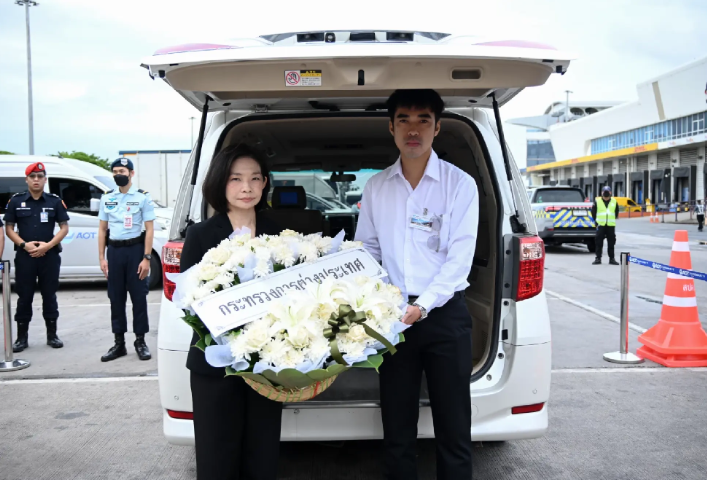
Thailand's Ministry of Foreign Affairs has overseen the repatriation of Bavorntat Pengsuk, the 27-year-old content creator and travel vlogger known to his substantial online following as Hlun Solo, following his death in Tbilisi, Georgia, on 14 July 2026. The move marks the conclusion of diplomatic coordination between Thai authorities and their Georgian counterparts to return the YouTuber's remains to his grieving family and allow for proper funeral arrangements according to Buddhist tradition.
Jaithai Upakarnitikaset, the Department of Information's director-general and official MFA spokesperson, confirmed on Thursday that Deputy Prime Minister and Foreign Minister Sihasak Phuangketkeow had tasked Prathuangtip Sirivithes, the acting director-general of the Department of Consular Affairs, with receiving the remains upon their arrival in Thailand. This elevated level of institutional involvement underscores both the prominence of Hlun Solo within Thailand's digital entertainment landscape and the government's commitment to supporting families during repatriation crises abroad.
Hlun Solo had cultivated a dedicated audience through his YouTube channel, which documented his travels and adventures across various destinations. The content creator's unexpected death in the Georgian capital prompted immediate action from Thai diplomatic missions, highlighting the vulnerabilities that young travellers and digital nomads face when operating in distant countries far from their home support networks.
The Royal Thai Embassy in Ankara maintained continuous liaison with Bavorntat's family, Georgian authorities, and all relevant officials from the moment the incident was formally reported. This ongoing communication proved essential in navigating the administrative processes required for international repatriation, which frequently involve multiple jurisdictions, varying legal frameworks, and bureaucratic delays that can extend the grieving process for families.
Thailand's diplomatic personnel demonstrated particular diligence by dispatching embassy staff directly to Tbilisi to investigate the circumstances surrounding Bavorntat's death, facilitate the release of his remains, and coordinate with Georgian officials. Such direct intervention serves dual purposes: it ensures that Thai nationals receive adequate consular protection and representation, while simultaneously signalling to the Georgian government that Thailand takes such matters seriously and will maintain pressure until procedures are expedited.
For Malaysian and Southeast Asian readers, the case illustrates the critical importance of maintaining updated travel documentation and emergency contact information when embarking on extended journeys, particularly for digital content creators who may spend months or years working remotely across multiple countries. The repatriation process, while ultimately successful, demonstrated the complex web of administrative hurdles that families must navigate when a citizen dies abroad.
Upon arrival in Thailand, Bavorntat's family arranged for comprehensive forensic examination to establish the precise cause of death. This medico-legal investigation will provide clarity on whether his passing resulted from accident, natural causes, or other circumstances, information that both the family and authorities require for closure and potential legal proceedings if warranted.
Following the completion of all necessary medical and administrative procedures in Thailand, the remains will be transferred to Somdet district in Kalasin province, Bavorntat's home region in northeastern Thailand. This journey homeward carries profound cultural significance within Thai society, as it marks the beginning of the formal transition from the secular sphere of investigation and repatriation into the sacred domain of Buddhist funeral rites and spiritual observance.
The funeral arrangements will unfold according to traditional Theravada Buddhist practices specific to the Kalasin region, allowing extended family, friends, and community members to pay respects and participate in ceremonies designed to honour the deceased's memory and facilitate his spiritual transition. Such rites typically extend over several days and involve elements of both secular mourning and religious devotion.
Bavorntat's case serves as a sobering reminder of the hazards that content creators and travellers encounter while pursuing their professional ambitions or personal adventures in unfamiliar environments. The incident underscores the necessity for travel insurance, medical coverage, and clear communication channels with embassies and consular officials for all Southeast Asians venturing abroad for extended periods.
The Thai government's coordinated response also demonstrates the diplomatic machinery available to support citizens in distress, though such assistance often depends on prompt notification to embassies and maintaining active communication with consular staff. For digital nomads and travel influencers working across Southeast Asia and beyond, establishing relationships with embassy contacts and maintaining updated emergency protocols remains essential precaution.
As the region experiences growing numbers of young professionals and entrepreneurs operating as digital content creators across international borders, the coordination mechanisms demonstrated in this repatriation case may serve as a template for how governments balance individual privacy rights with the protective obligations owed to their nationals abroad. The case ultimately reflects both the opportunities and vulnerabilities inherent in the contemporary global digital economy.

