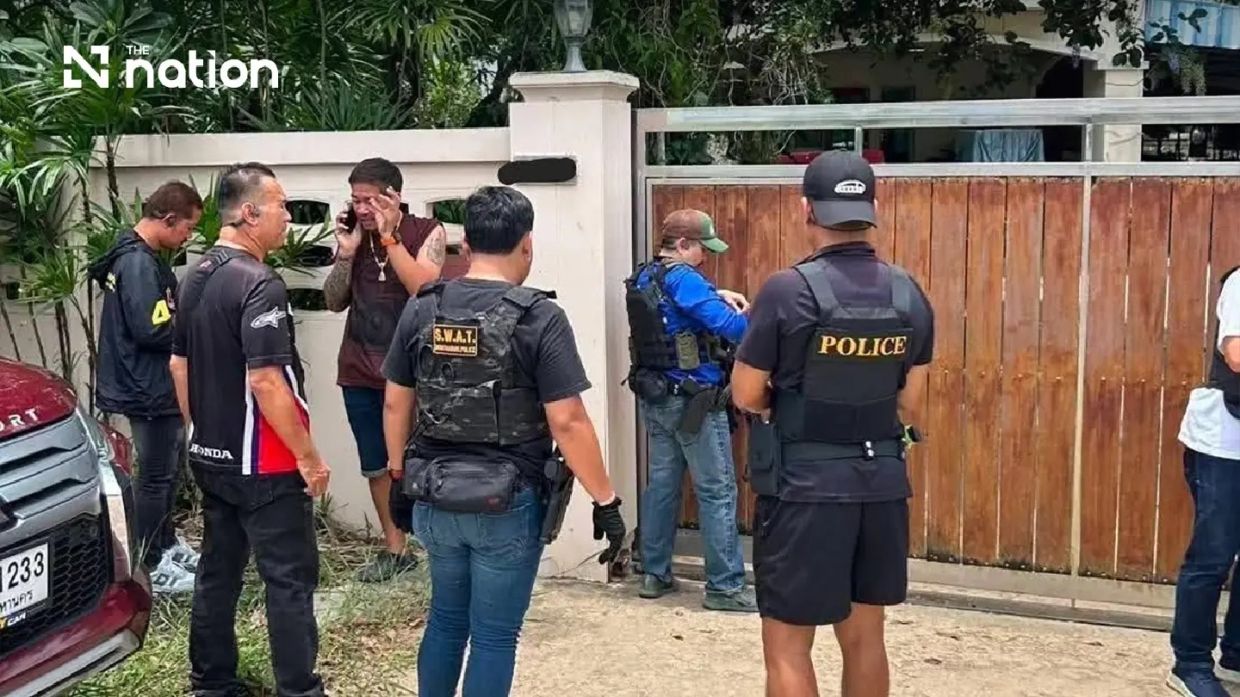
A Mathayom 2 student in Thailand's Nonthaburi province killed his grandparents at their home before opening fire at Debsirin Nonthaburi School on Friday morning, August 7, in what authorities say was a coordinated act of violence. The shooting claimed seven lives, including the suspected attacker, with 15 others wounded in the incident. Police discovered the victims at the family residence in a residential area of Bang Bua Thong district after responding to reports of the school shooting, establishing a direct link between the domestic homicide and the subsequent mass casualty event.
The teenager, identified as a student enrolled in the second year of secondary education, resided with his paternal grandparents in Soi Wat Lat Pla Duk, Bang Khu Rat subdistrict. When officers attended the house following the school incident, they found both elderly relatives deceased, with preliminary evidence suggesting they had been killed earlier that morning using the same firearm subsequently deployed in the school attack. The discovery transformed what initially appeared to be a school shooting into a broader investigation encompassing family violence and potential underlying psychological or domestic tensions within the household.
Authorities identified the weapon as a CZ 9mm handgun officially registered to the suspect's grandfather. This detail became central to the investigation, as investigators grapple with understanding how a minor in secondary school accessed a legally registered firearm and ammunition. The fact that the weapon belonged to a family member whom the student lived with raises questions about firearm storage practices, supervision, and whether adequate safeguards existed to prevent unauthorized access by juveniles in the residence. Police spokesman Pol Lt Gen Trairong Phiwphan acknowledged that determining the exact sequence through which the suspect obtained the weapon remains a critical investigative priority.
The incident underscores vulnerabilities in household firearm management across Southeast Asia, where incidents of minors accessing family weapons remain a persistent concern. Unlike some Western nations where school shootings frequently originate from external actors, this tragedy emerged from within a domestic setting, suggesting the violence may have stemmed from family conflict or personal crises experienced by the young perpetrator. The dual nature of the attacks—the calculated killing of relatives followed by a seemingly indiscriminate assault at an educational institution—indicates the suspect may have been experiencing severe psychological distress or crisis that escalated to violence.
Royal Thai Police moved swiftly to secure Debsirin Nonthaburi School following reports of gunfire. Officers ended the violence and established control of the premises, with all casualties evacuated from school grounds. National police chief Pol Gen Kitrat Phanphet ordered comprehensive scene management, including evidence collection and detailed documentation of the incident site. His directive emphasized methodical investigation protocols intended to establish an accurate chronological and forensic record of events.
Police acknowledged their inability at the preliminary stage to definitively establish the suspect's motive. Determining what prompted a secondary school student to kill his elderly relatives and then attack a school requires examination of his behavioral patterns before the incident, his social environment, relationships with family members, and personal circumstances. Officers conducted initial contact with the suspect's guardians and established that he had been living primarily with his older relatives, a living arrangement that may itself have been a source of tension or conflict requiring deeper exploration.
The investigation must address multiple interconnected questions about causation and access. Beyond the fundamental issue of how the teenager obtained the firearm, investigators need to establish how the weapon was stored within the residence, whether ammunition had been secured separately, and whether anyone in the household was aware of the suspect's intention or capability to access the gun. The registered ownership to the grandfather also raises questions about whether he was aware the weapon was accessible to the minor or whether the student removed it surreptitiously.
Pol Lt Gen Trairong indicated that while police had confirmed the firearm's registered ownership and family connection, the investigative process must comprehensively reconstruct the sequence of events leading to the suspect's possession and use of the weapon. He emphasized that establishing these details through formal investigation represents essential groundwork for understanding the full context of the tragedy. This multi-layered investigation will likely take considerable time, as it encompasses homicide, juvenile culpability, firearm regulation compliance, and potential institutional failures in school safety.
Authorities prioritized not only investigation but also psychological support for affected communities. National police chief Kitrat instructed the chief medical officer of Police General Hospital to deploy psychologists and mental health specialists to the school and surrounding area. These teams have been tasked with providing immediate support to teachers, students, parents, and others traumatized by the violence. The intervention aims to help survivors process their grief and loss while mitigating potential long-term psychological consequences of exposure to mass violence.
This incident carries significant implications for Southeast Asian educational institutions and families managing firearms. School security protocols, early identification of students experiencing psychological crises, and household firearm management practices are now likely to face heightened scrutiny across the region. For Malaysia and other neighboring nations, the tragedy raises questions about whether comparable vulnerabilities exist within their own secondary school systems and whether families possess adequate education regarding safe firearm storage in homes where minors reside.
The timing of the attack on a Friday morning, when schools were in full operation with maximum occupancy, suggests either deliberate selection for maximum impact or spontaneous timing following the family killings. Understanding the sequence and planning involved becomes crucial for forensic and psychological profiling. Whether the school was specifically targeted or represented a secondary location for the suspect to continue violence has substantial implications for understanding the incident's nature and the pathology of the perpetrator.

