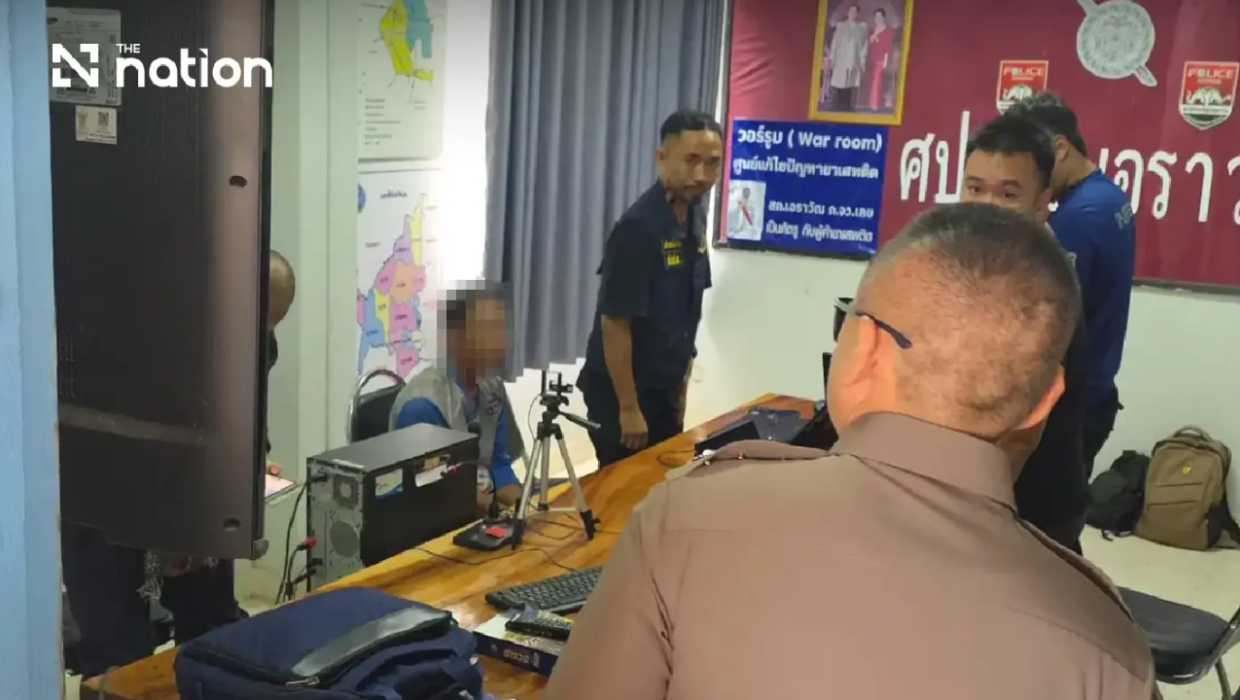
Thai authorities have made significant headway in dismantling what officials believe is a sophisticated cross-border narcotics operation, with the arrest of a married couple in Loei province marking an important escalation in an investigation that began with the detention of a Thai Airways flight attendant at Melbourne Airport. The couple's apprehension represents a crucial step in Thai law enforcement's effort to trace the supply chain of a major drug trafficking network that had been operating across multiple countries and jurisdictions. This development underscores the intricate coordination required to combat transnational criminal enterprises in Southeast Asia, where porous borders and well-established smuggling routes have long facilitated the movement of illicit substances across the region.
The initial catalyst for the investigation centred on a flight attendant, identified in Thai media reports as Mina, who was apprehended by Australian police at Melbourne Airport after customs officials discovered what they assessed to be approximately one kilogram of heroin concealed within her baggage. Following her detention, Thai authorities recognised the potential significance of the case and began systematically pursuing leads to identify the individuals responsible for orchestrating the smuggling operation from the Thai side. Rather than treating the case as an isolated incident, police and narcotics control agencies elected to pursue a comprehensive investigation aimed at unravelling the entire network, recognising that flight attendants employed by major carriers are often exploited as unwitting or coerced couriers for transnational drug syndicates.
Police investigators from Chiang Khan Police Station, acting on intelligence suggesting links between the Melbourne case and individuals in Loei province, conducted an initial operation on Thursday, July 2, targeting a residence in That subdistrict where they believed the suspects could be located. When the primary address yielded no results, law enforcement officers pursued follow-up inquiries and eventually learned that the individuals in question had been employed as rubber tappers in Erawan district. This occupational detail proved significant, as it illustrated how drug trafficking networks frequently recruit migrant workers and individuals in unstable employment situations, offering them payments that substantially exceed their regular wages in exchange for their participation in illegal activities.
Authorities ultimately located Athit, aged 43, at Wat Tham Pha Mak Ho, a Buddhist temple in Sri Songkhram subdistrict of Wang Saphung district, where he was undertaking roofing work. Officers from the Chiang Khan Police Station, coordinated with personnel from the Office of the Narcotics Control Board and other relevant law enforcement units, apprehended him and transported him to Erawan Police Station for formal questioning. During the initial interrogation phase, Athit reportedly admitted to having received compensation for dispatching parcels to Bangkok on six separate occasions, with three parcels routed through a parcel service operating from Chiang Khan, two originating from Ban That in That subdistrict, and one dispatched from Erawan district. For each completed transaction, he stated that he received 8,000 baht, equivalent to approximately US$240, paid by an individual identified as a Lao national, with the most recent parcel having been sent on June 28, 2026.
Subsequent to Athit's detention, authorities intensified their search efforts and discovered a black Mitsubishi Triton pickup truck bearing Loei registration plates parked within a rubber plantation located in the Pha Nang-Pha Koeng vicinity of Pha In Plaeng subdistrict in Erawan district. This discovery led to the apprehension of Thatsaphon, aged 42, identified as a Lao national and Athit's spouse. The couple's binational status and their presence in a region heavily populated by cross-border migrant workers highlights the complexity of managing drug trafficking in areas characterised by significant population mobility and limited enforcement capacity. When brought in for preliminary questioning, Thatsaphon categorically denied any involvement in or knowledge of the smuggling operation, though Thai authorities proceeded with her formal detention pending further investigation.
Both suspects have been transferred into the custody of the Office of the Narcotics Control Board for more intensive questioning as investigators seek to expand their understanding of the operation's architecture and identify higher-level participants who may have ordered, financed, or facilitated the smuggling activities. Thai law enforcement officials have emphasised that the couple likely represented merely the operational tier of a much larger enterprise, with unknown actors potentially controlling decisions at strategic and financial levels. According to the ONCB secretary-general, the case exemplifies the modus operandi of transnational drug networks that deliberately compartmentalise operations, enlisting individuals at different strata to transport narcotics while limiting the information available to each participant, thereby reducing the risk that law enforcement breakthroughs at one level will expose the entire structure.
The investigation has also benefited substantially from cooperative efforts between Thai authorities and international law enforcement agencies, particularly Australian police, who have provided crucial intelligence that enabled Thai investigators to identify and apprehend suspects within their jurisdiction. This cross-border collaboration has proven instrumental in tracing potential connections and supply chain relationships that might otherwise have remained obscured. The successful information exchange demonstrates the critical importance of formal mutual legal assistance agreements and informal working relationships between neighbouring and distant law enforcement organisations in combating the increasingly borderless nature of organised drug trafficking.
The ONCB has declared its determination to pursue the investigation with heightened intensity, committing to pursuing legal action against all individuals identified as being involved in the conspiracy, regardless of their hierarchical position within the network. The agency has signalled that it intends to broaden the inquiry to encompass not merely the individuals directly engaged in transporting contraband, but also those who may have provided logistical support, financial backing, or organisational oversight. This comprehensive approach reflects a strategic shift in Thai drug enforcement toward targeting the infrastructure and networks that sustain large-scale trafficking operations rather than focusing exclusively on street-level or mid-level operatives. Furthermore, the ONCB has pledged to enhance collaborative mechanisms with international counterpart agencies, with particular focus on identifying and disrupting the transport corridors and financial mechanisms through which transnational networks operate. These enforcement priorities align with the Thai government's broader drug-suppression policy framework, which emphasises sustained international cooperation as essential to disrupting the regional heroin trade.

