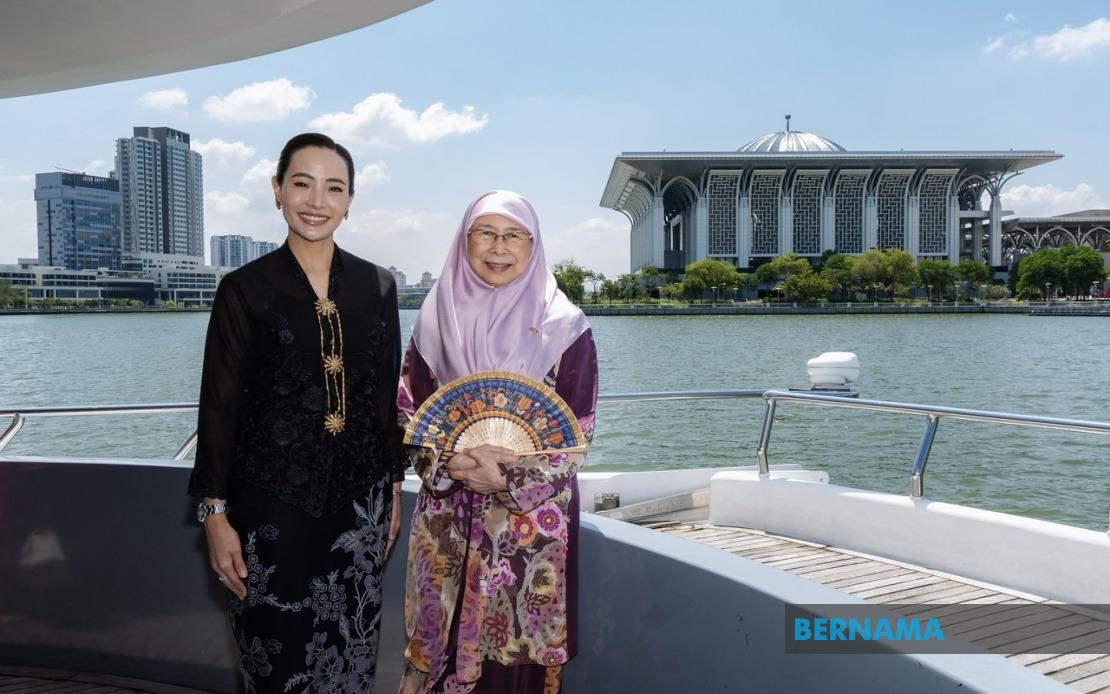
Thailand's Prime Minister Anutin Charnvirakul and his wife Thananon Charnvirakul are in Malaysia for a significant two-day official visit that marks the premier's first diplomatic mission since his reappointment to the office in March 2026. The delegation was welcomed at Kuala Lumpur International Airport on Thursday with full ceremonial honours at the Bunga Raya Complex, signalling the importance both nations place on their enduring relationship.
The visit comes at Anwar Ibrahim's invitation and represents a deliberate effort by both governments to deepen cooperation across multiple sectors and consolidate the strategic partnership that has long defined Malaysia-Thailand relations. The timing of this visit reflects Anutin's prioritisation of regional engagement immediately following his return to the prime ministerial role, an indication that strengthening ties with neighbouring Southeast Asian nations remains central to Thailand's diplomatic agenda.
On Thursday afternoon, Thananon embarked on a leisure cruise across Tasik Putrajaya, one of Malaysia's most recognisable waterways and a defining feature of the purpose-built administrative capital. The 45-minute excursion offered visiting guests an opportunity to experience the carefully landscaped surroundings and architectural achievements that characterise the federal territory. The lake's scenic vistas provide an intimate perspective on Malaysia's governance infrastructure and urban planning ambitions, making it a popular destination for high-level diplomatic engagements.
Datuk Seri Dr Wan Azizah Wan Ismail, wife of Prime Minister Anwar Ibrahim, personally received Thananon upon arrival at approximately 12.10 pm, underscoring the cordial nature of the bilateral relationship. Their extended conversation during the cruise served as an informal diplomatic engagement, allowing the spouses of both nations' leaders to build personal rapport while enjoying Putrajaya's panoramic settings. Such interactions, though informal in appearance, carry symbolic weight in diplomatic protocol and contribute to the softer dimensions of bilateral relations.
Also attending the lakeside tour was Hannah Yeoh, Minister in the Prime Minister's Department responsible for Federal Territories, whose presence reinforced the Malaysian government's commitment to showcasing the federal capital's achievements and facilities. Yeoh's attendance reflected the significance placed on the visit within Malaysia's administrative hierarchy and ensured that Malaysian officials with direct responsibility for Putrajaya's development and management could engage meaningfully with the visiting delegation.
Putrajaya itself remains a relatively young federal territory, having been developed specifically as Malaysia's administrative centre beginning in the mid-1990s. The planned city embodies Malaysia's vision of modern governance infrastructure combined with carefully integrated environmental management. The deliberate choice to include a leisure cruise of Tasik Putrajaya within the official visit itinerary demonstrates how host nations employ carefully curated experiences to communicate their achievements and priorities to diplomatic visitors.
The Malaysia-Thailand relationship has historically encompassed extensive cooperation across defence, trade, and security matters, with both nations sharing maritime boundaries and substantial overlapping interests in regional stability. Recent years have seen both countries collaborate increasingly on cross-border challenges, tourism promotion, and economic integration initiatives within the ASEAN framework. This official visit provides an opportunity to discuss emerging areas of cooperation and address any bilateral matters requiring high-level attention.
Anutin's appointment as Prime Minister in March 2026 represented a significant political development within Thailand's complex domestic context. His return to the premier's office following earlier periods in the position underscores the volatility that occasionally characterises Thai politics. Undertaking an early official visit to Malaysia signals his administration's commitment to maintaining Thailand's standing within the broader Southeast Asian diplomatic community and ensuring that neighbouring nations remain confident in the stability and continuity of Thai foreign policy.
For Malaysia, receiving the Thai Prime Minister and his delegation during this particular moment in Thailand's political calendar carries strategic significance. The visit reinforces Malaysia's role as a reliable partner for regional powers and demonstrates Anwar Ibrahim's administration's capacity to attract high-level official visits that validate Malaysia's standing in Southeast Asian affairs. Such diplomatic exchanges generate opportunities for substantive discussions on issues ranging from economic cooperation and tourism collaboration to coordination on regional security concerns.
The two-day duration of the visit suggests that beyond the ceremonial and leisure components, substantive bilateral meetings are planned between the two governments' officials and ministers. These formal discussions will likely address trade relations, border management, regional security cooperation, and other matters of mutual concern. The structured itinerary combining official receptions, sightseeing, and working sessions reflects standard diplomatic practice for high-level visits between neighbouring ASEAN nations.
Both Malaysia and Thailand maintain significant economic relationships with each other and share important cultural and historical connections. Thailand represents an important trading partner for Malaysian businesses, while Malaysian investments contribute meaningfully to Thailand's economy. Tourism flows between the nations remain robust, with both countries drawing substantial visitor numbers from each other's citizens. The visit provides an occasion to discuss how these economic and social connections can be further expanded.
The presentation of Putrajaya as a centrepiece of this visit carries symbolic implications about how Malaysia wishes to position itself regionally. By showcasing the federal capital's modern infrastructure and administrative capabilities, Malaysia communicates a message of governmental competence and forward-looking development. For Thai officials, experiencing these facilities firsthand provides insight into Malaysia's governance systems and urban planning approaches, potentially creating reference points for future cooperation or shared learning initiatives.

