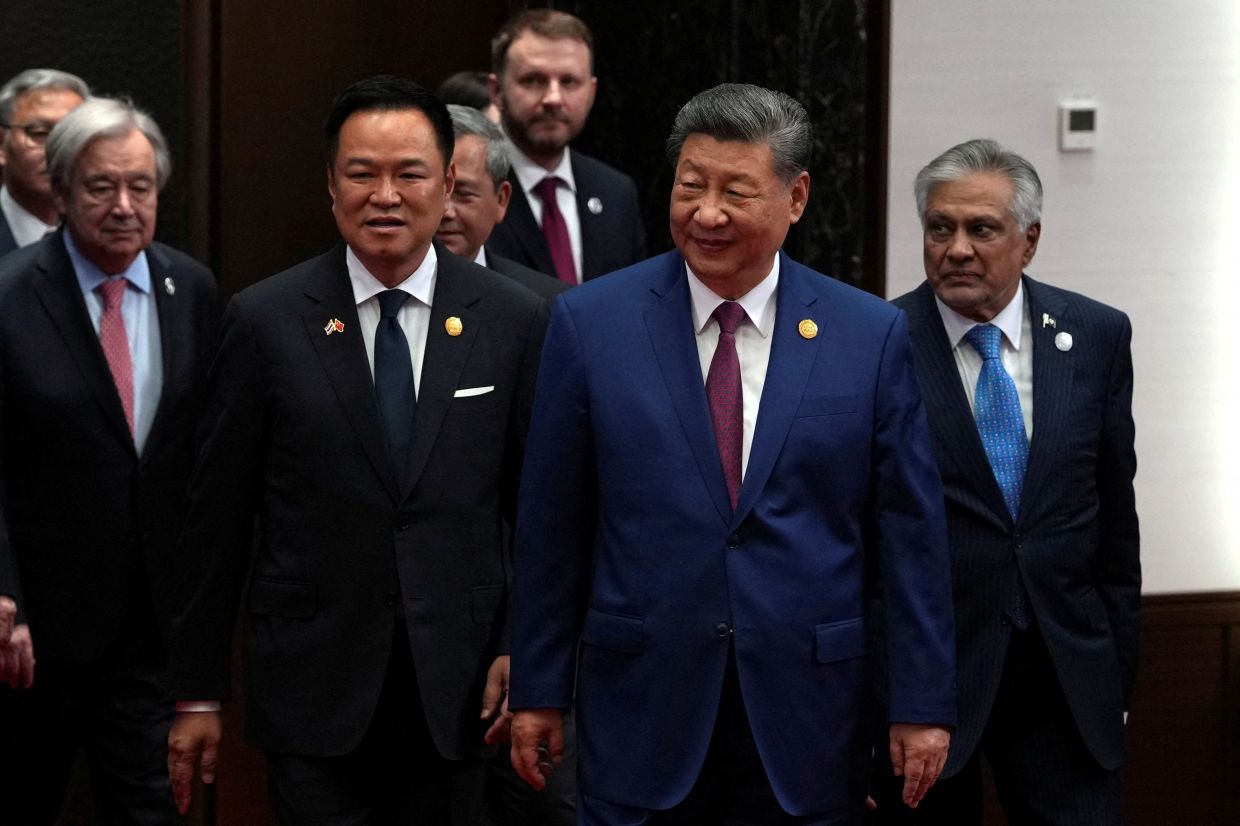
Thai Prime Minister Anutin Charnvirakul has become increasingly recognisable across Asia for an unconventional diplomatic style that merges politics with entertainment. During a formal state lunch in Beijing on Monday, the Thai leader demonstrated this trademark approach by performing a Teresa Teng classic for Chinese Premier Li Qiang. The performance, captured in footage released by his office, showed Anutin holding a microphone while seated alongside the Chinese Premier at a long table flanked by Thai and Chinese flags, with accompaniment from a live pianist.
This latest musical gesture forms part of a broader pattern that has defined Anutin's tenure since taking office in September last year. Just weeks earlier, he performed "My Way" alongside Malaysian Prime Minister Anwar Ibrahim during a bilateral engagement, with Anutin contributing saxophone while Ibrahim sang lead vocals. Such performances have become hallmarks of his diplomatic engagements across Southeast Asia and beyond, suggesting a deliberate strategy to humanise formal state relations and create memorable moments that transcend traditional protocol.
Anutin's musical credentials extend beyond ceremonial performances. Before his political rise, he cultivated a public persona as a multi-talented musician and aviation enthusiast, having served as a hobbyist jet pilot while maintaining competency on the piano and traditional Thai flute. His involvement in recent cultural events, including a collaboration with a Thai teenager whose performance captured international attention on America's Got Talent, further reinforces his image as someone who bridges elite governance with popular culture. This persona stands in deliberate contrast to the stiff formality typically associated with Southeast Asian leadership.
During a visit to Hanoi last month, Anutin continued this pattern by performing Vietnamese traditional instruments alongside local musicians in the presence of Prime Minister Le Minh Hung. These successive performances across the region signal a calculated effort to build personal connections with neighbouring leaders while demonstrating Thailand's cultural depth and openness. In an era where bilateral relations are often conducted through formal statements and protocol-bound meetings, Anutin's approach offers a refreshing and more accessible dimension to state diplomacy.
Anutin emerged victorious in Thailand's February elections, following his appointment as Prime Minister in September of the previous year. His political background, however, contrasts sharply with his contemporary public image. As a scion of a prominent construction dynasty, Anutin inherited significant wealth and business influence. Yet he has consciously cultivated an alternative narrative, positioning himself as a man of the people rather than a privileged elitist. This contradiction between inherited privilege and populist presentation has been central to his political messaging.
His political positioning also reflects a careful balancing act within Thai society's complex social landscape. Anutin has demonstrated consistent loyalty to Thailand's traditional social order and established institutions, a stance that aligns with values held by significant portions of the Thai electorate in what remains a largely conservative society. This conservative credibility has provided him with legitimacy among traditional constituencies while his musical and cultural interests appeal to younger, more cosmopolitan voters. The combination allows him to maintain broad-based political support across generational and ideological divides.
The strategic value of Anutin's musical diplomacy should not be underestimated in the context of contemporary regional relations. Thailand maintains complex relationships with both China and Malaysia, balancing economic interests with historical ties and geopolitical considerations. By approaching high-level diplomatic engagements through a cultural lens, Anutin creates informal channels for building rapport that can facilitate smoother negotiations on substantive matters. The personal connections forged through shared musical experiences often prove more durable than those established purely through official channels.
For Malaysia specifically, Anutin's performance with Prime Minister Anwar Ibrahim carries particular significance. The bilateral relationship between Thailand and Malaysia encompasses shared maritime borders, competing economic interests, and occasional tensions over cross-border issues. By framing diplomatic engagement through music and cultural exchange, both leaders signal a commitment to maintaining cordial relations despite underlying complexities. Such gestures, while seemingly lighthearted, communicate serious intentions regarding regional stability and cooperation.
Anutin's approach also reflects broader trends in how younger or reform-minded Asian leaders are reshaping diplomatic conventions. As traditional formal protocols become less effective at building meaningful international relationships, leaders increasingly employ unconventional methods to establish personal connections and project leadership qualities that resonate with modern electorates. Anutin's musical performances position him as culturally sophisticated, emotionally intelligent, and willing to break with rigid hierarchy—qualities increasingly valued in democratic societies.
The reception accorded to Anutin's performances—including the applause from Premier Li and assembled dignitaries during the Beijing lunch—suggests these gestures achieve their intended effect at the highest levels of government. Rather than viewing such displays as frivolous or undignified, contemporary statesmen increasingly recognise their value in humanising international relations and creating atmospheres conducive to productive dialogue. Anutin's willingness to perform across diverse musical traditions, from classic Taiwanese pop to American standards to Vietnamese instruments, demonstrates cultural literacy and respect for neighbouring nations.
Looking forward, Anutin's musical diplomacy is likely to remain a defining feature of his leadership approach. As Thailand navigates increasingly complex regional dynamics involving China, maritime disputes, economic competition, and geopolitical positioning, the ability to build and maintain strong personal relationships with counterparts in neighbouring capitals becomes ever more valuable. Whether through saxophone performances or piano accompaniment, Anutin appears to have identified a diplomatic tool that distinguishes him from his peers while advancing Thailand's broader strategic interests across Southeast Asia and beyond.

