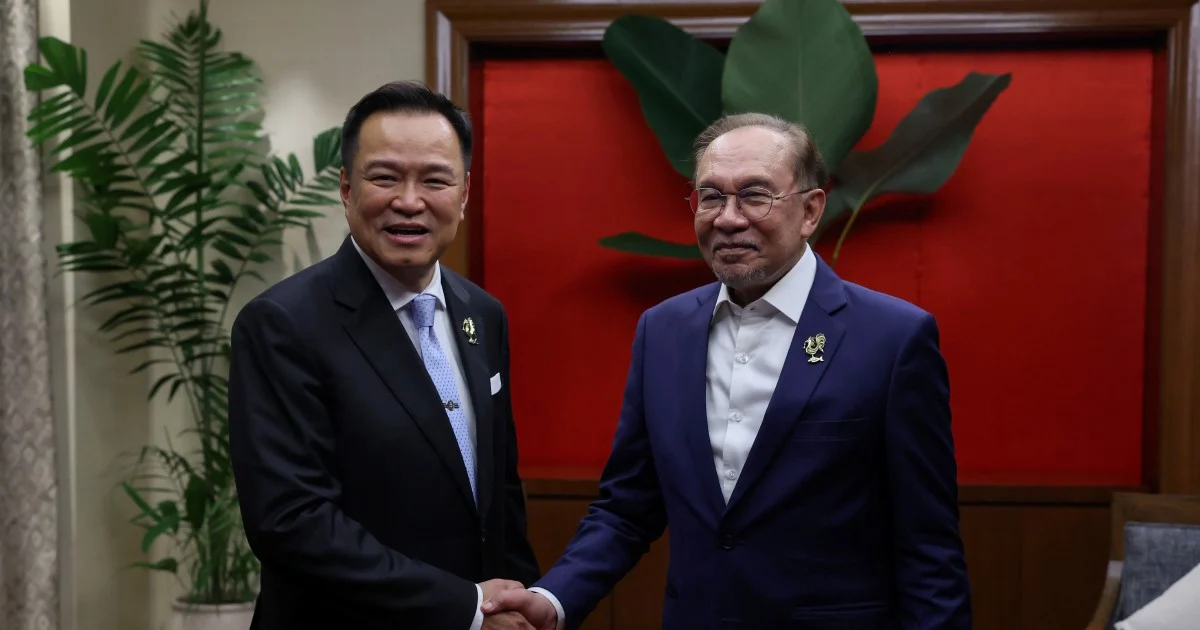
Thai Prime Minister Anutin Charnvirakul is scheduled to arrive in Malaysia on July 9 for a two-day official visit that will place both nations' security concerns and economic aspirations squarely in focus. The high-level engagement reflects the deepening importance of bilateral relations as both countries navigate shared regional challenges and seek to unlock new commercial opportunities along their lengthy frontier.
During his meeting with Prime Minister Datuk Seri Anwar Ibrahim, Anutin is expected to prioritise addressing longstanding cross-border security issues that have affected communities on both sides of the Thai-Malaysian boundary. These concerns span drug trafficking networks, human trafficking operations, and the movement of transnational criminal elements that exploit porous border regions. The two leaders will likely discuss enhanced intelligence-sharing mechanisms and improved coordination between their respective security agencies to combat these multifaceted threats more effectively.
Beyond security matters, the visit signals both governments' commitment to broadening their economic footprint. Thailand and Malaysia have historically competed for regional investments and trade relationships, yet recent geopolitical shifts have created fresh momentum for deeper collaboration. Energy cooperation, manufacturing partnerships, and digital economy initiatives are anticipated to feature prominently in their conversations, as both nations seek to position themselves as attractive hubs within the Association of Southeast Asian Nations framework.
The timing of this visit carries significance within the broader context of Southeast Asian diplomacy. Malaysia has worked deliberately to strengthen ties across the region, particularly with immediate neighbours facing similar development and security pressures. Thailand's position as a major ASEAN economy and strategic player in mainland Southeast Asia makes such ministerial-level visits integral to Malaysia's regional influence-building strategy. Conversely, Thailand has consistently sought to deepen partnerships with maritime Southeast Asian nations to enhance its connectivity and economic reach.
Border security cooperation between the two nations has evolved considerably over recent years. Both governments have invested in modern surveillance infrastructure and established joint task forces to address specific criminal activities. However, the sheer complexity of transnational organised crime networks means continuous dialogue and policy refinement remain essential. During this visit, officials may discuss additional resource allocation, training initiatives, and the establishment of new cross-border checkpoints or liaison offices to improve real-time information exchange.
The economic dimension of Thailand-Malaysia relations extends beyond traditional trade in agricultural and manufacturing goods. Both nations recognise the transformative potential of digital commerce, renewable energy investments, and infrastructure projects that could benefit their supply chains. The proposed discussions on economic cooperation may include updates on existing bilateral agreements and exploration of new sectoral opportunities in technology, tourism, and logistics that would strengthen their competitive positions in regional and global markets.
For Malaysia, welcoming the Thai Prime Minister underscores its role as a stabilising force within Southeast Asia and a reliable partner for addressing transnational challenges. Malaysia's government has prioritised building credible relationships with neighbouring states, recognising that isolated approaches to security and economic development yield inferior outcomes. The visit demonstrates how personal relationships between top leaders remain crucial for advancing national interests and resolving complex issues that do not respect political boundaries.
Thailand's participation in such high-level bilateral engagements reflects its own strategic calculations regarding regional positioning. As a nation straddling mainland and maritime Southeast Asia, Thailand benefits from maintaining robust relationships across the region. The visit allows Anutin to reinforce Thailand's commitment to constructive multilateralism while advancing specific Thai interests in security cooperation and economic partnership.
The discussions will likely touch on existing mechanisms for bilateral coordination, including the Malaysia-Thailand Joint Commission on Bilateral Cooperation and sector-specific working groups. These institutional frameworks have proven valuable for maintaining continuity in diplomatic efforts even when governments change or political circumstances shift. Both leaders may discuss how to invigorate these mechanisms with fresh initiatives and expedite implementation of previously agreed projects that have languished in bureaucratic channels.
Regional observers will be watching how the two leaders address the persistent challenge of balancing national sovereignty with the practical necessities of transnational cooperation. Both Thailand and Malaysia face domestic political pressures regarding border security and the perceived effectiveness of their governments in protecting citizens from cross-border criminal activities. Successfully demonstrating tangible improvements in security coordination could strengthen both leaders' domestic political standing while delivering genuine benefits to border communities.
The visit also reflects broader trends in Southeast Asian geopolitics, where nations increasingly recognise that prosperity and security are intertwined. Economic cooperation alone cannot flourish without robust security frameworks protecting supply chains, investors, and citizens from criminal disruption. Conversely, security measures prove more sustainable when accompanied by economic opportunities that reduce incentives for smuggling and organised crime. The Thailand-Malaysia discussions will likely attempt to weave these strands together into a coherent bilateral strategy.

