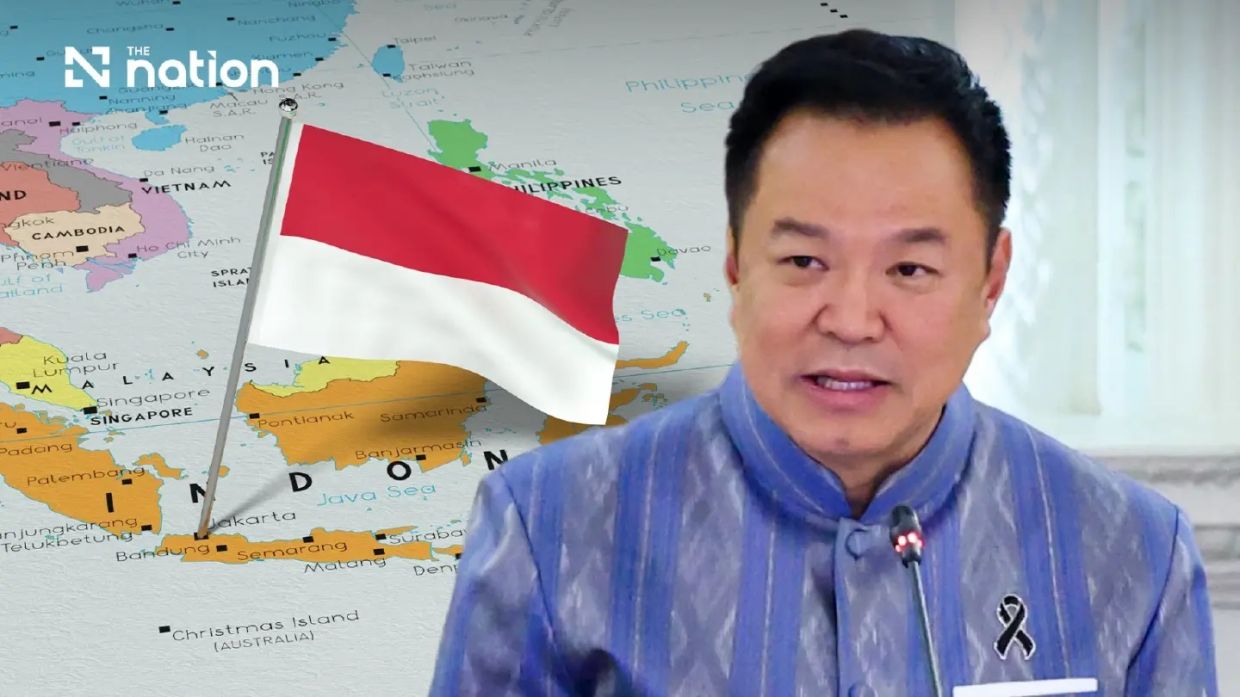
Prime Minister and Interior Minister Anutin Charnvirakul will travel to Indonesia from August 3 to 4 for what the Thai government is describing as the first official visit by a Thai prime minister to the country in a decade and a half. The journey marks a significant moment in bilateral relations between the two Southeast Asian heavyweights, signalling renewed diplomatic momentum at the highest levels after years of lower-profile engagement between Bangkok and Jakarta.
The centrepiece of Anutin's visit will be substantive talks with Indonesian President Prabowo Subianto at the presidential palace. According to government spokesperson Rachada Dhnadirek, the discussions will span a comprehensive agenda covering trade and investment promotion, tourism expansion, security cooperation, food and energy security, educational exchanges, and opportunities for joint business ventures. This breadth of topics reflects both nations' recognition that their partnership extends far beyond ceremonial diplomacy into practical domains affecting their citizens' economic wellbeing.
Anutin's diplomatic calendar will also include a high-profile foreign-policy address at the ASEAN Secretariat in Jakarta, where he will articulate Thailand's vision for the regional organisation and outline the country's strategic priorities as it prepares to assume the ASEAN chairmanship in 2028. This speech serves dual purposes: demonstrating Thailand's commitment to regional leadership while also using the platform to signal to the broader international community where Bangkok sees opportunities and challenges in the coming years. The timing is deliberately strategic, allowing Thailand to shape conversation around regional architecture well before its turn at the helm.
Indonesia's scale and economic weight make it an undeniably critical partner for Thai strategic interests. With approximately 280 million people, Jakarta commands the bloc's largest economy and represents an enormous market for Thai exporters, investors, and service providers. Government officials see the visit as an opportunity to unlock substantial commercial potential that remains comparatively underexploited compared to Thailand's engagement with smaller ASEAN neighbours. Rachada emphasised that closer bilateral ties could fundamentally alter the trajectory of Thai businesses seeking to expand regionally, particularly for small and medium-sized enterprises that often lack the resources to develop markets independently.
The practical benefits Bangkok anticipates are considerable and multifaceted. Thai agricultural and food products currently enjoy strong demand in Indonesia, but distribution networks and market access barriers have constrained growth. The visit is designed to address these bottlenecks through leader-level engagement that can unlock policy changes and facilitate connections between business communities. Enhanced supply-chain integration between the two countries could create redundancy in critical sectors, reducing both nations' vulnerability to disruptions elsewhere in the region. Investment flows in both directions represent another significant opportunity, with Thai capital potentially finding attractive opportunities in Indonesia's infrastructure and manufacturing sectors.
The visit's first day will feature an official welcoming ceremony followed by intimate talks between Anutin and Prabowo, subsequently expanding to full delegation-level meetings at the presidential palace. A joint press conference will signal any agreements or understandings reached during these discussions. This format allows negotiators to work through technical details during larger meetings while preserving space for the leaders to establish personal rapport and demonstrate political commitment. The structured progression also gives media and observers clear signals about the relationship's trajectory.
On August 4, the focus shifts decisively toward commercial engagement. Anutin will participate in the opening of a business forum jointly organised by the Indonesian Chamber of Commerce and Industry (KADIN) and the Thai Chamber of Commerce in Indonesia. This gathering serves as a crucial connecting point for corporate leaders seeking cross-border opportunities, transforming diplomatic goodwill into concrete business relationships. Rather than waiting passively for market forces to create connections, both governments are actively facilitating introductions and identifying complementary strengths that could generate mutual profit.
Anutin's subsequent engagements in Jakarta include discussions with ASEAN's secretary-general about advancing regional cooperation mechanisms and delivery of his address outlining Thailand's vision for a more united, economically resilient, and people-centred ASEAN. These contributions to the regional dialogue matter significantly beyond their immediate bilateral impact. They help shape the consensus around which ASEAN operates and signal Thailand's willingness to invest political capital in regional institution-building at a moment when great power competition and geopolitical uncertainty threaten to fracture Southeast Asian cohesion.
From the perspective of Malaysian observers and policymakers, this visit deserves careful attention as it reflects broader shifts in how ASEAN's major economies are repositioning themselves. Thailand's renewed emphasis on practical economic diplomacy and institutional leadership suggests a region increasingly focused on concrete deliverables rather than symbolic gestures alone. The explicit linkage between foreign policy and economic outcomes—as articulated by Rachada's comment that the government wants foreign policy to strengthen the economy and improve quality of life—represents a pragmatic approach that resonates across ASEAN capitals.
The timing of this visit also carries significance in the context of global economic volatility and intensifying great power competition. By strengthening ties with Indonesia while preparing for regional leadership, Thailand is demonstrating how smaller and mid-sized ASEAN economies can maintain strategic agency through deepened intra-regional partnerships. This approach offers lessons for Malaysia and other ASEAN members grappling with how to navigate between rival powers while advancing national interests.
Both nations' roles as ASEAN founding members provide them with shared stakes in the regional grouping's evolution and effectiveness. The talks between Anutin and Prabowo will undoubtedly touch on how ASEAN can better respond to transnational challenges—from transnational crime to supply-chain vulnerabilities—while preserving the space for member states to maintain balanced international relations. Creating environments where Southeast Asian businesses can thrive while the region avoids becoming a proxy battleground for greater powers remains a persistent challenge that no single country can address alone.
The business forum and subsequent meetings with Indonesian private-sector representatives underscore that this visit is fundamentally about translating political relationships into economic outcomes. Thai companies and workers ultimately depend on expanding opportunities beyond their home market, and Indonesian growth represents one of the region's most significant reservoirs of untapped potential. Similarly, Indonesian businesses seeking technological expertise or manufacturing partnerships can benefit from closer Thai connections. When structured thoughtfully through government-to-government engagement, these commercial ties can generate prosperity while deepening mutual understanding and interdependence that contributes to regional stability.

