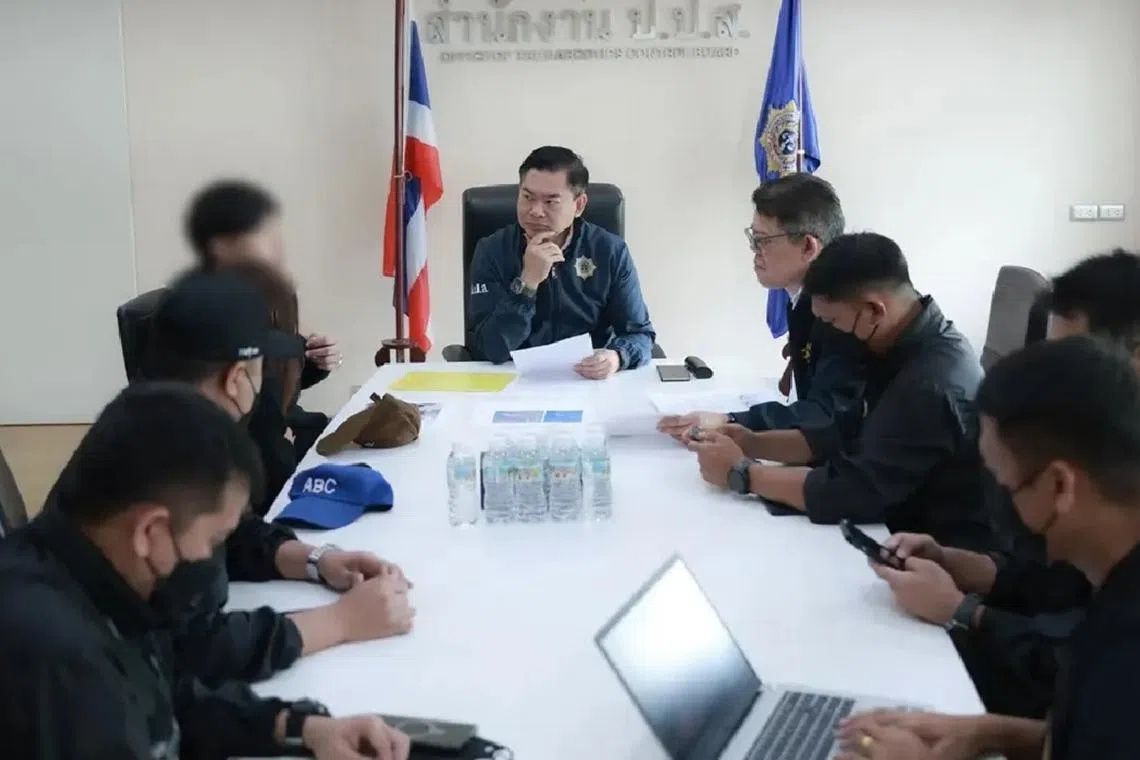
A coordinated investigation spanning Thailand and Australia is intensifying following the arrest of a Thai female airline crew member by Australian authorities with heroin hidden in her luggage, highlighting the persistent vulnerability of aviation workers in transnational drug-trafficking networks. Police Major Suriya Singhakamol, secretary-general of the Office of the Narcotics Control Board (ONCB), disclosed that initial findings from Australian officials revealed the shipment contained only limited quantities of the illicit substance despite the large number of bags involved in the parcel.
According to Suriya's statement on Wednesday, July 1, Australian Federal Police conducted preliminary measurements on the contraband by sectioning one of the bags, discovering approximately 900 grams of suspected heroin. The investigation has determined that the criminal network employed a sophisticated concealment technique, embedding heroin directly into the fabric of only two bags among the twelve in the parcel. Thai authorities remain pending comprehensive laboratory confirmation from Australia before finalising their assessment, though initial estimates suggest the two bags together held no more than two kilograms of drugs—a quantity significant enough for major trafficking charges but modest relative to the apparent operational scale.
The ONCB's cross-border coordination with the Australian Federal Police demonstrates how Southeast Asian nations increasingly recognise that disrupting sophisticated smuggling operations requires integrated intelligence-sharing and joint task force operations. The case exemplifies broader regional challenges, as Thailand sits within critical corridors for narcotics originating from the Golden Triangle, the mountainous region spanning Thailand, Laos, and Myanmar where significant opium and heroin production persists despite eradication efforts. The involvement of an airline employee suggests criminal networks have successfully infiltrated aviation supply chains—a concerning trend given the sector's inherent access to international routes and minimal customs scrutiny compared to general cargo.
Investigators have made substantial progress eliminating false leads, which often consume resources in complex transnational cases. One delivery courier voluntarily presented himself to the ONCB to establish his innocence, a cooperation that facilitated investigators' ability to identify critical discrepancies through CCTV footage analysis. The individual who came forward had delivered a separate package via a black plastic box on June 23 at approximately 5 p.m., whereas the suspicious heroin-containing parcel arrived in a large brown cardboard box on June 22 around midday. Additional distinguishing factors included the courier's yellow shirt and white helmet, which contrasted sharply with the suspect's black helmet visible in surveillance recordings. These investigative refinements have narrowed the search parameters for identifying the actual delivery rider responsible for the illicit shipment.
The probe has simultaneously expanded to target the individual who orchestrated the delivery arrangement through an online recruitment mechanism, specifically a Facebook profile operating under the account name "Rose." This dimension of the investigation reveals how modern drug networks leverage social media platforms for operational coordination, recruitment, and customer communication, exploiting the difficulty of tracing genuine identities behind encrypted digital personas. The ONCB has acknowledged it cannot rely exclusively on the Facebook account information and is pursuing parallel investigative channels to unmask the actual person controlling the profile. This operational sophistication suggests involvement of organised networks with experience circumventing law enforcement detection rather than opportunistic individual offenders.
Thailand's inter-agency response has consolidated resources under Task Force Storm, an integrated operation incorporating the ONCB, Customs Department, Department of Special Investigation, and Australian Federal Police collaboration. On the afternoon of July 1, ONCB representatives conducted substantive strategic discussions with AFP officials to synchronise investigative findings and coordinate intelligence analysis. This unified approach addresses the reality that dismantling international drug operations requires simultaneous pressure on trafficking networks across multiple jurisdictions, preventing suspects from exploiting legal or jurisdictional gaps to evade accountability.
Suriya provided critical context regarding drug sourcing patterns affecting the region, clarifying that crystal methamphetamine, heroin, and methamphetamine pills originate primarily from Golden Triangle production facilities in neighbouring countries rather than domestic Thai manufacturing. However, the technical process of concealing contraband within bag fabric—representing a specialised skill requiring knowledge of materials, construction techniques, and customs inspection vulnerabilities—may have occurred either in source countries or during transit through Thailand. This ambiguity complicates attribution efforts but suggests either the criminal network maintains operational facilities in Thailand or possesses sufficient logistical sophistication to execute such preparation steps opportunistically across multiple geographic locations.
The case carries particular significance for Malaysia and the broader ASEAN region, as it underscores how airline personnel trafficking networks function within regional aviation infrastructure. Malaysian airports, as major international hubs serving both Eastern and Western routes, face comparable risks of infiltration by criminal organisations seeking to exploit transport workers' systematic border-crossing privileges. The investigation methodology demonstrated by Thai-Australian cooperation—utilising CCTV analysis, courier profiling, digital forensics, and coordinated intelligence sharing—provides a template for Malaysian authorities managing similar aviation-related trafficking concerns.
The scale and sophistication of this operation also suggest broader supply chain vulnerabilities extending beyond individual courier systems. The use of a middleman Facebook recruiter indicates the network may operate multiple similar delivery arrangements simultaneously across different couriers and packages, potentially generating economies of scale insufficient to trigger immediate law enforcement detection. Investigators are reconstructing the precise routing and handling progression of this specific parcel to establish whether it originated directly from neighbouring Golden Triangle production zones or passed through consolidation points within Thailand or other transit countries.
As the investigation progresses, the identification of the "Rose" account operator and the original delivery courier remains paramount to unravelling the network's operational structure and identifying higher-level coordinators. Transnational drug cases of this magnitude typically involve supply source contacts, consolidation managers, transport coordinators, delivery personnel, and end-market distributors—requiring parallel investigative pressure across all these nodes simultaneously. The voluntary cooperation of the initially questioned courier demonstrates that law enforcement messaging emphasising cooperation benefits can yield valuable assistance, potentially accelerating identification of the actual suspect through refined investigative targeting.

