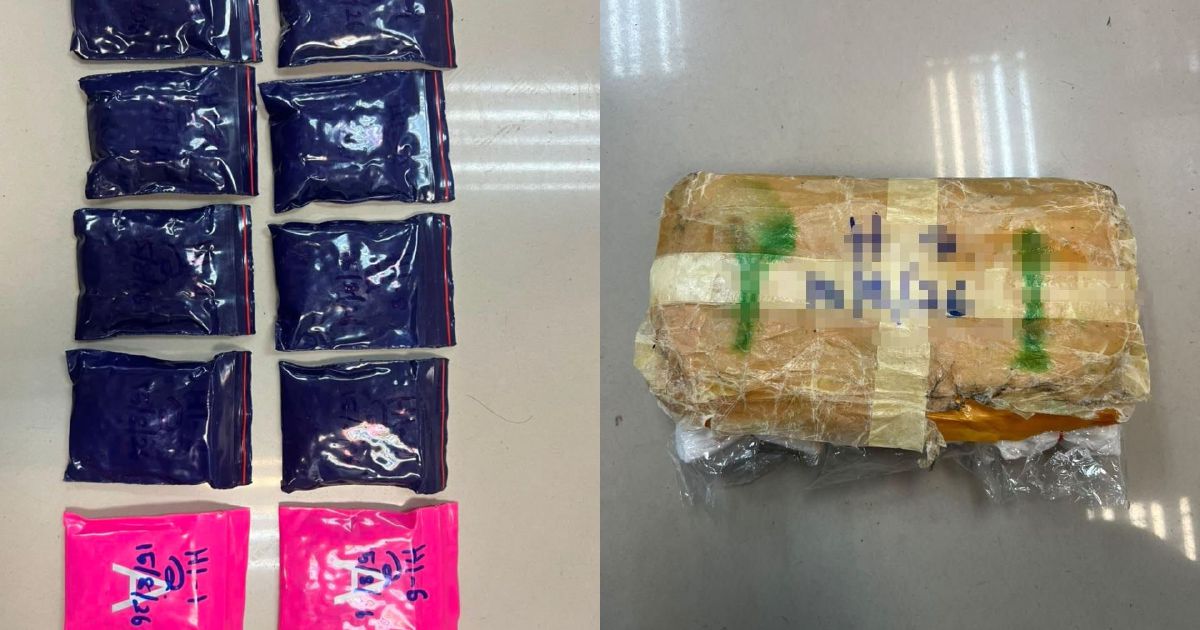
Police in Kelantan have arrested a 45-year-old Thai national following a drug enforcement operation in Pasir Mas, dismantling what authorities say is part of the regional yaba trafficking network that continues to plague Southeast Asia. The suspect was detained at Kampung Rahmat, a residential area near Rantau Panjang, during what officers describe as a targeted investigation into methamphetamine distribution along Malaysia's eastern border. The seizure of 6,000 yaba pills, with an estimated street value of RM60,000, marks another significant interdiction in Kelantan's drug enforcement efforts.
The arrest underscores the persistent challenge facing Malaysian law enforcement along the Thai-Malaysia border, a corridor long recognised as a critical transit route for synthetic drugs destined for regional markets. Yaba, a combination of methamphetamine and caffeine typically pressed into small tablets, has become one of the most prevalent illegal stimulants circulating through Southeast Asia, with production facilities concentrated in Myanmar's lawless border regions. The drug commands strong demand among younger demographics across Malaysia, Thailand, and neighbouring countries, driven by its stimulant properties and accessibility relative to other narcotics.
Kelantan's position on the northern frontier makes it particularly vulnerable to drug trafficking operations. The state has experienced recurring seizures of yaba and related amphetamines, reflecting both the scale of cross-border smuggling and the relative ease with which traffickers can move contraband through remote areas and established smuggling networks. Local enforcement agencies have intensified operations in response, though the chemical simplicity of yaba production and the vast geography of the porous border present ongoing operational challenges.
The 6,000-pill haul is substantial within the context of typical street-level operations. In Malaysia's drug markets, yaba is commonly sold in small quantities to end-users, making this seizure representative of either a significant distribution cache or a mid-level smuggling operation. The valuation of RM60,000 reflects wholesale pricing rather than street retail, suggesting authorities may have intercepted the contraband before it reached neighbourhood-level dealers. Each tablet typically retails for between RM10 and RM30, depending on location and market conditions.
The suspect's nationality reflects well-documented patterns in regional drug trafficking, whereby Thai nationals have featured prominently in amphetamine distribution networks spanning Southeast Asia. While production occurs primarily in Myanmar, trafficking organisations based in Thailand have historically managed logistics and distribution across borders. Malaysian law enforcement has repeatedly encountered Thai nationals involved in yaba smuggling, suggesting organised involvement rather than independent entrepreneurship.
The geographic specificity of the arrest—Kampung Rahmat near Rantau Panjang—points to deliberate trafficking route selection. Rantau Panjang sits opposite Sungai Kolok in Thailand, a region with established smuggling infrastructure and cultural cross-border ties that facilitate illicit movement. The choice of residential area for storage suggests either distributor-level operations or temporary holding before further distribution southward.
Yaba abuse carries severe consequences for public health and social stability. The drug's stimulant properties make it particularly attractive to long-distance truck drivers, factory workers, and students seeking enhanced alertness. Chronic use leads to addiction, psychological deterioration, and behavioural disorders that strain healthcare and social systems. Malaysian authorities have documented rising yaba-related hospital admissions and rehabilitation centre intake, particularly among younger age groups in urban and semi-urban areas.
Under Malaysia's Dangerous Drugs Act 1952, trafficking in controlled substances carries mandatory minimum sentences and substantial fines. Trafficking convictions typically result in lengthy imprisonment, with sentences scaled according to quantity seized. The quantity in this case—sufficient for distribution rather than personal consumption—would likely trigger trafficking charges rather than possession charges, exposing the accused to significantly harsher penalties.
This operation forms part of broader bilateral and multilateral drug enforcement efforts involving Malaysian and Thai authorities. Regional cooperation mechanisms, including intelligence sharing and joint task forces, have expanded in recent years as Southeast Asian governments recognise that unilateral enforcement proves insufficient against transnational trafficking organisations. However, resource constraints, jurisdictional limitations, and the profitability of the narcotics trade continue to undermine enforcement effectiveness.
The arrest also reflects Malaysia's ongoing National Anti-Drugs Strategy, which emphasises supply reduction through enforcement while simultaneously promoting demand reduction through education and rehabilitation. Despite substantial government investment and enforcement operations, drug seizures remain robust, indicating either persistent trafficking volumes or enhanced enforcement capabilities—or both. The yaba seizure in Pasir Mas represents one of numerous interceptions occurring regularly across Malaysian border regions, though most receive limited public attention unless quantities prove exceptionally large.
Looking forward, the case exemplifies the structural challenges facing border security and drug enforcement in Southeast Asia. Geographic proximity, economic disparities, established smuggling infrastructure, and high profit margins ensure that synthetic drug trafficking will remain a priority issue for years to come. Enhanced port-of-entry screening, intelligence analysis, and cross-border cooperation offer incremental improvements, yet the fundamental economics of the drug trade—where suppliers can absorb occasional large seizures as operational costs—perpetuate the cycle.

