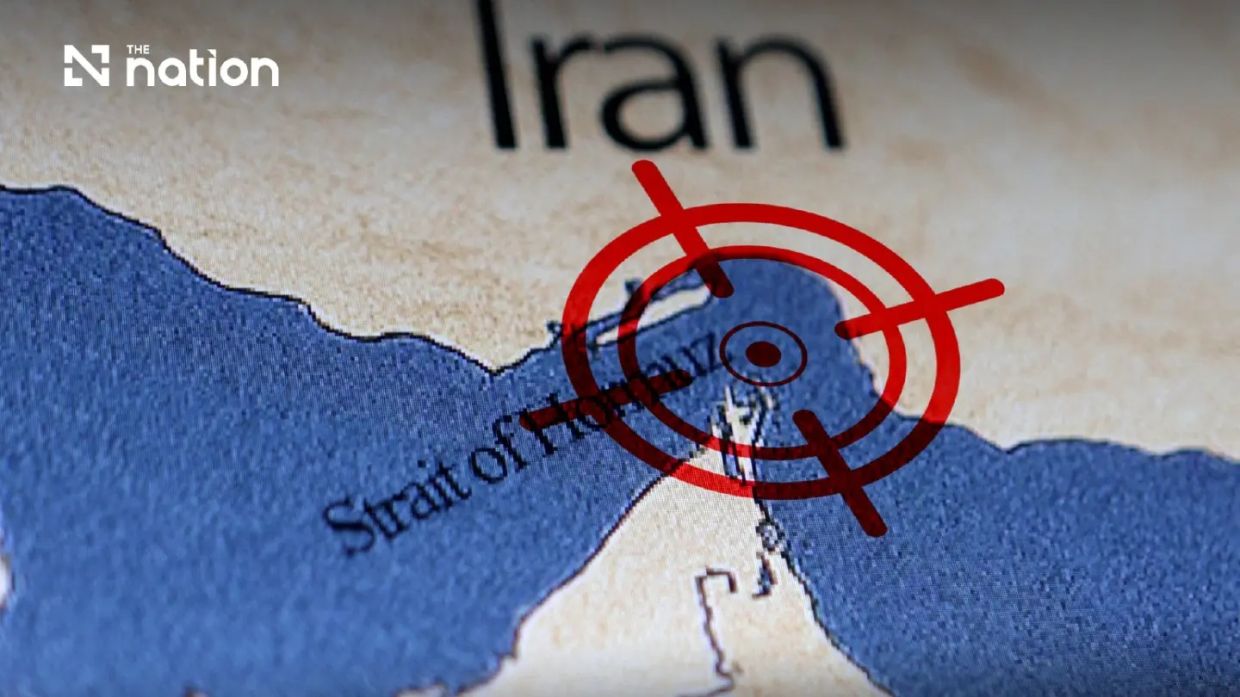
A vessel operating under the Thai flag has reportedly come under attack from Iranian forces while transiting the Strait of Hormuz, highlighting the acute risks now facing commercial shipping in one of the world's most strategically important waterways. The semi-official Iranian news agency Tasnim disclosed the incident, though it withheld identifying details about the vessel, its owners, cargo, destination or crew nationality. No immediate confirmation came from Thai authorities, international maritime monitoring organisations or the vessel's operator, and details about potential damage or crew injuries remain undisclosed.
The reported assault on the Thai-flagged ship reflects a broader pattern of maritime incidents unfolding across the Strait of Hormuz as military activity intensifies dramatically in the region. Iranian state media cited the Islamic Revolutionary Guard Corps Navy in claiming the waterway had become "extremely unsafe" and was completely closed, attributing the deterioration to what Iranian officials characterised as United States aggression. Additionally, Tasnim reported that two oil tankers caught fire following explosions while traversing an area described by Iranian sources as a minefield in the southern portion of the strait, though the precise circumstances and potential casualties remained unclear.
The IRGC has escalated its assertions further, claiming it successfully intercepted four additional oil tankers allegedly attempting passage with United States military support. According to Iranian military statements, these vessels were ordered to remain stationary during a combined missile-and-drone operation. The Iranian armed forces simultaneously issued warnings to international shipowners, instructing them to prioritise compliance with Iranian military directives rather than relying on protection systems offered by American forces. The identities and specific locations of the four intercepted tankers have not been disclosed, raising questions about their actual status and condition.
The accumulation of reported incidents in the Strait of Hormuz carries profound implications for global commerce and energy markets. This critical shipping corridor handles a substantial portion of the world's daily oil and liquefied natural gas shipments, making it indispensable for energy security across Asia, Europe and beyond. Any sustained disruption to traffic through these waters would inevitably trigger cascading effects across global supply chains, driving up maritime insurance premiums, increasing freight charges and potentially constraining energy availability in importing nations. The regional economic consequences would be particularly acute for countries like Malaysia, Singapore and other Southeast Asian economies heavily dependent on stable energy flows and uninterrupted international trade.
The maritime tensions are occurring against the backdrop of intensified military strikes between Washington and Tehran. The United States Central Command announced via its social media channels that American forces launched their seventh consecutive night of air operations on Friday evening, with strikes commencing at 7pm GMT. The US military described these operations as intended to "continue degrading Iran's military capabilities," though specific target information and damage assessments were not immediately forthcoming from CENTCOM officials.
Iranian authorities have countered with their own accounts of the American strikes, asserting that civilian infrastructure across Iran's southern regions sustained significant damage. Iranian Foreign Minister Abbas Araghchi reported that three individuals were killed in an attack targeting a bridge at Bandar Khamir, placing the total death toll from overnight US strikes at eight. State-linked media sources cited a deputy governor of Bushehr province claiming that American forces had attacked an Iranian oil tanker moored at Kharg Island. However, these casualty figures and damage assessments, all originating from Iranian official sources and state media, have not undergone independent verification by international observers.
In response to the American operations, Iran's military leadership has announced a series of retaliatory strikes against what it describes as United States assets and military installations distributed across the Gulf region. Iranian forces have claimed responsibility for attacks on American-linked military sites in Bahrain, Jordan, Kuwait and Qatar, though the actual extent of any resulting damage remains disputed and unclear. Qatari authorities acknowledged that their armed forces intercepted an incoming Iranian attack, with officials reporting that a child sustained injuries from falling debris generated during the interception process. The IRGC Navy has additionally claimed credit for destroying a United States MQ-9 reconnaissance drone over the Iranian port city of Bushehr using what it characterised as a newly developed air-defence system integrated into Iran's broader defence network, a claim the American military has not yet confirmed or addressed.
The escalating cycle of military action and counter-action is fundamentally altering the security calculus for international maritime commerce and raising broader regional stability concerns. The Strait of Hormuz remains the world's preeminent chokepoint for petroleum shipments, with disruption creating immediate ripple effects throughout global energy markets and industrial supply chains. Beyond the direct impact on shipping, the military exchanges are increasing strategic anxieties across the Persian Gulf region, where numerous nations including Saudi Arabia, the United Arab Emirates and several smaller Gulf states host substantial United States military deployments and infrastructure.
For Malaysia and the broader Southeast Asian region, the deteriorating security environment in Middle Eastern waters carries direct economic consequences. Malaysia's position as a major trading hub and energy consumer means that instability affecting the Strait of Hormuz flows directly into regional shipping costs, port operations and energy procurement expenses. Malaysian shipping companies and cargo operators transiting these waters face mounting insurance expenses and navigational risks, while Malaysia's energy security calculations are complicated by supply chain vulnerabilities originating from Middle Eastern disruptions.
The convergence of multiple risk factors—the reported attack on a Thai-flagged vessel, Iran's claims of intercepting tankers, competing assertions about military operations and the unverified casualty reports—underscores the fragile situation facing commercial operators in contested waters. Vessels from various Southeast Asian nations regularly pass through the Strait of Hormuz, making regional states stakeholders in maritime security outcomes. The absence of independent verification for many reported incidents complicates risk assessment for shipping companies attempting to navigate the corridor safely, potentially encouraging some operators to seek alternative routes despite longer transit times and increased fuel consumption.
The international maritime community faces growing pressure to establish clearer protocols for safe passage through the Strait of Hormuz amid the military tensions. International shipping organisations and flag state authorities must balance crew safety considerations against operational necessity, as prolonged route diversions prove economically unfeasible for many commercial operators. The situation demands urgent diplomatic engagement to establish de-escalation mechanisms and protected shipping corridors, though current political dynamics between Washington and Tehran offer limited cause for optimism regarding near-term solutions.
The potential for unintended escalation remains significant, particularly given the possibility of miscalculation involving commercial vessels inadvertently entering contested zones or military operators misidentifying civilian ships amid heightened tensions. Each reported incident, whether independently verified or not, incrementally raises the psychological risk environment for maritime operators and amplifies insurance market responses. The reported attack on the Thai-flagged vessel, occurring within this volatile context, exemplifies the multifaceted threats now confronting international shipping and underscores the necessity for sustained international attention to maritime security throughout the Persian Gulf and beyond.

