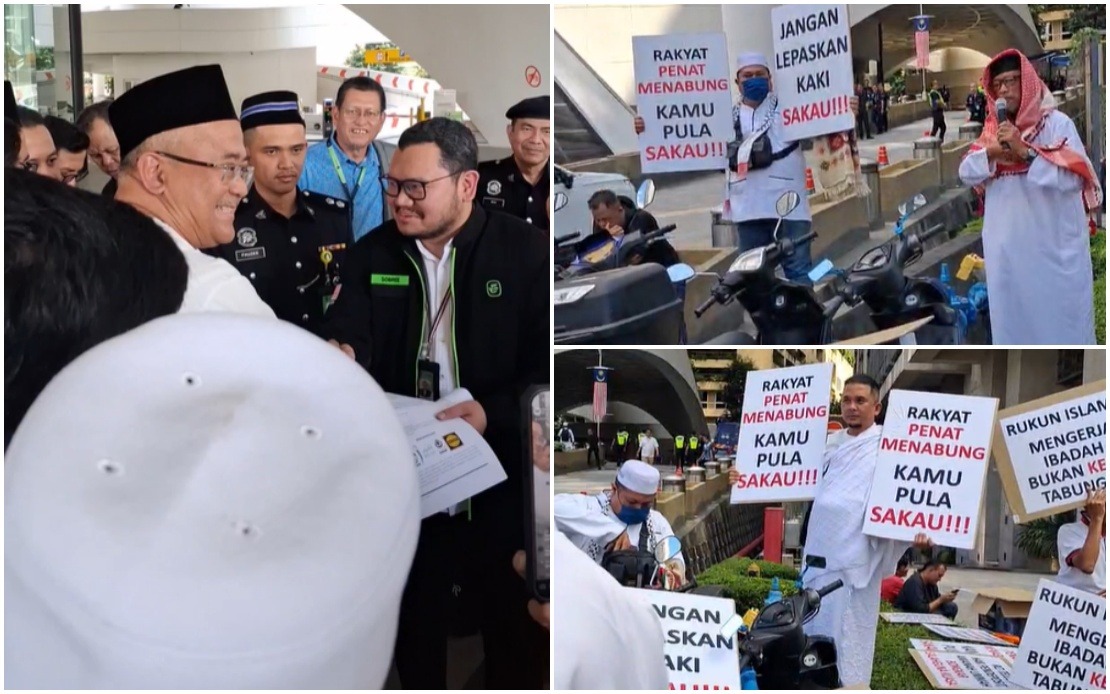
The MADANI coalition has intensified pressure for swift and independent action on the Royal Commission of Inquiry into Tabung Haji, insisting that investigations into governance failures at the Islamic pilgrimage fund must proceed without political obstruction. At a solidarity gathering in Kuala Lumpur, coalition leadership stressed that the integrity of the probe depends entirely on allowing investigators and prosecutors to work freely, signalling concerns that political considerations might otherwise compromise accountability.
The RCI's examination of Tabung Haji operations spanning 2014 to 2020 uncovered serious management irregularities that demand resolution through established legal channels. These findings carry particular weight given the scale of public trust involved—millions of Muslim Malaysians have entrusted substantial savings to the institution, making governance failures not merely administrative lapses but breaches of religious and financial stewardship. The commission's scope extended beyond operational inefficiencies to encompass governance concerns, including allegations that political figures exerted undue influence over board appointments and strategic decisions during this period.
Amir Zuhair Abdull Khalid, the MADANI coalition chairman, articulated a position that transcends routine partisan debate by emphasizing that the Tabung Haji matter represents a test of whether Malaysia's institutions can hold leadership accountable regardless of political affiliation. His remarks reflected broader anxieties within reform-minded circles that high-profile investigations can become hostages to political negotiations or pressure campaigns. The call for investigative autonomy specifically addressed the Malaysian Anti-Corruption Commission, signalling that independent agencies must be permitted to pursue evidence and potential charges without interference from political actors seeking to shield allies or exploit the process for partisan advantage.
The distinction between determining guilt through courts versus making preliminary political judgments represents a crucial threshold in Malaysia's governance recovery. The MADANI coalition's framing acknowledges a common stumbling block in accountability efforts: the tendency for those under scrutiny to deny wrongdoing at the outset, which naturally occurs before judicial examination. Yet this preliminary defensiveness must not derail the actual investigative and prosecutorial process. The coalition's insistence that courts alone determine culpability reflects recognition that Malaysia's credibility in tackling corruption depends on allowing judicial proceedings to reach conclusions based on evidence rather than political convenience.
The RCI's findings regarding political interference in governance and board appointments carry particular significance for institutional reform in Southeast Asia's most prominent Muslim-majority democracy. Such interference patterns, if substantiated through legal proceedings, would demonstrate systemic vulnerabilities that extend beyond a single organization. They would indicate how political networks exploit state institutions to channel resources, secure positions, or obscure accountability—dynamics that have plagued government-linked companies across the region. For Malaysian policymakers considering institutional safeguards, the Tabung Haji investigation provides a concrete case study in whether existing oversight mechanisms can withstand political pressure.
The Malaysian Islamic Movement Coalition and affiliated Islamic non-governmental organisations submitted a comprehensive ten-point agenda encompassing immediate legal action, asset recovery, implementation of RCI recommendations, and ongoing governance reforms. This coalition's involvement underscores how institutional failure within an Islamic religious trust affects not merely individual depositors but broader Muslim community perceptions of state stewardship. When religiously-significant institutions fail, the damage extends beyond financial metrics into questions about whether religious communities' resources remain protected under state administration.
Asset recovery and financial restitution form critical components of the accountability framework, particularly given that affected parties are primarily ordinary Malaysians who contributed savings believing these funds would be professionally managed. The scale of potential losses remains significant, and the coalition's emphasis on recovery mechanisms reflects understanding that legal convictions alone provide incomplete justice if victims cannot recoup their losses. Southeast Asian countries have increasingly grappled with this tension between punitive accountability and compensatory remedies in corruption cases, and Malaysia's approach here may establish precedents for similar situations.
Implementation of RCI recommendations represents another threshold distinct from mere investigation completion. Commissions frequently produce sophisticated diagnostic reports and proposed reforms that subsequently languish due to bureaucratic inertia, political disinterest, or resistance from entrenched interests. The MADANI coalition's inclusion of this demand reflects realistic assessment that the investigation phase, while necessary, does not automatically translate into institutional transformation. Governance reforms require deliberate implementation through policy changes, new oversight structures, and potentially legislative amendments—steps that demand sustained political commitment beyond the immediate satisfaction of securing convictions.
The broader context involves Malaysia's anti-corruption trajectory and regional standing on institutional accountability. International assessments of Southeast Asian countries frequently note that investigations into major scandals sometimes conclude without corresponding systemic reforms, leaving structural vulnerabilities intact for future exploitation. The Tabung Haji situation, precisely because it involves a religious institution whose legitimacy depends on trustworthiness, offers Malaysia an opportunity to demonstrate that accountability extends from investigation through prosecution to institutional reconstruction. Regional observers and domestic stakeholders alike will assess whether Malaysian authorities can sustain pressure for thorough investigation despite political complexities.
Political interference in investigations constitutes a persistent challenge across Southeast Asia, where powerful actors frequently attempt to shape probe outcomes through various mechanisms. MADANI's explicit warnings against such interference acknowledge that formal independence does not automatically guarantee investigative integrity without vigilant oversight and public scrutiny. The coalition's public advocacy essentially enlists civil society as a watchdog, creating political costs for any actor attempting to undermine the process. This strategy reflects evolution in anti-corruption strategies that recognize how transparency and public engagement can reinforce institutional independence where formal structures alone prove insufficient.
The solidarity gathering format employed by MADANI signalled that this issue maintains public salience and grassroots support for accountability. Unlike cases where anti-corruption efforts fade from public consciousness, the Tabung Haji investigation retains visibility through coalition mobilization and civil society engagement. This sustained attention creates constituency pressure that institutional reformers can leverage against internal resistance or political attempts to dampen proceedings. For Malaysian governance observers, the gathering demonstrated how issue-specific coalitions across different organizational sectors can amplify accountability demands in ways individual organizations might struggle to achieve.
Moving forward, the investigation's trajectory will reveal much about Malaysia's capacity for institutional accountability. Successful prosecution of individuals found responsible would validate the RCI's findings and demonstrate that even prominent figures face meaningful legal consequences. Conversely, regulatory capture, prosecutorial delays, or conviction reversals would indicate that political power continues overwhelming formal accountability mechanisms. Southeast Asian jurisdictions increasingly recognize that governance credibility depends on demonstrating that investigations produce outcomes consistent with severity of findings—a standard that the Tabung Haji case will either meet or visibly fall short of satisfying.

