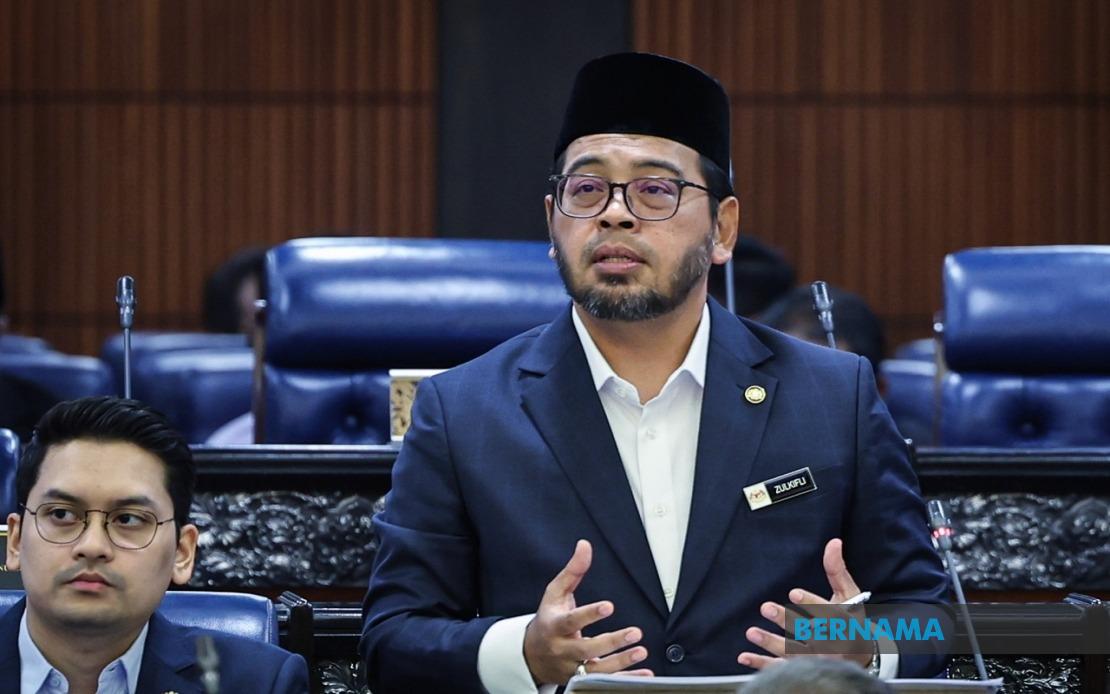
The Lembaga Tabung Haji (TH) financial crisis that forced the government to arrange a multi-billion-ringgit bailout could have been entirely prevented had the pilgrimage savings institution responded promptly to repeated warnings from Bank Negara Malaysia, according to Minister in the Prime Minister's Department (Religious Affairs) Dr. Zulkifli Hasan. Speaking during a special parliamentary session convened to debate the Royal Commission of Inquiry report into TH's collapse, Zulkifli outlined how institutional negligence and poor governance transformed what should have been manageable financial headwinds into a systemic threat to Malaysia's financial stability.
Between August 2014 and September 2016, Bank Negara Malaysia dispatched five separate warning letters to the TH Chairman and relevant government ministers flagging serious concerns about the fund's financial position, reserve adequacy, and liquidity management practices. Despite these explicit alerts from the country's financial regulator, TH's leadership failed to implement substantive remedial measures. Instead of taking defensive action, the institution continued existing operational patterns that had contributed to its deteriorating position. This inaction stands as a stark example of how regulatory warnings, when ignored, can permit institutional decay to accelerate unchecked through successive management cycles.
The consequences of this negligence became apparent only after the damage had become severe. By the end of 2018, TH's asset-liability deficit had ballooned to approximately RM10 billion, necessitating government intervention to prevent broader financial system contagion. Zulkifli emphasized that had TH's board and executive management taken the 2014 warnings seriously and implemented corrective governance measures and investment restructuring at that time, the subsequent deterioration could have been arrested. The scale of the eventual bailout—one of Malaysia's largest financial institution rescues—underscores how critical those early intervention windows were and how costly their forfeiture proved.
The minister's remarks were underpinned by the RCI's own findings regarding TH's audit process. The commission concluded that TH should never have received clean audit certificates in the years leading to the crisis. Instead of attesting to full compliance with accounting standards and regulatory requirements, auditors should have issued qualified opinions highlighting "emphasis of matter" sections that flagged concerning trends. These audit qualifications would have signalled to depositors, regulators, and stakeholders that material issues required attention. The failure to issue such warnings in financial statements meant that TH's deteriorating position remained obscured from many who might have demanded accountability or supervisory action.
Central to TH's mismanagement was a pattern of distributing dividends to depositors while the fund's liabilities exceeded its assets—a practice that directly violated Section 22 of the Tabung Haji Act. Beyond this statutory breach, TH's leadership adopted an imprudent practice of declaring hibah (Islamic charitable distributions) that bore no meaningful relationship to the institution's actual financial capacity. This practice persisted well into 2017, long after BNM's warnings should have prompted a comprehensive review of dividend and distribution policies. The continued extraction of value from the fund even as it weakened financially represented not merely poor judgment but a fundamental departure from fiduciary responsibility toward millions of Malaysian Muslim pilgrims whose savings were entrusted to TH.
Bank Negara Malaysia, in executing its statutory mandate to safeguard financial system stability, had maintained ongoing monitoring of TH as a significant non-bank financial institution. Through continuous surveillance and periodic engagements with TH management, the central bank communicated the remedial steps it expected the institution to undertake. Yet when the regulator subsequently assessed whether those commitments had been implemented, the evidence demonstrated that TH's actions fell far short of addressing BNM's concerns. The gap between TH's assurances to the regulator and its actual conduct revealed either an inability to execute necessary changes or an unwillingness to prioritize financial stability over near-term dividend distribution to depositors.
Zulkifli used the parliamentary session to outline the government's response to the RCI's findings. Amendments to the Tabung Haji Act 1995 are being prioritized for immediate implementation to strengthen governance frameworks and prevent recurrence of the weaknesses that permitted the crisis. Additionally, forensic auditing has been commissioned to examine specific investments flagged in the RCI report as being at elevated risk of loss. The government has also accepted the RCI's recommendation to establish a Multi-Agency Task Force tasked with investigating each problematic investment to determine the extent of losses and identify recovery opportunities. These institutional reforms represent an attempt to rebuild depositor confidence and demonstrate that the governance failures which enabled the crisis will not be repeated.
The government's stated approach encompasses four interconnected pillars: investigation of the circumstances that led to the financial crisis, enforcement action against those responsible for breaches and mismanagement, asset recovery to rebuild TH's financial position, and legislative strengthening to close regulatory gaps. Zulkifli emphasized that these actions are designed to preserve the long-term trust and financial interests of TH's millions of depositors, many of whom are ordinary Malaysians saving for the Hajj pilgrimage. The reputational damage to Malaysia's Islamic financial sector and to public institutions more broadly requires not merely technical fixes but demonstrated commitment to accountability and reform.
For Malaysian depositors and the broader public, the TH case illustrates the critical importance of regulatory vigilance and institutional responsiveness to early warning signals. A pilgrimage savings fund of TH's scale—with millions of contributors and tens of billions in assets—carries systemic significance well beyond its primary religious mission. When regulatory authorities identify problems, the window for preventing escalation into crisis is typically measured in months or a few years, not decades. The cost of delay compounds exponentially, as demonstrated by how warnings issued in 2014 went unheeded until 2018, when intervention costs had multiplied many times over.
The special parliamentary session itself, which consumed more than ten hours of debate with 39 Members of Parliament participating, reflected the gravity with which lawmakers treated the matter. Speaker Tan Sri Johari Abdul acknowledged the extended proceedings and noted that a third parliamentary session on the TH matter is scheduled for October, indicating that scrutiny of the institution's governance failure and the government's remedial actions will continue. This ongoing parliamentary engagement signals that TH is not being treated as a one-off scandal to be managed quietly but rather as a governance failure with implications for how Malaysia's financial institutions and public sector bodies are supervised and held accountable. The commitment to continued parliamentary oversight may itself serve as a deterrent to future institutional negligence, as leaders recognize that breaches of fiduciary duty and regulatory non-compliance will face sustained democratic scrutiny.

