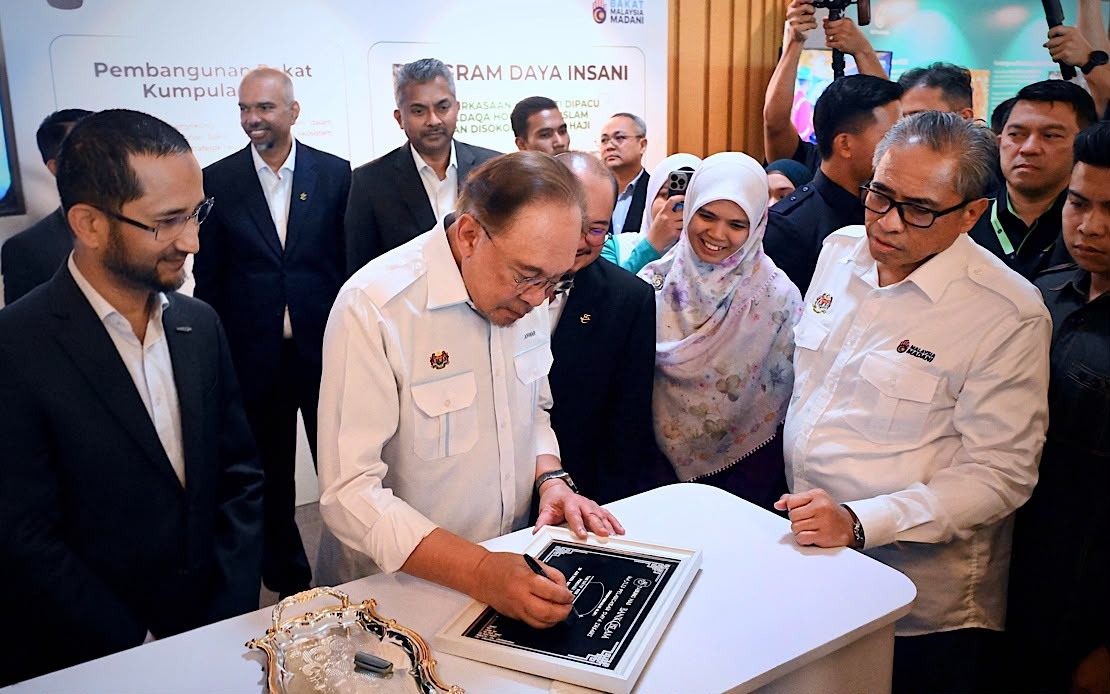
Malaysia's largest pilgrimage fund and an Islamic banking institution have joined forces to address youth unemployment among economically disadvantaged communities through a comprehensive skills development initiative. Tabung Haji (TH) and Bank Islam Malaysia Berhad unveiled the Asnaf Youth Development Programme for Inclusive and Sustainable Empowerment (DAYA INSANI) on July 2, committing an initial RM1 million to equip underprivileged young people with market-ready qualifications and direct pathways into employment.
The programme represents a strategic response to persistent gaps in Malaysia's talent pipeline, particularly within vulnerable populations. By focusing on asnaf youth and orphans—categories defined by Islamic law as among those most deserving of financial assistance—the initiative tackles a dual challenge: reducing dependency on social support while filling genuine labour shortages across high-demand sectors. The announcement aligns with Prime Minister Datuk Seri Anwar Ibrahim's broader MADANI Talent initiative, launched simultaneously in Sendayan, Negeri Sembilan, signalling government backing for the collaborative approach.
The architecture of DAYA INSANI reflects careful industry consultation and practical design. Rather than offering generic training divorced from employment realities, the programme weaves together three interconnected pillars: specialized skills instruction tailored to specific professions, structured exposure to working environments through partner companies, and guaranteed job placement upon qualification completion. This integrated model distinguishes it from traditional scholarship schemes that often leave graduates searching for suitable work despite possessing qualifications.
TH Group Managing Director Mustakim Mohamad framed the investment as fundamental to long-term community wellbeing, emphasizing that human capital development represents the most valuable expenditure for future generations. His statement underscores a philosophical shift within Malaysia's Islamic financial sector toward viewing social responsibility not as peripheral charitable activity but as central to institutional mission. This positioning carries particular weight given TH's mandate to serve millions of Malaysian pilgrims whose contributions form the fund's financial base.
The partnership architecture demonstrates how fragmented institutional strengths can be mobilized toward coherent social outcomes. Kulim Hi-Tech Park Skills Centre will produce highly trained technical workers capable of serving Malaysia's advanced manufacturing ecosystem. Simultaneously, Kolej Universiti Bestari and Kumpulan Medic Iman Sdn Bhd will prepare nursing professionals for positions throughout Malaysia's expanding healthcare sector, where persistent shortages have forced recruitment difficulties. The Malaysian Professional Accountancy Centre will develop certified accountants meeting international standards, while Showme Education addresses the therapeutic professions—a sector experiencing rapid growth as mental health awareness increases across Southeast Asia.
Evidence of traction already exists. The nursing diploma stream, operational since 2024, currently enrolls nineteen students with one graduate already employed, demonstrating that the model successfully transitions participants from classroom to workplace. The technical training cohort launched in June with thirteen participants has set ambitious expansion targets of one hundred trainees in the near term, suggesting confidence in both demand and delivery capacity. These concrete outcomes distinguish DAYA INSANI from announcement-stage initiatives lacking demonstrated implementation capability.
Bank Islam Chief Executive Raja Datin Paduka Teh Maimunah Raja Abdul Aziz positioned the initiative within the broader concept of social finance, a lending and investment approach that prioritizes measurable social impact alongside financial sustainability. This framing matters for Southeast Asian financial systems increasingly focused on inclusive growth and environmental, social, and governance considerations. By demonstrating that supporting vulnerable populations can operate as sound financial strategy rather than pure charity, Bank Islam sets a potential template for competitor institutions.
The programme's openness to additional funding streams from corporate entities, charitable foundations, and individuals creates potential for significant scaling beyond the initial RM1 million commitment. Malaysian corporations increasingly face pressure—both regulatory and reputational—to demonstrate meaningful corporate social responsibility beyond token donations. DAYA INSANI offers a structured mechanism through which capital can flow toward clearly defined outcomes, with transparent tracking of beneficiaries and employment results. This accessibility likely accounts for the decision to designate fund management to Sadaqa House, Bank Islam's dedicated social finance platform, ensuring professional stewardship and public accountability.
The programme emerges against a backdrop of persistent youth unemployment and underemployment across Malaysia, where despite relatively strong overall economic performance, participation in the formal economy remains unequal. Geographic disparities mean opportunities concentrate in urban centers, disadvantaging youth from rural areas or lower-income households who lack networks to navigate hiring processes. By providing both skills and direct employer connections, DAYA INSANI specifically addresses this structural barrier that credentials alone cannot overcome.
Forensic examination of programme scope reveals sophisticated targeting. The focus on technical roles, nursing, accounting, and therapy reflects sectors where documented labour shortages persist and wage growth trajectories promise sustainable income improvement. These are not low-wage dead-end positions but skilled occupations offering professional advancement and earning power. This differentiation matters for long-term poverty alleviation, as participants will not simply transition from welfare dependence to minimum-wage vulnerability but toward middle-income stability.
The collaboration between pilgrimage fund management, Islamic banking, technical education centers, and professional accounting bodies illustrates how Malaysia's diverse institutional ecosystem can function synergistically when properly coordinated. TH brings financial resources and legitimacy within Muslim communities; Bank Islam contributes banking infrastructure and social finance expertise; educational partners provide curriculum design and delivery; professional bodies ensure standards alignment with international expectations. No single institution possesses all necessary capabilities, yet their coordination generates something substantially more powerful than any could achieve independently.
Looking forward, DAYA INSANI's success metrics will extend beyond simple participant numbers to employment retention rates, income trajectories, and whether graduates advance into supervisory and professional positions. Malaysian policymakers tracking the initiative will likely examine whether the model can replicate across additional sectors and geographic regions. If the programme achieves its stated ambitions of empowering over one hundred asnaf youth and orphans while establishing sustainable employment patterns, it could influence broader Malaysian social policy approaches to skills development and inclusive economic participation.

