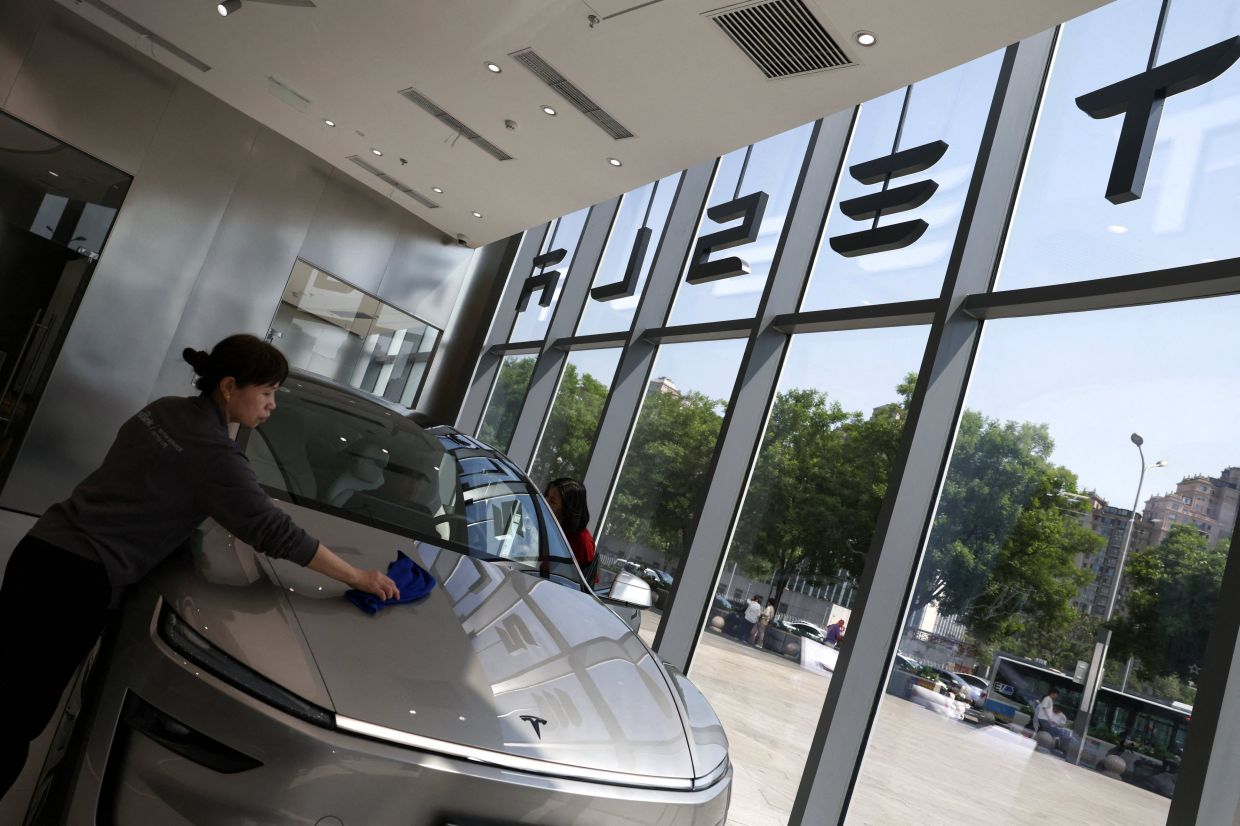
Tesla has announced the largest product recall in mainland China's electric vehicle sector, pledging to address a defective door-handle mechanism that has affected nearly three million vehicles across its fleet. The unprecedented scale of this recall underscores mounting safety concerns in China's booming EV industry and demonstrates how a single design vulnerability can cascade into a massive regulatory intervention affecting one of the world's most valuable automakers.
The origin of this crisis traces back to October of last year, when a fatal accident in Sichuan province involving a Xiaomi SU7 Ultra electric vehicle sparked public outcry. In that incident, a 31-year-old driver became trapped inside a burning vehicle as bystanders desperately attempted to open the doors but found themselves unable to do so. The tragedy crystallised broader safety anxieties about retractable door handles—a design feature that has become increasingly common among premium EV manufacturers seeking sleeker aesthetics and improved aerodynamics. However, what appealed to designers for its cosmetic elegance suddenly appeared dangerous when traditional mechanical access failed during emergencies.
Respecting Chinese regulatory momentum, the country's Ministry of Industry and Information Technology formally announced plans in February to prohibit retractable door handles entirely. Starting next year, all vehicles must incorporate both internal and external door handles capable of being opened mechanically at any time, regardless of whether the vehicle has suffered an accident or experienced complete electrical failure. This mandate represents a significant design constraint that will force manufacturers to reconsider their approach to vehicle safety architecture, essentially overriding market preferences for sleek, minimalist styling in favour of demonstrable emergency accessibility.
Tesla's response comprises two distinct recall initiatives. The primary recall involves 2.98 million vehicles, for which the company will apply warning labels to internal door handles and execute an over-the-air software update beginning September 25. This OTA modification will automatically lower the vehicle's windows following a collision, theoretically providing an alternative exit route if door mechanisms prove inoperable—a workaround rather than a permanent fix. Simultaneously, Tesla announced a separate recall affecting 2.74 million Model 3 and Model Y vehicles manufactured at its Shanghai facility, requiring software updates to enhance assisted steering and driver-assistance functionality during collision scenarios.
The Shanghai manufacturing complex plays a critical role in Tesla's global operations strategy. During 2025, this single facility produced approximately 851,000 vehicles destined for both Chinese consumption and international export markets. This output represents more than half of Tesla's worldwide production volume for that year, which declined 8.6 per cent to 1.63 million units globally. The heavy reliance on Chinese manufacturing infrastructure means that any regulatory disruption in this market carries immediate consequences for Tesla's ability to meet investor expectations and delivery targets across multiple regions.
While Tesla faces the largest announced recall to date, the company remains merely one participant in a broader industry-wide recalibration sparked by Chinese regulatory action. Other automakers manufacturing vehicles with retractable door handles have also confronted pressure to address the same design vulnerability, though none has yet announced recalls approaching Tesla's scale. This disparity likely reflects the sheer volume of Tesla vehicles already on Chinese roads—the company has aggressively expanded its market presence there over the past five years—combined with the visibility and media scrutiny surrounding Elon Musk's operations.
Industry observers view the recall episode as potentially catalytic for broader quality consciousness throughout China's automotive sector. Zhang Wenjie, who manages a car maintenance workshop in Shanghai, characterised the situation as a necessary awakening. The market now expects that large-scale recalls by Tesla and other domestic competitors will collectively elevate awareness regarding product design rigour and manufacturing quality standards across the entire industry. What began as a tragic accident and safety concern has become a pivot point where regulatory authority, public consciousness, and corporate responsibility converge to reshape how vehicles are engineered and validated before reaching consumers.
For Malaysian and Southeast Asian readers, this sequence of events carries particular relevance. China's automotive regulatory decisions frequently establish precedent for other regional markets, especially regarding safety standards and design requirements. If Beijing's mandate against retractable door handles gains traction elsewhere, it could influence how vehicles sold across Southeast Asia are engineered and certified. Additionally, the recall demonstrates how concentrated supply chains—with single facilities responsible for massive production volumes—create systemic risk when regulatory changes occur unexpectedly.
Tesla's position as China's second-largest market by revenue, behind only the United States, means that regulatory friction in this geography directly impacts shareholder valuations and corporate strategy globally. The company must simultaneously manage the technical remediation of millions of vehicles while investing in design modifications to comply with future regulatory requirements. The financial burden of such recalls, combined with potential brand reputation damage, illustrates the escalating costs associated with entering and maintaining market leadership in China's highly competitive and increasingly stringent regulatory environment.
Looking forward, this recall serves as a cautionary narrative for the entire EV industry. Safety vulnerabilities that manufacturers thought acceptable under previous regulatory regimes suddenly become liabilities when public incidents shift political attention and enforcement priorities. The door-handle episode also highlights the tension between innovative design aesthetics and fundamental safety functionality—a balance that regulators worldwide are increasingly resolving in favour of demonstrable emergency accessibility, even if it requires sacrificing the minimalist styling that manufacturers prefer.

