Terengganu's government has channelled RM3.78 million into developing Kenyir Geopark, a sprawling protected area in Hulu Terengganu, with ambitious plans to elevate the site's international standing. The investment, disbursed through the Hulu Terengganu District Office, represents a significant commitment to transforming the geopark into a world-class geotourism destination while strengthening its current National Geopark designation.
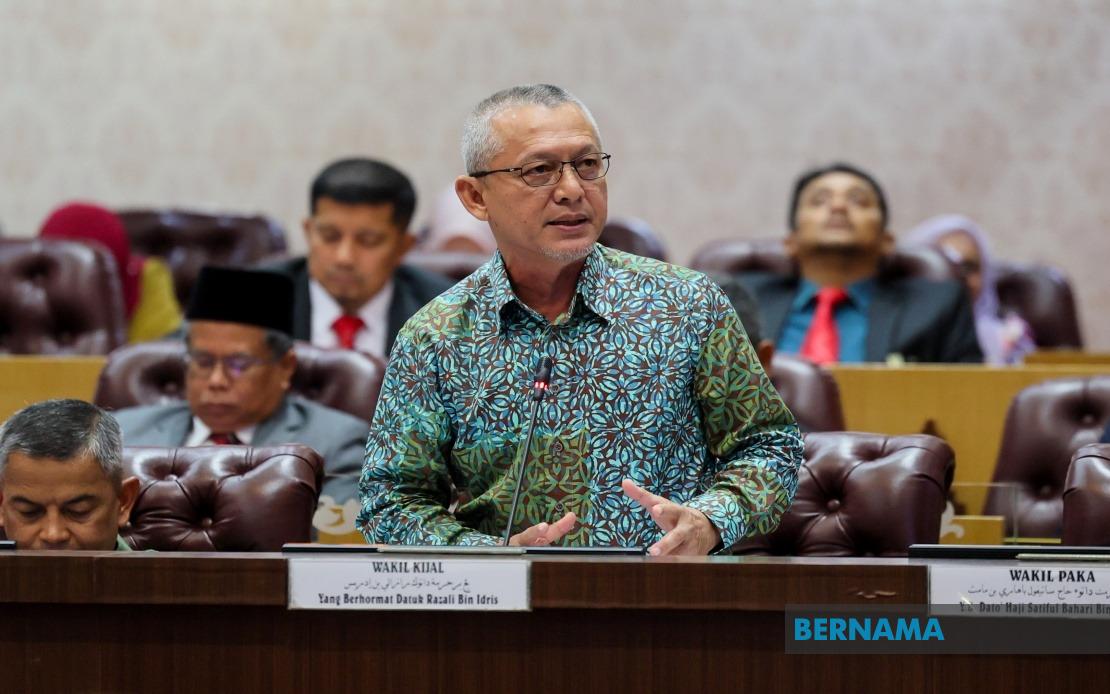
Datuk Razali Idris, chairman of the state's Tourism, Culture, Environment and Climate Change Committee, outlined the strategic direction during a legislative assembly session, emphasising that the funding supports a multi-faceted approach to sustainable management. The programme encompasses geoheritage preservation, product development for geotourism, infrastructure enhancement, community engagement through education, and skills training for local residents who depend on the geopark's success.
Kenyir Geopark sprawls across approximately 244,900 hectares of the Hulu Terengganu district, making it one of Terengganu's most substantial natural heritage assets. The site's geological formations, coupled with its rich biodiversity, cultural heritage, and archaeological significance, position it as a repository of both scientific knowledge and community identity. Currently, the geopark encompasses 15 designated geosites, 10 biosites, 11 cultural sites, and one geo-archaeological site—a comprehensive inventory reflecting the complexity and value of the landscape.
Among the conservation priorities is protection of specific landmarks including Gua Bewah, Gua Taat, and Batu Bersurat, ancient cave and rock sites that hold substantial scientific and cultural importance for Terengganu. These locations represent irreplaceable records of geological processes and human occupation spanning millennia. By securing their status and enforcing conservation protocols, the state government is safeguarding these features from degradation caused by unmanaged tourism or environmental pressures.
The allocation directly supports Terengganu's aspiration to obtain UNESCO Global Geopark recognition—a designation that carries significant implications for the region's global visibility and economic prospects. UNESCO recognition typically enhances international tourism appeal, attracts scientific research funding, and strengthens conservation credibility. For a Malaysian state seeking to diversify its economic base beyond conventional resource extraction, such credentials prove invaluable in marketing the destination to discerning international travellers and research institutions.
Visitor engagement at Kenyir Geopark has experienced dramatic growth, with arrivals reaching 454,765 in 2024 compared to 218,157 in 2023—a 108.5 percent surge demonstrating rising regional interest in geotourism experiences. This trajectory suggests that investment in infrastructure, facilities, and educational programming generates measurable returns in visitation, though rapid growth simultaneously presents management challenges. Balancing accessibility with conservation requires careful planning to prevent overcrowding, environmental degradation, or cultural disruption in local communities.
The funding allocation reflects broader Southeast Asian trends in recognising geological and natural heritage as economic assets. Malaysia's diverse geological landscapes—from Peninsular formations to Sabah and Sarawak's unique structures—position the nation as a potential geotourism hub. Terengganu's initiative demonstrates how state-level investment in heritage infrastructure can pioneer sustainable tourism models that generate employment while preserving natural assets for future generations.
Geotourism represents an emerging niche sector within regional tourism markets, appealing to educated, affluent travellers seeking educational and authentic experiences. Unlike mass-market beach tourism, geotourism participants typically remain longer, spend more, and generate less environmental stress through concentrated activity. For Hulu Terengganu—a rural district with limited industrial infrastructure—geotourism development offers pathways to sustainable economic growth without requiring large-scale manufacturing or extractive investments.
Community capacity building constitutes an essential element of the development strategy, recognising that local residents must become custodians and beneficiaries of geopark development. Training programmes equipping guide services, hospitality, and interpretive skills enable residents to capture economic value from increased visitation. Educational initiatives deepen community understanding of their region's geological significance, fostering pride and motivation for voluntary conservation stewardship—often more effective than enforcement-based approaches.
The state government's commitment to maintaining national status while pursuing UNESCO designation establishes a two-track strategy mitigating risk. National recognition provides immediate institutional framework and management standards, while UNESCO aspiration creates directional momentum for incremental improvements. This phased approach acknowledges that international designation requires sustained investment and demonstrates commitment beyond single budget cycles.
Terengganu's Kenyir Geopark initiative reflects recognition that heritage conservation and economic development need not exist in opposition. By investing in geotourism infrastructure and education, the state positions natural and geological assets as permanent revenue sources. For Malaysian policymakers monitoring Terengganu's results, the model offers insights into leveraging geological diversity for sustainable regional development—a consideration increasingly relevant as climate pressures and resource depletion demand economic diversification across Southeast Asia.

