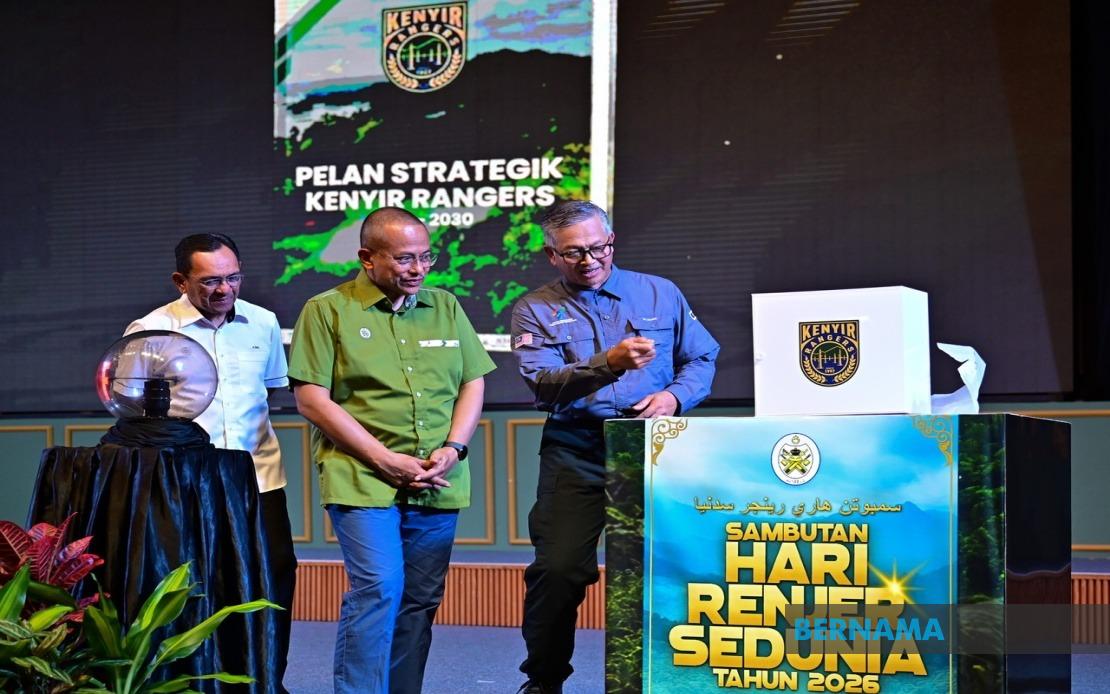
Terengganu Menteri Besar Datuk Seri Dr Ahmad Samsuri Mokhtar has emphasized the urgent need for enhanced collaboration among multiple stakeholders to address the growing frequency of human-wildlife conflicts in the state, with particular concern about elephant-related incidents along major road corridors. Speaking at the state-level World Ranger Day 2026 celebration held at Wisma Darul Iman in Kuala Terengganu on August 10, the chief minister outlined a comprehensive approach involving coordinated efforts between the Wildlife and National Parks Department, the Malaysian Highway Authority, and other relevant bodies to implement practical solutions.
The Terengganu leader's intervention comes in response to an alarming incident that occurred on August 5 on the East Coast Expressway 2, where a couple sustained injuries after their Toyota Estima collided with a herd of elephants near Kilometre 274.6, just past the Cheneh Toll Plaza en route to Kuala Terengganu. This collision underscores the dual tragedy inherent in such encounters—the immediate danger posed to motorists and their families, as well as the threat to wildlife populations that increasingly find themselves displaced from their natural habitats. Ahmad Samsuri characterized the incident as a watershed moment that demands serious attention from policymakers and enforcement agencies across the region.
Recognizing the complexity of addressing conflicts along extensive highway networks, the menteri besar proposed a tiered strategy that acknowledges both operational realities and budgetary constraints. Installation of electric fencing represents one component of this broader framework, though he acknowledged that comprehensive fencing along the entire length of major expressways would prove prohibitively expensive. Instead, authorities are considering selective deployment of such barriers along critical stretches immediately adjacent to identified wildlife habitats and established animal migration routes, where incidents are statistically more likely to occur.
The chief minister stressed that road patrols require significant strengthening, particularly during monsoon seasons when rainfall drives animals from their natural shelters in search of alternative refuge. These seasonal patterns have long been documented by wildlife specialists, who note that elephant movements become increasingly unpredictable during wet weather periods when water sources become abundant across broader areas. Enhanced surveillance during these high-risk periods could serve as an immediate intervention while longer-term infrastructure solutions are developed and implemented.
Beyond conventional physical barriers, Ahmad Samsuri indicated that technological innovations are being actively explored to provide early warning systems for wildlife presence on roadways. Such systems could alert highway users and enforcement personnel to dangerous animals in proximity, potentially allowing authorities to implement temporary speed restrictions or traffic diversions before collisions occur. These technological solutions represent a forward-looking component of the state's wildlife management strategy and reflect acknowledgment that traditional approaches alone cannot adequately address problems of this scale and urgency.
The menteri besar's appeal for greater inter-agency coordination reflects a fundamental challenge in Malaysian wildlife management: the compartmentalized nature of government responsibility. Wildlife conservation falls under one jurisdiction, while highway operations and maintenance typically fall under separate authorities, creating potential gaps in communication and unified planning. Breaking down these institutional silos through formalized protocols and joint operational committees could significantly enhance response times and enable more holistic approaches to problem-solving.
For Malaysian motorists and road users, these developments carry immediate practical implications. The East Coast Expressway serves as a vital commercial corridor connecting Peninsular Malaysia's east coast with central regions, carrying substantial traffic volumes daily. Any risk of wildlife collisions affects not only individual safety but also traffic flow and economic efficiency across this crucial transportation artery. Travellers in the region should remain vigilant, particularly during evening and early morning hours when animal activity peaks, and exercise heightened caution in areas identified as wildlife hotspots.
The underlying issue touches on broader questions about habitat preservation and urban expansion that extend far beyond Terengganu's borders. As Malaysia develops economically and infrastructure projects proliferate, wildlife corridors become increasingly fragmented and compressed. Elephants in particular require vast territories for foraging and migration, and when development encroaches on these spaces, conflicts become inevitable. The Terengganu government's pragmatic acknowledgment of this reality—that both animal and human lives merit protection—reflects a maturing perspective on conservation within developing contexts.
For Southeast Asia more broadly, the Terengganu situation represents a microcosm of larger challenges facing the region. Multiple nations including Thailand, Laos, and Myanmar grapple with similar human-wildlife conflicts as infrastructure development accelerates and animal populations feel mounting pressure. Successful models developed in Malaysia could inform policy approaches elsewhere, while learning from regional experiences might enhance strategies implemented locally.
The implementation timeline for proposed measures remains unclear, though the urgency underlying the chief minister's statements suggests that authorities view this as a priority requiring prompt action. Coordination meetings between the Wildlife and National Parks Department and the Malaysian Highway Authority will likely determine which specific measures proceed first and at what pace. Budget allocation for electric fencing, enhanced patrols, and technology deployment will ultimately depend on government resource availability and political prioritization within broader state expenditure frameworks.
The August 5 incident appears to have catalyzed genuine momentum toward policy change, suggesting that such tragic events can sometimes produce constructive outcomes if policymakers respond thoughtfully rather than defensively. As Terengganu moves forward with implementation, success will depend not only on initial coordination and commitment but also on sustained, long-term engagement among relevant agencies and consistent allocation of resources over multiple budget cycles.

