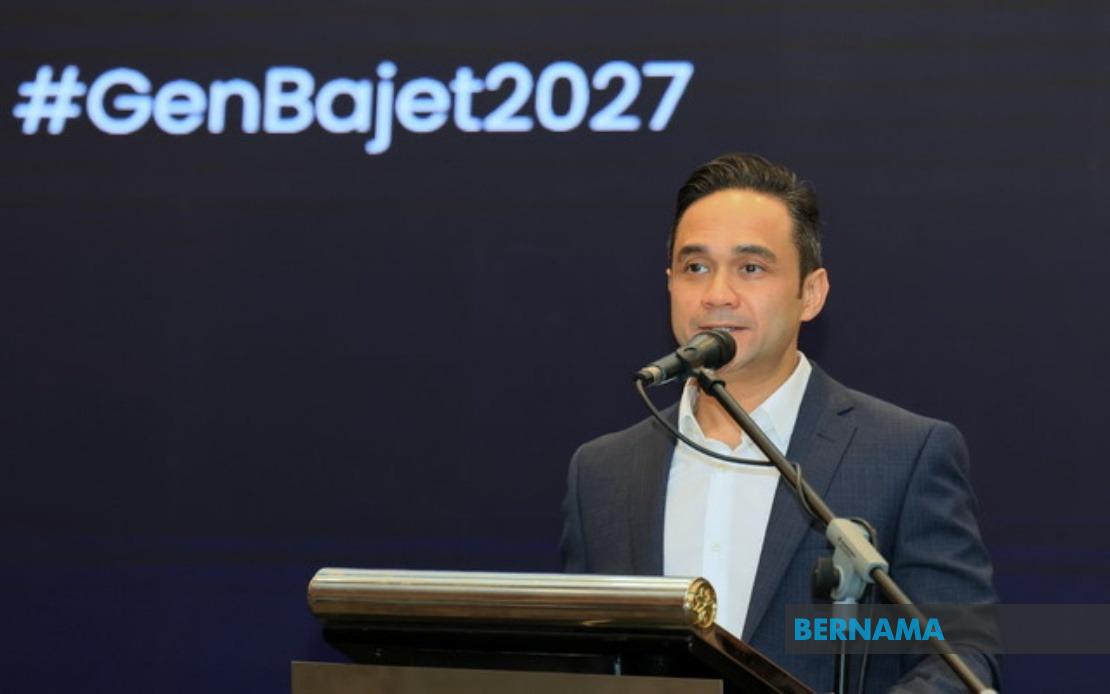
The Bumiputera Agenda Steering Unit (TERAJU) has made a formal plea for Budget 2027 to prioritise financial support for the Bumiputera Economic Transformation Plan 2035 (PuTERA35), signalling that adequate resources are essential to the success of Malaysia's most ambitious effort to reshape economic participation among the Bumiputera community. Speaking in Cyberjaya, TERAJU's Strategic Services Division senior director Nik Nazree Nik Abdul Rahman emphasised that robust funding mechanisms would be the linchpin in translating the plan's ambitious framework into tangible improvements for Bumiputera entrepreneurs and households across the nation.
The PuTERA35 agenda represents a decade-long commitment launched in August 2024, designed to elevate Bumiputera ownership, participation and control within Malaysia's broader economy. The initiative encompasses 132 distinct programmes structured around three core pillars and twelve strategic drivers, each calibrated to align with the government's MADANI Economy framework. This multi-faceted approach reflects a recognition that economic empowerment requires simultaneous intervention across multiple channels—from access to capital and market opportunities to skills development and sectoral expansion.
Nik Nazree articulated that the 132 initiatives, sequenced through to 2035, collectively pursue a singular overarching objective: advancing the socio-economic status of the Bumiputera community and narrowing existing wealth and opportunity gaps. Current trajectory suggests that nearly two-thirds of planned implementation actions have already commenced, yet TERAJU leadership has cautioned that sheer numerical progress masks a more nuanced concern. The critical question, as Nik Nazree framed it, is whether ongoing implementation activities are generating the substantive economic outcomes required—specifically, whether enterprises are genuinely strengthened and whether household welfare measurably improves as a consequence.
One area TERAJU has identified as particularly ripe for expansion is deepening Bumiputera access to capital market instruments and financing vehicles. This strategic gap represents an underexploited avenue for enterprise scaling and wealth accumulation. By facilitating pathways through which Bumiputera entrepreneurs can tap institutional investment, equity partnerships and debt financing at competitive terms, TERAJU believes the business ecosystem can become considerably more dynamic. The acknowledgement that this sector remains underdeveloped suggests that previous approaches have not fully mobilised Malaysia's financial infrastructure in service of Bumiputera economic objectives.
Energy transition presents another high-priority domain commanding TERAJU's immediate attention. As Malaysia and the region pivot toward renewable infrastructure, decarbonisation and green technologies, TERAJU views this transition not as a constraint but as a generational opportunity for Bumiputera entities to establish themselves in emerging sectors before competitive dynamics crystallise. Early positioning in energy solutions, solar development, battery technologies and grid modernisation could anchor a new wave of Bumiputera-led enterprises with substantial export potential and long-term competitiveness.
The governance architecture supporting PuTERA35 execution extends across multiple institutional layers. Working committees dedicated to specific sectoral and cross-cutting themes coordinate implementation, whilst the Bumiputera Economic Council, chaired by Prime Minister Datuk Seri Anwar Ibrahim, maintains strategic oversight and ensures cabinet-level prioritisation. This tiered supervisory structure reflects the cross-governmental scope of the initiative, requiring coordination among economic ministries, state authorities and statutory bodies. Nonetheless, institutional coordination alone cannot substitute for financial resources; without budget allocation proportionate to ambition, even well-designed programmes encounter implementation constraints.
TERAJU has committed to releasing a comprehensive performance assessment at year-end, marking two years since PuTERA35's formal launch. This mid-course review will evaluate not merely progress against timeline milestones, but qualitative measures of programme efficacy—whether enterprises report enhanced competitiveness, whether income levels among participants have genuinely risen, and whether market participation has translated into sustainable business operations. Such accountability is essential for maintaining stakeholder confidence and for refining the initiative's trajectory as external conditions evolve.
For Malaysian policymakers and taxpayers, the budget implications are substantial. Deploying 132 initiatives across a decade-long horizon, whilst simultaneously managing competing fiscal priorities, requires strategic resource allocation. Budget 2027 represents the fourth annual appropriation cycle for PuTERA35, meaning decisions made in the upcoming budget round will substantially determine whether the programme achieves critical mass or whether momentum dissipates through underfunding. The question before Parliament is whether economic transformation of this scope justifies the requisite investment, and conversely, whether deferring such investment imposes larger long-term opportunity costs.
Regionally, Malaysia's approach to Bumiputera economic empowerment carries broader significance. Other Southeast Asian nations grapple with similar challenges of inclusive growth, closing wealth gaps between dominant and minority communities, and ensuring that economic expansion benefits diverse populations. The specificity of PuTERA35—its combination of strategic frameworks, measurable targets, and institutional oversight—potentially offers instructive lessons for regional peers contemplating analogous initiatives. Conversely, implementation shortfalls attributable to inadequate resourcing would underscore the precarious gap between ambitious planning and practical execution across the developing world.
Nik Nazree's framing of funding as "crucial" rather than merely "helpful" signals TERAJU's conviction that the initiative cannot advance meaningfully without substantive budget commitment. The 67 percent implementation rate, whilst numerically impressive, leaves open whether achieved outcomes justify the effort expended. Approaching Budget 2027 with this assessment in hand, the government faces a choice between deepening investment to consolidate and accelerate PuTERA35's trajectory, or accepting a plateauing effect that leaves the initiative's ultimate objectives partially realised. The coming budget debate will likely centre on whether Malaysian economic capacity justifies such prioritisation, and whether alternative fiscal allocations might yield superior returns.

