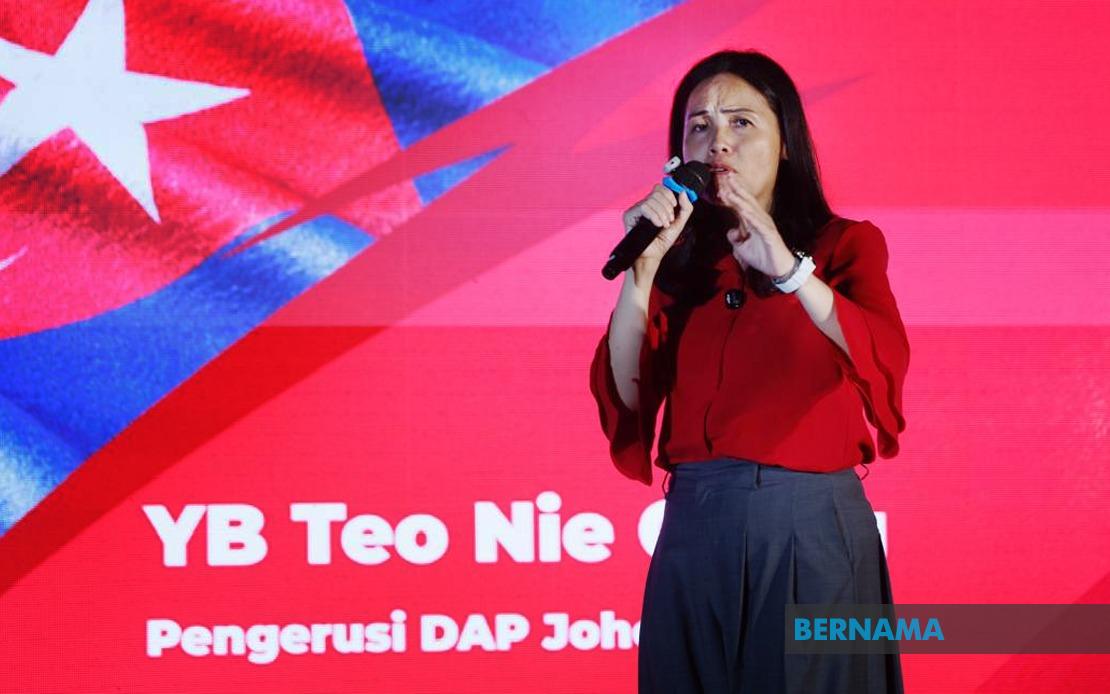
Johor DAP chairman Teo Nie Ching has challenged the state government to justify its decision to introduce appointed state assemblymen positions, expressing apprehension that the mechanism threatens the foundational principles of democratic governance. Speaking at a Pakatan Harapan campaign event in Paloh on the eve of Saturday's state election, Teo raised pointed questions about who would ultimately benefit from such appointments and whether the mechanism might be exploited to reward political allies rather than serve the broader public interest.
The Johor State Legislative Assembly passed legislation in May allowing for the appointment of up to five assemblymen, purportedly to enhance the assembly's functionality and composition. However, Teo's remarks suggest the move has generated considerable scepticism within the opposition coalition, particularly given the political calculations surrounding recent electoral alliances. Her questioning reflects deeper concerns within DAP about whether appointed positions could circumvent the electoral process and weaken the connection between representatives and voters they claim to serve.
Teo, who also serves as National DAP Wanita chairman and Deputy Communications Minister, emphasised that appointed assemblymen would bypass the fundamental democratic safeguard of public scrutiny through the ballot box. She warned that without transparent criteria for selection, such appointments risk eroding public confidence in the legislative process and creating space for patronage networks to flourish unchecked. Her comments underscore a persistent tension within Malaysia's political landscape between initiatives framed as institutional strengthening and measures perceived as undermining electoral integrity.
The timing of Teo's intervention carries particular weight given the PAS-Barisan Nasional electoral cooperation in the Johor contest. Teo pointedly asked whether the appointed positions would ultimately serve to reward PAS for its role in supporting the current state administration, a question that highlights the intricate coalition mathematics governing Malaysian state politics. This line of inquiry reflects broader anxieties within Pakatan Harapan about whether institutional changes adopted during the Unity Government era might be exploited in ways that entrench certain political factions while limiting democratic competition.
Despite her criticism of the appointed assemblymen mechanism, Teo mounted a vigorous defence of the Unity Government's overall record, attributing meaningful progress across multiple policy domains to the current administration's systematic approach to reform. She acknowledged candidly that no government achieves perfection, but argued that the MADANI Government has implemented substantive changes that warrant voter confidence in the coming election and beyond. This balancing act reflects the delicate position of DAP within the coalition, simultaneously defending partnership with Pakatan Harapan while maintaining distinct positions on specific governance issues.
Teo highlighted educational reforms as a cornerstone of the Unity Government's achievement. She pointed to the guarantee of matriculation programme placement for all SPM students achieving ten A's, a policy change that she suggested removes systemic barriers based on socioeconomic background or ethnicity. This reform carries particular resonance for DAP, which has traditionally emphasised merit-based advancement and equitable access to educational pathways. The policy shift represents a departure from previous approaches and illustrates how federal-level initiatives can reshape opportunities at the grassroots level.
Beyond matriculation access, Teo championed expanded educational opportunities for holders of the Unified Examination Certificate, reflecting DAP's longstanding advocacy for Chinese independent schools and their graduates. She further noted that federal allocations to Chinese independent schools had reached RM20.16 million in the current financial year, representing a substantial increase from the RM12 million allocated in 2019. For DAP supporters, these figures underscore tangible improvements in educational equity and resource allocation that distinguish the current administration from its predecessors.
Teo characterised the broader reform agenda as institution-building oriented toward securing Malaysia's long-term prosperity and democratic resilience. She framed systemic reforms in education and social welfare as foundational investments in future competitiveness and social cohesion, arguments likely to resonate with constituencies prioritising structural improvements over immediate electoral promises. Her emphasis on staged implementation reflects realistic recognition that comprehensive institutional reform requires sustained political commitment across multiple electoral cycles.
The deputy minister's closing appeal for electoral support in 2026 contextualises the current Johor election within a longer political trajectory. This framing suggests DAP's view of electoral contests as waypoints within extended campaigns to reshape Malaysia's governance architecture. By positioning the Unity Government as engaged in multi-year institutional transformation, Teo seeks to immunise the coalition against criticism regarding incomplete reforms or unmet expectations, suggesting that meaningful progress inherently requires patience and renewed political mandates.
Saturday's election will determine representation for 56 state seats, with approximately 2.7 million voters eligible to participate. The contest represents a critical test of Unity Government support in a major state where coalition dynamics remain fluid and opposition alternatives retain significant appeal. Results in Johor could influence national political calculations heading into 2026, making Saturday's voting consequential far beyond the state itself. Teo's campaign remarks, particularly regarding appointed positions and reform progress, will likely frame broader coalition messaging as voting concludes.

