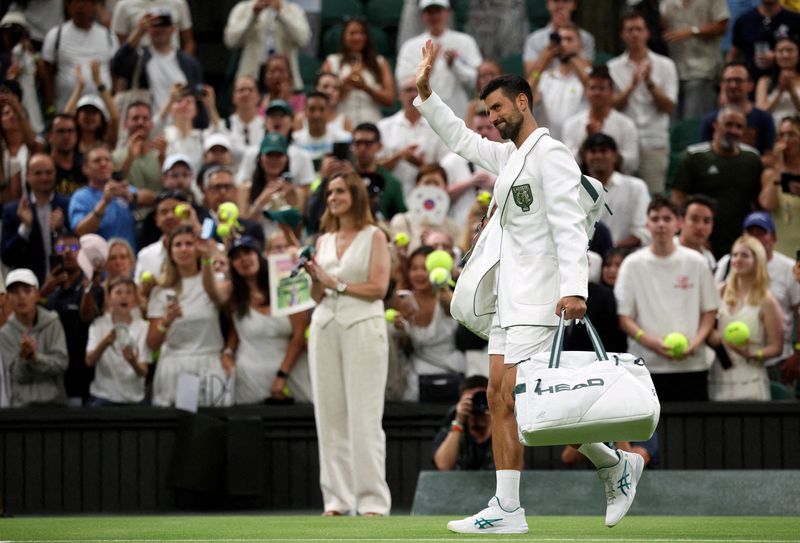
Wimbledon's hallowed grass courts have witnessed a notable shift in how elite male tennis players approach the tournament's strict all-white dress code, with several seeded competitors embracing elaborate entrance outfits as a form of personal branding. Novak Djokovic has paraded a customised Lacoste blazer and shorts during his walk-ons, while sixth seed Taylor Fritz arrives on court in a white Hugo Boss jacket paired with tailored trousers and a silk scarf—a departure from the understated professionalism that traditionally characterised men's tennis at the All England Club. The movement mirrors the groundbreaking fashion statements made by Naomi Osaka, whose kimono-inspired entrance outfit captured global attention and sparked widespread conversation about personality and self-expression within professional sport.
Industry observers view this phenomenon as part of a broader evolution in how athletes and their commercial partners leverage tournament moments for marketing impact. Joelle Michaeloff, chief creative officer at Wilson sports brand, emphasised that male players are now taking full advantage of opportunities previously dominated by female competitors, turning walk-on clothing into deliberate moments of theatrical presentation. The trend reflects growing recognition among sponsors that these brief pre-match appearances generate significant social media traction and media coverage, creating valuable brand exposure beyond traditional advertising channels. What distinguishes this year's Wimbledon from previous editions is the coordinated effort between athletes, sponsors, and designers to create conversation-starting moments, transforming the tournament into a fashion event alongside its sporting significance.
The commercial calculation driving these sartorial choices operates on multiple levels. Nike and Osaka's team strategically shared videos and imagery of her kimono arrival before her opening match, while Hugo Boss similarly promoted Fritz's tailored suit to its global audience. Sponsors increasingly recognise that the relationship between athlete and brand can be communicated through visual storytelling, particularly when players achieve results that justify the investment in elaborate entrance wear. Michaeloff noted that this partnership dynamic represents a fundamental shift in how brands engage with professional athletes, moving beyond equipment provision to encompassing complete lifestyle and image curation. The strategy proves especially effective at Wimbledon, where the tournament's prestige and global broadcast reach amplify the visibility of every entrance.
Yet the risks accompanying high-fashion entrances are equally apparent. Fritz himself acknowledged the delicate balance required, observing that arriving in designer wear only to exit in the first round would appear foolish and damage both personal credibility and brand reputation. He has successfully navigated this challenge by progressing to the third round without dropping a set, thereby preserving the integrity of his carefully curated image. Similarly, Djokovic generated substantial coverage following his commanding victory over Stefanos Tsitsipas, though his entrance blazer received as much attention as his demolition of the opponent. The intertwining of fashion statement and athletic performance means that these outfits carry implicit pressure—they signal confidence and prestige, but only if backed by competitive success.
Designers and sponsors are now engaging male players more deeply in the creative process than ever before. Russian third-round competitor Karen Khachanov exemplifies this collaborative approach, reportedly insisting on detailed involvement across all aspects of his entrance outfit, from fabric selection through colour choices to structural elements like necklines and fit. This level of creative input reflects a growing understanding that authenticity and comfort contribute to both performance confidence and marketability. Players increasingly view entrance wear not merely as sponsor mandates but as extensions of personal identity, requiring that designs reflect their individual aesthetic preferences whilst maintaining the technical functionality necessary for competitive athletics.
Wimbledon's unique all-white requirement creates distinctive constraints compared to other Grand Slam tournaments, where players wear substantially more colourful and varied outfits. This restriction paradoxically elevates the fashion stakes, as designers and athletes must create visual impact within tighter parameters. Italian sixth-ranked Matteo Berrettini discovered the limits of creative expression when the Wimbledon Committee rejected his entrance outfit for insufficient whiteness, illustrating that the All England Club maintains strict oversight despite the apparent liberalisation of attitudes toward player styling. Nevertheless, the tournament carries powerful historical resonance as the site of numerous iconic fashion moments, including Ted Tinling's groundbreaking white bodysuit created in 1985 and Roger Federer's distinctive jacket appearance in 2007.
The precedent for fashion-forward tennis extends considerably further back than recent seasons. Eleanor Thomas, collections lead at the All England Lawn Tennis Club and custodian of items displayed in the on-site museum, recognises Osaka's entrance wear this year as an iconic moment comparable to historical fashion touchstones. The fashion evolution visible at Wimbledon connects to broader tennis history, with legendary figures from the 1960s and 1970s such as Arthur Ashe setting standards for distinctive dress that transcended mere uniform compliance. What differs now is the intentional, coordinated nature of fashion strategy, combined with the amplifying power of social media and global broadcast technology that allows instantaneous worldwide dissemination of image content.
Osaka herself has emerged as the most consistent fashion innovator across the major tournaments this season, establishing a pattern of innovative entrance wear at each Grand Slam venue. She debuted a black Kevin Germanier skirt at the French Open before unveiling a layered yellow-brown and gold Nike match dress inspired by the Eiffel Tower's nighttime brilliance. Her Australian Open jellyfish-inspired outfit similarly demonstrated sophisticated conceptual design that connected thematic elements to venue identity. This consistency has established Osaka as a fashion authority within professional tennis, effectively raising audience expectations and inspiring other players to pursue comparable levels of creative expression. Her trajectory suggests that entrance fashion will become increasingly significant as a metric of player personality and brand alignment.
The implications for professional tennis extend beyond mere aesthetic considerations. The normalisation of elaborate entrance wear among elite male competitors signals shifting attitudes toward personality expression and individual branding within a sport historically dominated by conformity and restraint. Younger players may increasingly view entrance fashion as essential to professional development and sponsor relationships, potentially creating new hierarchies based on creative vision and brand partnerships. For sponsors, the trend offers unprecedented opportunities to communicate brand values and aesthetic positioning through athlete association, creating marketing moments that extend far beyond match duration. For Southeast Asian tennis fans and emerging regional players, these developments illustrate how global standards of athletic presentation continue evolving, with implications for how regional tournaments might adapt their own approach to player image and commercial partnerships.
The question of whether this trend will sustain or plateau remains uncertain. Fritz himself suggested cautiously that women have dominated the entrance fashion category thus far and questioned whether male players would continue investing energy in increasingly elaborate presentations. Nevertheless, the precedent has been established, and the successful integration of fashion moments into the Wimbledon narrative suggests that subsequent tournaments will feature comparable levels of sartorial creativity. As long as sponsors view entrance wear as valuable marketing real estate and players maintain competitive success, the visibility and prestige associated with high-fashion tournament arrivals will likely continue attracting investment and creative energy from design partners and the athletes themselves.

