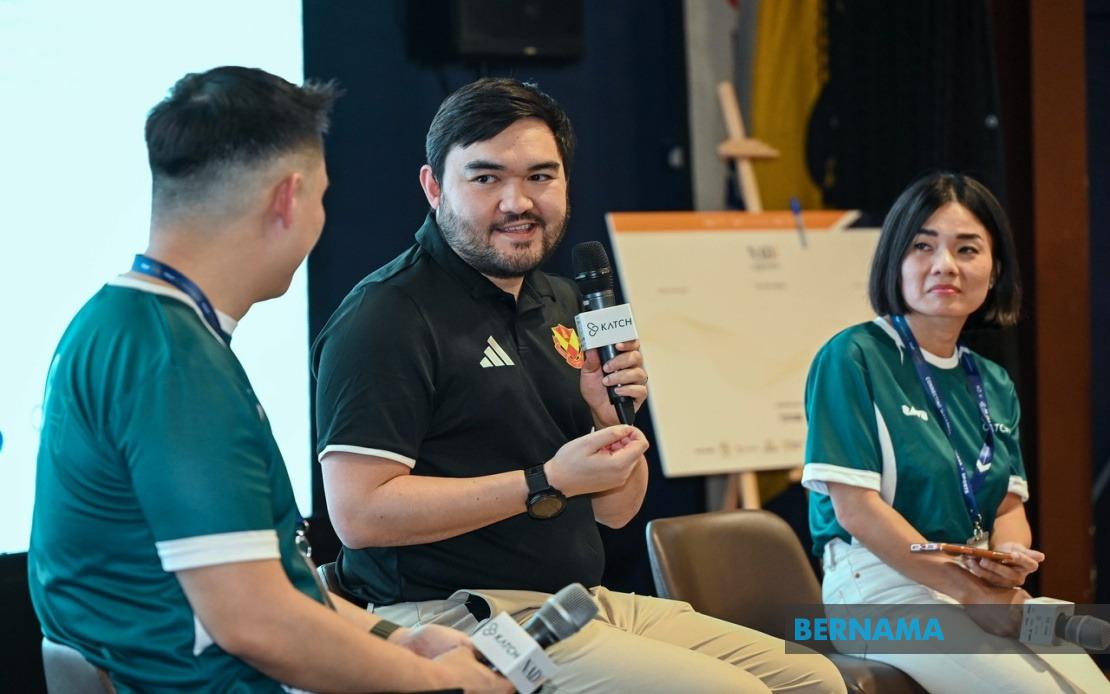
Selangor's overwhelming victory at the Malaysia Games (SUKMA) 2026 presents an opportunity to fundamentally reshape how the state nurtures sporting talent at the community level, according to Tengku Amir Shah Sultan Sharafuddin Idris Shah, the Raja Muda of Selangor. Speaking at the NADI Connecting Wellness, Fitness and Sports With RMS event in Petaling Jaya on August 27, the royal patron articulated a vision for sustained grassroots development that extends far beyond the traditional medal-counting framework of major competitions.
The state's commanding medal haul of 101 gold, 73 silver and 71 bronze medals at SUKMA 2026 underscores Selangor's sporting infrastructure, yet Tengku Amir Shah contends this success must catalyze something more profound: the establishment of accessible, recurring competition platforms that keep young athletes engaged throughout the year. His emphasis on grassroots development reflects a personal commitment spanning years, initially channeled through the Selangor Youth Community and subsequently deepening through involvement in football administration and governance.
Central to Tengku Amir Shah's argument is the psychological and developmental necessity of regular competitive opportunities. Rather than viewing competitions merely as tournaments to be won, he frames them as essential training mechanisms that furnish youth athletes with concrete objectives and the psychological scaffolding required for sustained improvement. The distinction is subtle yet consequential: athletes competing weekly develop fundamentally different approaches to training than those preparing for sporadic events. This weekly rhythm creates what Tengku Amir Shah describes as a "winning and goal-oriented mindset," positioning competition not as an occasional test but as an integral component of athletic development.
The practical implications for Malaysian sports infrastructure are substantial. If young competitors understand they will face opponents every weekend, the training week acquires purposeful structure. Each session becomes directed toward specific performance targets rather than amorphous fitness maintenance. This competitive framework generates psychological resilience and strategic thinking that transcends individual sports, potentially explaining why nations with robust grassroots competition systems consistently produce athletes capable of excelling at higher levels. Tengku Amir Shah's insistence on weekly competition reflects international best practices observed in successful sporting nations, adapted to Selangor's demographic and geographical context.
Selangor's selection of specific sports for SUKMA 2026 representation exemplifies strategic thinking about which disciplines could benefit from expanded development. By choosing sports offering meaningful platforms for showcasing quality and competitive excellence, the state created opportunities for young athletes to test themselves against peers in structured environments. This curated approach, according to Tengku Amir Shah, proved instrumental in demonstrating both sportsmanship and competitive intensity across multiple disciplines, validating the principle that diverse sports require diverse but equally rigorous development pathways.
Tengku Amir Shah's experience establishing the Selangor Champions League provides a concrete institutional model for his advocacy. This competition, designed to aggregate active social football teams across Selangor into a competitive framework determining championship standing, succeeded in identifying talent while simultaneously elevating competitive standards among participating communities. The league functioned as both talent pipeline and community engagement mechanism, serving functions typically separated in conventional sporting structures. Its relative success suggests scalability to other rapidly growing sports, particularly those gaining traction among diverse demographic groups.
The proposed expansion to sports like pickleball and chess represents recognition of evolving recreational preferences among Malaysian youth. Rather than limiting grassroots development to traditional disciplines, Tengku Amir Shah advocates for competition infrastructure matching contemporary sporting interests. Pickleball's recent surge in popularity across Southeast Asia, coupled with chess's intellectual appeal and lower physical barrier to entry, suggests untapped talent pools within Malaysian communities. Establishing regular competitive platforms in these domains could democratize sports development, reaching participants beyond conventional athletic populations.
The conceptual framework underlying Tengku Amir Shah's advocacy challenges conventional assumptions about sports development sequencing. Malaysian sports policy historically emphasized elite training centers and national team pathways, often neglecting the foundational infrastructure that generates sustained athlete engagement. By positioning grassroots competitions as primary rather than supplementary, Tengku Amir Shah inverts this hierarchy, suggesting that pyramidal athletic development necessarily rests upon robust community-level competition.
Implementing this vision requires coordination across multiple stakeholders. State sports councils, municipal authorities, school systems, and community organizations must align to provide venues, administrative support, and promotional infrastructure for weekly competitions. The logistical challenges are considerable, yet the potential returns justify investment. Communities hosting regular sporting competitions experience documented benefits including increased youth engagement, reduced social problems, and enhanced community cohesion beyond sporting outcomes.
The timing of Tengku Amir Shah's advocacy proves significant within Malaysia's broader sporting context. As the nation prepares for future SUKMA iterations and international competitive cycles, establishing robust grassroots foundations becomes increasingly urgent. Nations consistently outperforming Malaysia in international rankings typically invested heavily in community competition infrastructure decades prior. Selangor's position as an economically developed state with substantial resources places it in an advantageous position to pioneer models potentially adoptable by other states.
Tengku Amir Shah's engagement at the NADI event, bringing together 50 wellness, fitness and sports leaders, reflects institutional recognition that sports development transcends traditional athletic bureaucracies. Connecting voices across sectors fosters integrated approaches to community engagement. This convening model potentially generates synergies between corporate wellness programs, municipal recreational planning, and grassroots sporting initiatives, creating ecosystems supporting sustained athletic development.
The broader implication of Tengku Amir Shah's position concerns how Malaysian sporting culture conceptualizes success. Moving beyond medal accumulation at periodic major games toward valuing consistent participation and skill development across populations represents philosophical shift with institutional consequences. If competitions become regular features of community sporting landscapes, participation metrics would improve dramatically, generating more comprehensive talent pools from which elite athletes eventually emerge. This patient, infrastructure-focused approach contrasts with short-term medal-chasing strategies, yet ultimately produces more sustainable competitive advantages.

