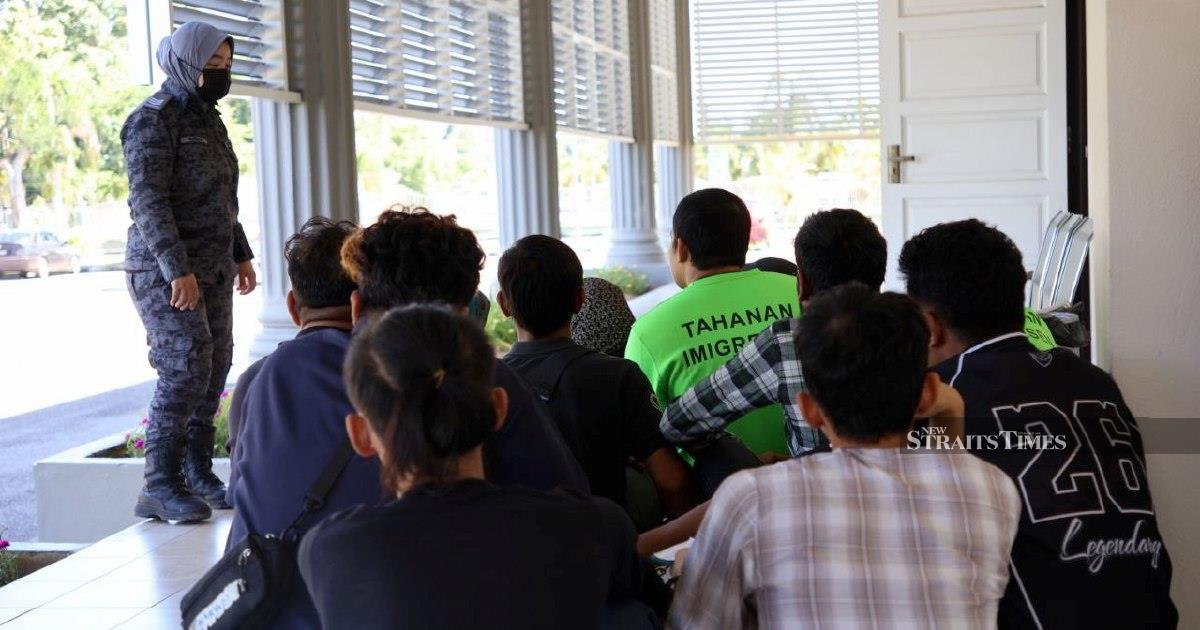
A group of 10 undocumented migrants made separate appearances in the Sessions Court at Pasir Mas today, facing charges related to various immigration violations that have become an increasingly common enforcement focus across Malaysia's border regions. The court proceedings revealed that three of the accused were foreign women, highlighting the diverse composition of irregular migration patterns into the country. The charges against the group encompassed overstaying beyond the authorised period, illegally entering Malaysian territory, and the misuse of social visit passes—immigration documents typically intended for short-term tourism or business visits.
The Pasir Mas court sits in one of Kelantan's most strategically significant border districts, situated near major transit corridors used by undocumented migrants. This location underscores the ongoing challenge Malaysia faces in managing irregular migration flows through its northern borders with Thailand. Immigration enforcement agencies have intensified operations in such zones, recognising that tackling violations at the entry point and during early overstaying periods can serve as a deterrent to larger networks facilitating irregular movement.
Misuse of social visit passes represents a particularly concerning category of immigration breach because it suggests deliberate circumvention of proper entry procedures. Migrants obtaining these passes under false pretences or using them beyond their intended scope undermine the integrity of Malaysia's visitor documentation system. This pattern points to a broader problem: the involvement of intermediaries or smuggling networks that facilitate not merely illegal border crossings but also document fraud, multiplying the complexity of enforcement efforts.
The charging of overstaying offenders in Sessions Court rather than lower-tier courts indicates the severity with which authorities are treating these cases in recent months. Sessions Court proceedings carry more substantial penalties and reflect a policy shift toward stricter prosecution standards. For migrant workers and visitors who have inadvertently or deliberately breached immigration terms, such court action can result in fines, detention, and deportation orders that fundamentally disrupt their livelihoods and family arrangements.
Malaysia's documented migrant population contributes substantially to the economy, yet undocumented migration strains public services, complicates law enforcement, and creates vulnerability among migrants themselves—exposing them to exploitation, trafficking, and abuse. The distinction between documented and undocumented migrants carries profound implications for worker protections, healthcare access, and social stability. Enforcement actions like the Pasir Mas prosecutions signal government commitment to reducing the undocumented population, though critics argue that supply-side enforcement alone, without addressing demand-side factors, produces limited systemic change.
The presence of three women among the accused reflects patterns observed across Southeast Asia, where women migrants face distinct vulnerabilities in irregular migration journeys. They may migrate for domestic work, catering, or manufacturing roles where documentation requirements are less stringently enforced. The gendered dimensions of irregular migration demand particular attention from policymakers and enforcement agencies, as women migrants often endure heightened risks of exploitation and abuse when lacking legal status.
Border management in Kelantan, situated between Malaysia and Thailand, requires sophisticated coordination between federal immigration authorities, state-level enforcement, and military or police presence. The Pasir Mas charging suggests that frontline agencies have been conducting sustained intelligence and patrol operations to identify and apprehend undocumented migrants. However, the sheer volume of irregular movement—driven by economic disparities between Malaysia and its neighbours, conflict in Myanmar, and other regional factors—continues to outpace enforcement capacity in many areas.
The implications of these prosecutions extend beyond individual migrants to regional cooperation frameworks. Malaysia's approach to immigration enforcement influences how neighbouring countries perceive bilateral enforcement agreements and migration management protocols. Thailand, in particular, has a substantial diaspora of Burmese migrant workers in Malaysia, and coordinated border management between the two countries remains essential to addressing root causes of irregular migration, such as human trafficking networks.
From a Malaysian economic perspective, the documented migrant worker population fills significant labour gaps in construction, agriculture, domestic services, and manufacturing. Yet the presence of undocumented workers—who work without contracts, minimum wage protections, or safety standards—creates unfair competition and labour market distortions. By prosecuting overstaying migrants, authorities aim to reinforce the formal employment model and discourage employers from hiring undocumented labour, though enforcement of employer penalties remains inconsistent.
The Pasir Mas Sessions Court cases also reflect broader immigration policy debates within Malaysia regarding processing capacity and rehabilitation versus punishment. Deportation, though legally mandated for many immigration offences, can prove costly and logistically complex, especially when migrants' countries of origin are distant or politically unstable. Some policymakers advocate for community service, monitoring requirements, or conditional work permits as alternatives that might address both enforcement objectives and humanitarian concerns—an approach increasingly adopted in certain Southeast Asian jurisdictions.
These charges underscore Malaysia's continuous struggle to balance economic openness toward migrant labour with immigration law enforcement and national security imperatives. The Sessions Court proceedings at Pasir Mas, while individually impactful for the migrants involved, represent merely one enforcement intervention within a much larger, ongoing migration dynamic that will require sustained, multifaceted policy responses.

