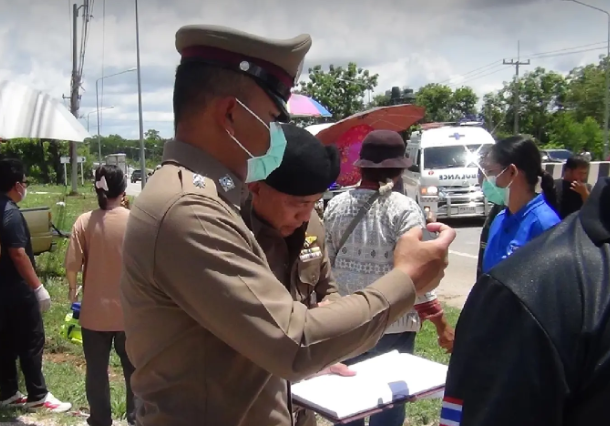
A tragedy in Thailand's northeast has claimed the lives of ten Buddhist monks after an 11-year-old child drove a pickup truck directly into a religious procession on Thursday, according to authorities who confirmed the death toll on Friday. The incident occurred in Mukdahan province as a group of 35 monks and five lay followers walked along a roadside during a pilgrimage, unaware of the danger approaching. The vehicle struck the gathering with devastating force, killing five monks immediately at the scene while another five succumbed to their injuries later in hospital. Ten additional individuals remain under medical care at Mukdahan Hospital in the region's north, with two patients in critical condition and eight suffering from various injuries sustained in the collision.
Investigators have established that the child took his parents' vehicle without authorization before the accident occurred. Police officials state that the boy, whose age places him below Thailand's criminal liability threshold, was unable to provide formal questioning to law enforcement. The young driver has since been transferred to child welfare authorities for psychological and developmental assessment, accompanied by his mother throughout the process. Under Thai law, children younger than 12 years old cannot be held criminally responsible for their actions, a legal framework that protects minors while still allowing for proper intervention through social services and welfare mechanisms.
Prayut Ruanthongkam, chief of Mukdahan City Police, explained to international news agencies that officers were simultaneously gathering statements from surviving monks to piece together the sequence of events leading to the collision. The investigation focuses on understanding how a child gained access to the vehicle and what circumstances led to the truck entering the roadway where the procession was travelling. Authorities are examining whether mechanical failure, lack of supervision, or other factors contributed to the incident, though preliminary findings suggest the child deliberately operated the vehicle.
The tragedy underscores the deep spiritual significance of Buddhist monks within Thai society, where they hold an elevated cultural and religious status that extends far beyond their roles as religious practitioners. Monks function as custodians of Buddha's teachings and serve as moral exemplars within their communities, engaging regularly in public religious ceremonies and accepting alms from devotional laypeople. These processions, which the ill-fated group was conducting when tragedy struck, represent important spiritual occasions that draw ordinary Thais into direct participation in Buddhist traditions. The loss of ten monks represents not merely a numerical casualty but a profound blow to the religious life of communities across Mukdahan and the broader region.
Wat Roi Phra Phutthabat Phu Manorom, a hilltop temple located within Mukdahan province, has become a centre of care and recovery following the incident. Temple officials have provided accommodation and support to the surviving and recovering monks from the procession, alongside other lay followers who participated in the pilgrimage and sustained injuries. The temple community has mobilized to offer both physical rehabilitation and spiritual comfort to those affected, reflecting Buddhist traditions of compassion and communal support during times of suffering and loss.
The incident will likely prompt broader discussions across Thailand regarding road safety, vehicle access protocols for minors, and supervision practices in households with children. While the legal system cannot prosecute the child involved, the tragedy raises questions about preventive measures that could reduce the likelihood of similar incidents occurring in the future. Parents and guardians throughout the country may face renewed scrutiny regarding how they store vehicle keys and educate children about the dangers of operating motor vehicles without proper training or authorization.
For Malaysian and Southeast Asian readers, this incident serves as a sobering reminder of the shared vulnerabilities facing Buddhist communities across the region. Thailand's experience demonstrates how accidents involving religious practitioners can reverberate throughout entire societies, given the central role monks play in spiritual and cultural life. The incident also highlights divergent approaches to juvenile justice across Southeast Asia, with Thailand's age-based immunity contrasting with frameworks in other nations that may impose rehabilitation requirements even on young children involved in serious incidents.
The recovery process for the surviving monks and lay followers will extend far beyond physical healing, encompassing emotional and spiritual rehabilitation following their traumatic experience. Temple communities in Mukdahan will likely organize merit-making ceremonies and other Buddhist rituals designed to honour those who died and support the grieving process within the monastic and lay communities. These observances serve multiple purposes within Buddhist theology, facilitating spiritual growth while honouring the departed and strengthening communal bonds tested by tragedy.
The international attention focused on this incident reflects the broader global interest in incidents affecting religious communities and the particular reverence accorded to Buddhist monastics throughout Asia. News agencies have covered the story extensively, bringing awareness of Thai Buddhist practices and the vulnerability of religious practitioners even during routine ceremonial activities to audiences far beyond the region.

